Book 7: Odysseus Enters the Palace of Alcinous
Ὀδύσσεια · Book 7 · Classix Modern English Reading Edition
So much-enduring, noble Odysseus prayed there, while the two mules carried the girl swiftly toward town. At her father’s famous palace she stopped at the gateway. Her brothers, looking like immortals, gathered around, unhitched the mules and carried the clothes inside. She went to her room, where old Eurymedusa, her chamber attendant from Apeira, lit a fire. Curved ships had brought Eurymedusa from Apeira, and she had been chosen as Alcinous’ prize of honor because he ruled all the Phaeacians and the people obeyed him like a god. She had raised white-armed Nausicaa at home. Now she lit her fire and set out supper.
Read Ancient Greek Source (Odyssey.7.1–Odyssey.7.13)
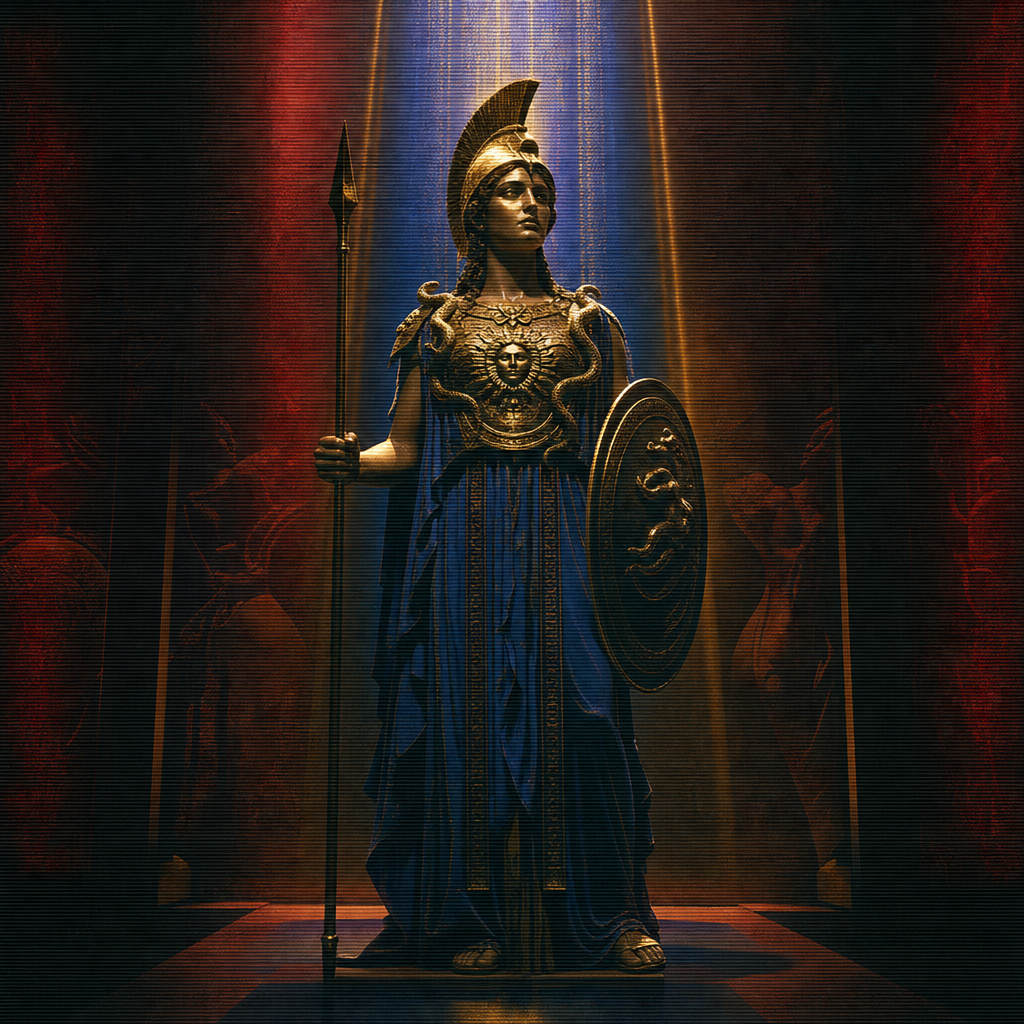
Then Odysseus rose to go to the city; and around him Athena poured a thick mist out of kindness toward Odysseus, so that none of the proud-hearted Phaeacians meeting him would jeer at him with words and ask who he was. But just as he was about to enter the lovely city, the goddess, bright-eyed Athena, met him there in the likeness of a young girl carrying a water pitcher. She stood before him, and noble Odysseus questioned her: “Child, could you guide me to the house of the man Alcinous, who rules among these people? For I have come here as a much-tested stranger from far away in a distant land; so I know no one among the people who hold this city and country.”
Read Ancient Greek Source (Odyssey.7.14–Odyssey.7.26)
Then the goddess, bright-eyed Athena, answered him: “I will show you the house you ask for, honored stranger. He lives near my noble father. Just follow quietly while I lead. Do not look at anyone or ask questions. These people have little patience with strangers and do not warmly welcome anyone from elsewhere. They trust their swift ships to cross the great sea, a gift of the Earth-Shaker. Their ships are swift as a wing or a thought.”
Read Ancient Greek Source (Odyssey.7.27–Odyssey.7.36)
So speaking, Pallas Athena led the way quickly, and he followed in the footsteps of the goddess. And the Phaeacians, famous for their ships, did not notice him as he walked through the town among them, for Athena with her lovely hair did not allow it—that dread goddess, who had poured a mist of divine power over him out of kindness in her heart. Odysseus marveled at the harbors and the balanced ships, the assembly places of the heroes themselves, and the long walls, high and fitted with palisades, a wonder to see.
Read Ancient Greek Source (Odyssey.7.37–Odyssey.7.45)
When they reached the king's famous palace, the goddess, bright-eyed Athena, began to speak: “Here, honored stranger, is the house you asked me to show you. You will find the kings fostered by Zeus feasting inside. Go in without fear: a bold man fares better in every undertaking, even if he comes from elsewhere. First seek the lady of the house. Her name is Arete, and she comes from the same ancestral line as King Alcinous.
Read Ancient Greek Source (Odyssey.7.46–Odyssey.7.55)
“First, Poseidon the Earth-Shaker fathered Nausithous with Periboea, the finest of women in beauty, the youngest daughter of great-hearted Eurymedon, who once ruled over the insolent Giants. But he destroyed his reckless people and perished himself; yet Poseidon lay with her and fathered a son, great-hearted Nausithous, who ruled among the Phaeacians. And Nausithous fathered Rhexenor and Alcinous.
Read Ancient Greek Source (Odyssey.7.56–Odyssey.7.63)
“Apollo of the silver bow struck Rhexenor down at home while he was newly married and had no son. He left just one daughter, Arete, whom Alcinous married. He honored her as no other wife now keeping house under a husband is honored on earth. Such heartfelt honor she has received and still receives from her dear children, Alcinous himself and the people, who look upon her as a god and greet her with warm words as she walks through town. She has a fine mind herself, and settles disputes for women she favors, and for men too. If she is kindly disposed toward you in her heart, then there is hope that you will see your loved ones and come to your high-roofed house and into your native land.”
Read Ancient Greek Source (Odyssey.7.64–Odyssey.7.77)
Bright-eyed Athena left lovely Scheria and went over the barren sea to Marathon and wide-streeted Athens, where she entered the strong house of Erechtheus. Odysseus went toward Alcinous’ famous palace. Before crossing its bronze threshold he stood still, pondering much in his heart. For there was a radiance like the sun's or the moon's throughout the high-roofed hall of great-hearted Alcinous.
Read Ancient Greek Source (Odyssey.7.78–Odyssey.7.85)
Bronze walls stretched along both sides from the threshold to the back of the hall, crowned by a band of dark blue. Golden doors closed the strong house. Silver posts stood on the bronze threshold, with a silver lintel above and a golden handle. On either side stood dogs of gold and silver that Hephaestus had fashioned with his cunning skill to guard the hall of great-hearted Alcinous. The dogs were immortal and ageless for all days to come.
Read Ancient Greek Source (Odyssey.7.86–Odyssey.7.94)
Inside, chairs stood against the walls on both sides, all the way from the threshold to the back of the hall. Fine, closely spun cloths, the work of women, lay over them. Here the Phaeacian leaders sat eating and drinking, with an unfailing supply. And golden youths on well-built pedestals stood holding blazing torches in their hands, giving light through the nights in the halls for the banqueters.
Read Ancient Greek Source (Odyssey.7.95–Odyssey.7.102)
Fifty enslaved women worked in his house. Some ground yellow grain at millstones; others wove at looms or sat spinning yarn, restless as the leaves of a tall poplar. Liquid oil dripped from the closely woven linen. As the Phaeacian men excelled all others at driving swift ships over the sea, so their women excelled at weaving. Athena had given them surpassing skill in beautiful work and fine intelligence.
Read Ancient Greek Source (Odyssey.7.103–Odyssey.7.111)
Outside the courtyard near the gates stood a great orchard of four ploughlands, fenced all around. Tall trees flourished there: pears, pomegranates, apples with bright fruit, sweet figs and thriving olives. Their fruit never failed or ran out in winter or summer, all year long. The West Wind always breathed, bringing some to bud and ripening others. Pear ripened after pear, apple after apple, grape cluster after cluster and fig after fig.
Read Ancient Greek Source (Odyssey.7.112–Odyssey.7.121)
His fruitful vineyard grew there too. Grapes dried in a sunny, level plot; others were being gathered, and others trodden. In front, unripe grapes were just shedding their blossom, while others were beginning to darken. Beyond the last row grew orderly beds of all kinds, fresh and gleaming all year. Two springs flowed there: one spread through the whole garden; the other ran on the opposite side beneath the courtyard threshold toward the high house, and the townspeople drew their water from it. Such were the gods’ splendid gifts to Alcinous.
Read Ancient Greek Source (Odyssey.7.122–Odyssey.7.132)
Standing there, much-enduring noble Odysseus gazed in wonder. When he had marveled at it all in his heart, he stepped quickly across the threshold into the hall. He found the Phaeacian leaders and rulers pouring offerings from their cups to keen-eyed Hermes, slayer of Argus. His was always the last libation when they turned their thoughts to bed. Much-enduring noble Odysseus walked through the hall, wrapped in the thick mist that Athena had poured around him, until he reached Arete and King Alcinous. Odysseus threw his arms around Arete's knees, and at that moment the god-sent mist dissolved from around him. They fell silent throughout the hall at the sight of the man, staring at him in wonder, while Odysseus made his plea:
Read Ancient Greek Source (Odyssey.7.133–Odyssey.7.145)
“Arete, daughter of godlike Rhexenor, after many hardships I come to your husband, to your knees, and to these feasters here. May the gods grant them prosperity all their lives, and may each of them hand down to his children the wealth in his halls and whatever prize of honor the people have given him. But for me, speed my passage home to my native land soon, for I have suffered misery far from my loved ones for a long time.”
Read Ancient Greek Source (Odyssey.7.146–Odyssey.7.152)
So speaking, he sat down on the hearth in the ashes beside the fire, and they all stayed hushed in silence. At last old Echeneus spoke. He was the eldest of the Phaeacians, an outstanding speaker who knew many things from long ago. With goodwill toward them he addressed the company:
Read Ancient Greek Source (Odyssey.7.153–Odyssey.7.158)
“Alcinous, it is neither handsome nor fitting that a stranger should sit in ashes on the ground beside the hearth. These men are holding back, waiting for your word. Raise the stranger and seat him in a silver-studded chair. Tell the heralds to mix wine, so we can pour an offering to Zeus who delights in thunder and attends respected suppliants. Let the housekeeper give our guest supper from the stores.”
Read Ancient Greek Source (Odyssey.7.159–Odyssey.7.166)
When Alcinous in his sacred might heard this, he took wise, resourceful Odysseus by the hand, raised him from the hearth, and seated him on a shining chair, having his noble-hearted son Laodamas rise to make room—the son who sat beside him, whom he loved most of all. An attendant brought water for his hands and poured it from a pitcher, a fine golden one, over a silver basin so he could wash, and drew a polished table to his side. The respected housekeeper brought bread and set it before him, adding many dishes, giving generously from her store. Then much-enduring noble Odysseus drank and ate.
Read Ancient Greek Source (Odyssey.7.167–Odyssey.7.177)
And then mighty Alcinous spoke to the herald: “Pontonous, mix the wine in the bowl and serve everyone in the hall, so we can pour an offering to Zeus who delights in thunder and attends respected suppliants.” Pontonous mixed the honey-sweet wine and served everyone, first pouring portions into their cups for the libation. When they had poured libations and drunk as much as their hearts desired, Alcinous addressed the assembly and said to them:
Read Ancient Greek Source (Odyssey.7.178–Odyssey.7.185)
“Listen, Phaeacian leaders and rulers, while I say what my heart urges. You have feasted; now go home to bed. At dawn we will call more elders, entertain the stranger in our halls and offer fine sacrifices to the gods. Then we will arrange his escort, so he can reach his native land swiftly and joyfully under our care, without toil or grief, however far away it is. Let him suffer no harm or misery on the way before he sets foot on his own soil. Once there, he will endure whatever Fate and the stern Spinners spun into his thread at birth, when his mother bore him.
Read Ancient Greek Source (Odyssey.7.186–Odyssey.7.198)
“But if he is an immortal come down from heaven, the gods have some new design in mind. Before now the gods have always appeared to us in plain sight whenever we offered splendid great sacrifices. They sit beside us and feast where we sit. Even if a traveler meets them alone on the road, they do not hide, for we are close kin to them, like the Cyclopes and the wild tribes of Giants.”
Read Ancient Greek Source (Odyssey.7.199–Odyssey.7.206)
Resourceful Odysseus answered him and said: “Alcinous, turn your mind to another thought. I am no immortal like those who hold wide heaven, in body or bearing; I am a mortal man. I could match in suffering the most afflicted people you know, and tell of even more troubles, all I have endured by the gods’ will. But let me eat, for all my grief. Nothing is more shameless than the hateful belly. It forces a man to remember it even when he is worn down and his heart is full of sorrow. My heart is full of sorrow now, yet it keeps ordering me to eat and drink. It makes me forget all I have suffered and insists on being filled. At dawn, hasten to set this wretched man on his native soil after all his suffering. Once I have seen my possessions, my slaves and my great high-roofed house, let life leave me.”
Read Ancient Greek Source (Odyssey.7.207–Odyssey.7.225)
So he spoke, and they all approved and urged that the stranger be escorted home, since he had spoken rightly. When they had poured libations and drunk as much as their hearts desired, they went away to sleep, each to his own house, but noble Odysseus remained behind in the hall, and beside him Arete and godlike Alcinous sat, while the serving women cleared away the vessels of the feast. White-armed Arete was the first to speak among them, for she recognized the cloak and tunic when she saw the clothes, fine garments that she herself had made with her serving women; and she spoke out and addressed him with winged words: “Stranger, I will ask you this question first myself: Who are you among men, and where are you from? Who gave you these clothes? Did you not say you came here wandering over the sea?”
Read Ancient Greek Source (Odyssey.7.226–Odyssey.7.239)
Resourceful Odysseus answered her and said: “It is hard, Queen, to recount from beginning to end my troubles, since the heavenly gods have given me so many; yet I will tell you what you ask and inquire of me. There is an island called Ogygia that lies far off in the sea. There the daughter of Atlas, cunning Calypso, dwells, a dread goddess with lovely braids; and no one keeps company with her, neither god nor mortal man. But some god brought me in my misery to her hearth alone, after Zeus struck my swift ship with a flashing thunderbolt and shattered it in the middle of the wine-dark sea.
Read Ancient Greek Source (Odyssey.7.240–Odyssey.7.250)
“There all the rest of my good companions perished, but I clasped my arms around the keel of the curved ship and drifted for nine days. On the tenth, in the black night, the gods brought me to the island of Ogygia, where Calypso dwells, a dread goddess with lovely braids, who took me in and cared for me kindly and nourished me, and said she would make me immortal and ageless for all days; but she never persuaded the heart within my chest.
Read Ancient Greek Source (Odyssey.7.251–Odyssey.7.258)
“For seven years I remained there, always wetting the divine clothes Calypso gave me with my tears. When the eighth year came round, she urged me to go home—because of a message from Zeus, or because her own mind had changed. She sent me on a tightly lashed raft, gave me plenty of bread and sweet wine, dressed me in divine clothes and sent a gentle, harmless, warm wind behind me.
Read Ancient Greek Source (Odyssey.7.259–Odyssey.7.266)
“For seventeen days I sailed across the open sea, and on the eighteenth the shadowy mountains appeared of your land, and the heart within me rejoiced—ill-fated as I was; for I was still to meet with misery, great misery that Poseidon the Earthshaker brought upon me, who unleashed the winds against me and blocked my way, and churned up an immense sea, nor did the waves let me ride on my raft as I groaned without ceasing. Then the storm blast scattered its timbers; but I myself swam and cut my way through this gulf, until the wind and water carried me and brought me close to your land. There, as I tried to come ashore, the waves would have crushed me, hurling me against great rocks at a cheerless spot; but I drew back and swam out again, until I came to a river, where the place seemed best to me, clear of rocks, with shelter from the wind.
Read Ancient Greek Source (Odyssey.7.267–Odyssey.7.282)
“I stumbled ashore, gathering my strength, and immortal night came on. I went up away from the heaven-fed river and fell asleep in the bushes, heaping leaves all around me; and a god poured boundless sleep over me. With grief in my heart I slept among the leaves all night, through dawn and midday. The sun was sinking toward evening when sweet sleep released me. I saw your daughter’s attendants playing on the shore, and she was among them like a goddess. I approached her as a suppliant. Her judgment was good, better than you would expect from a young person you met, for the young are always thoughtless. She gave me plenty of bread and gleaming wine, bathed me in the river and gave me these clothes. For all my grief, I have told you the truth.”
Read Ancient Greek Source (Odyssey.7.283–Odyssey.7.297)
Alcinous answered him in turn and said: “Stranger, my daughter did fail in judgment in this: she did not bring you to our house with her attendants, though she was the first person you approached as a suppliant.”
Read Ancient Greek Source (Odyssey.7.298–Odyssey.7.301)
Resourceful Odysseus answered him and said: “My lord, do not blame the faultless girl for that. She did tell me to follow with her attendants, but I refused out of fear and shame, lest you be angry when you saw us. We humans on earth are quick to jealousy.”
Read Ancient Greek Source (Odyssey.7.302–Odyssey.7.307)
Alcinous answered him in turn and said: “Stranger, my heart is not one to grow angry for no reason. Due measure is better in everything. Father Zeus, Athena and Apollo, if only a man such as you, thinking as I do, would marry my daughter and be called my son-in-law, staying here! I would give you a house and possessions, if you wished to stay. No Phaeacian will hold you against your will. May Father Zeus never approve of that! As for your escort, I fix the time for tomorrow, so you can be sure. You will lie overcome by sleep while the men row over a calm sea, until you reach your home and native land or wherever you wish, even if it lies much farther than Euboea. Those of our people who saw it say that is the most distant place, when they took fair-haired Rhadamanthus to visit Tityus, Earth’s son. They went there without effort and completed the return home that same day. You will see for yourself how greatly my ships excel, and how skilled my young men are at tossing up the sea with their oar-blades.”
Read Ancient Greek Source (Odyssey.7.308–Odyssey.7.328)
So he spoke, and much-enduring noble Odysseus rejoiced; and in prayer he spoke, uttering his words aloud: “Father Zeus, grant that every word he spoke may be fulfilled by Alcinous! Across the grain-giving earth he would have unquenchable glory, and I would reach my fatherland.”
Read Ancient Greek Source (Odyssey.7.329–Odyssey.7.333)
So they spoke together. White-armed Arete told her attendants to set a bed beneath the portico, lay fine purple blankets on it, spread rugs above them and put thick woolen cloaks there for him to pull over himself. The women went from the hall with torches in their hands. When they had quickly made up the sturdy bed, they stood beside Odysseus and said, “Get up, stranger, and come to bed. Your bed is ready.” Sleep seemed welcome indeed. Much-enduring, noble Odysseus slept on the carved bed beneath the echoing portico. Alcinous lay in the inner part of the high house, and beside him his wife, the lady of the house, made their bed.