Book 21: The Battle by the River Scamander
Ἰλιάς · Book 21 · Classix Modern English Reading Edition
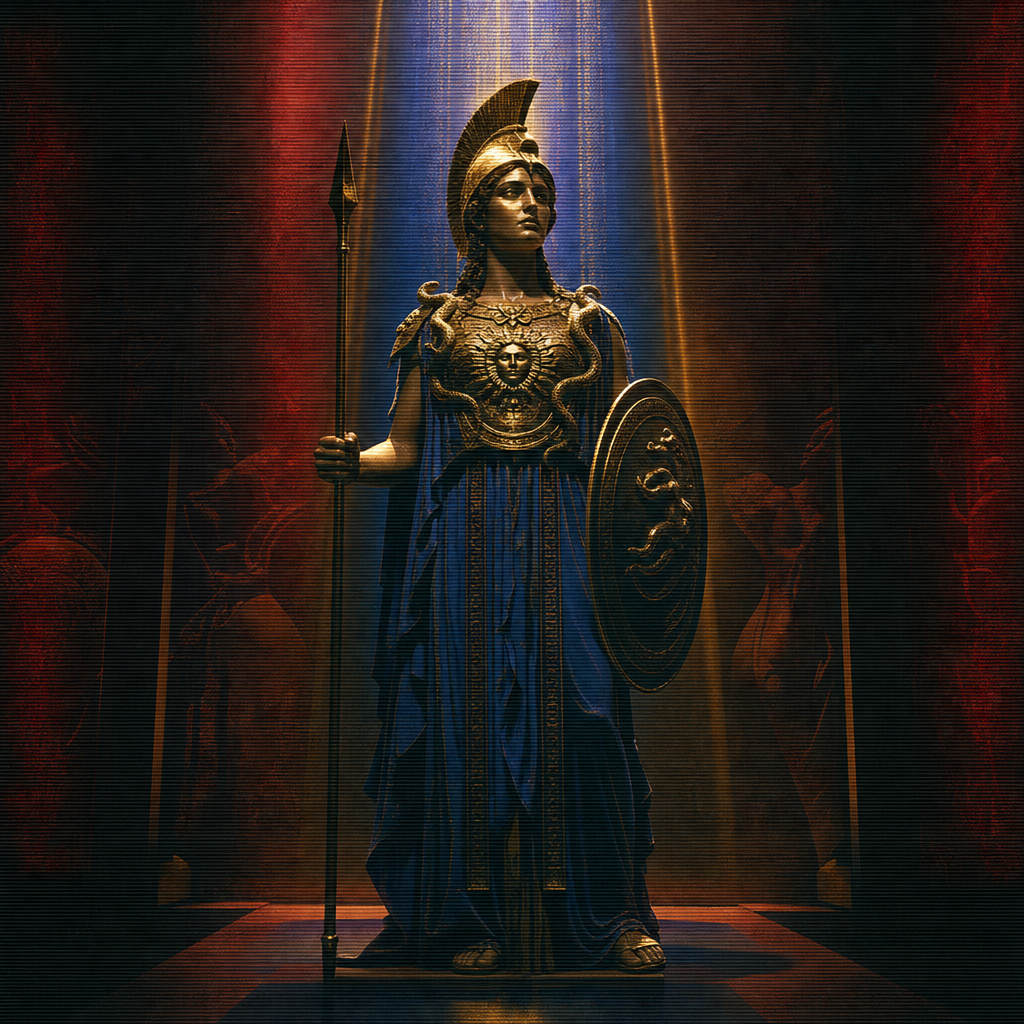
But when they reached the ford of the fair-flowing river, eddying Xanthus, whom immortal Zeus fathered, there Achilles split their ranks. Half he chased across the plain toward the city, along the very route where the Achaeans had fled in panic the day before, when glorious Hector raged. That way they poured in flight, and Hera spread a thick mist in front of them to hold them back; but the other half were crowded into the deep-flowing river with its silver eddies. They plunged in with a tremendous crash, the deep currents roared, and the banks all around echoed loudly, while with wild cries they swam this way and that, spun round in the whirlpools. As locusts rise in a cloud before the rush of a fire to flee toward a river—the tireless flame blazes up suddenly, and they cower down into the water—so before Achilles the roaring stream of deep-eddying Xanthus was choked with a tangle of horses and men.
Read Ancient Greek Source (Iliad.21.1–Iliad.21.16)
Then Zeus-born Achilles left his spear right there on the bank, propped against the tamarisk bushes, and leaped in like a god, holding only his sword, his heart bent on grim work. He struck in every direction; ugly groans rose from the men as the blade hacked them, and the water ran red with blood. And as other fish flee before a huge dolphin and crowd the crannies of a sheltered harbor in terror, because it devours whichever one it catches, so the Trojans cowered under the overhanging banks along the currents of that terrible river. When Achilles' hands grew weary of killing, he picked twelve young men alive out of the river as blood-price for dead Patroclus, son of Menoetius. He led them out onto the bank, dazed like fawns, bound their hands behind them with the well-cut leather straps that they themselves wore over their woven tunics, and gave them to his companions to lead down to the hollow ships. Then he lunged back in, raging to butcher more.
Read Ancient Greek Source (Iliad.21.17–Iliad.21.33)
There Achilles met Lycaon fleeing from the river, a son of Priam, descendant of Dardanus. Achilles himself had once come out by night and seized Lycaon in his father's orchard, leading him away against his will. Lycaon had been using sharp bronze on a wild fig tree, cutting young shoots to make rails for a chariot, when brilliant Achilles came upon him, an unlooked-for disaster. That time Achilles took him by ship and sold him into well-built Lemnos, where the son of Jason paid his price. From there a guest-friend, Eetion of Imbros, ransomed him for a great sum and sent him to bright Arisbe; from there he slipped away in secret and reached his father's house. For eleven days after returning from Lemnos he delighted his heart among his friends and kin; but on the twelfth a god once again cast him into the hands of Achilles, who was about to send him unwilling to the house of Hades.
Read Ancient Greek Source (Iliad.21.34–Iliad.21.48)
Now when swift-footed, brilliant Achilles saw him stripped bare, without helmet or shield, and holding no spear—for he had thrown all his gear to the ground, worn down by sweat as he scrambled from the river, his knees giving way beneath him from exhaustion—deeply troubled, Achilles spoke to his own great heart: "Impossible! What a great marvel my eyes are seeing! Surely now the proud Trojans I have killed will rise back up out of the murky darkness, just as this man has come back, escaping the pitiless day of doom after he was sold into sacred Lemnos; not even the open sea of gray salt water held him back, though it stops many against their will. Come then, let him taste the point of my spear as well, so that I may see in my heart and know for certain whether he will come back just the same from there too, or whether the life-giving earth will hold him down, she who holds even the strong."
Read Ancient Greek Source (Iliad.21.49–Iliad.21.63)
So he pondered as he stood waiting; and Lycaon came near him in terror, eager to clasp his knees, for above all else his heart longed to escape grim death and black fate. Brilliant Achilles raised his long spear, eager to stab him, but Lycaon ducked and ran in under the blow to catch his knees; the spear passed over his back and stood fixed in the ground, still hungering to glut itself on human flesh. With one hand Lycaon gripped Achilles' knees in supplication, and with the other he held the sharp spear and would not let go; and lifting his voice, he spoke winged words to him:
Read Ancient Greek Source (Iliad.21.64–Iliad.21.73)
"I clasp your knees, Achilles—respect my plea and take pity on me! To you, Zeus-nurtured one, I have the claim of a sacred suppliant, for at your side first I tasted the grain of Demeter on the day you took me in the well-tended orchard and led me far from my father and friends to sell me into sacred Lemnos, where I brought you the price of a hundred oxen. And now I have been ransomed for three times as much; this is only my twelfth dawn since I came back to Ilion after suffering so much, and now once again ruinous fate has put me into your hands. Father Zeus must hate me, since he has given me to you again; my mother bore me for a short life—Laothoe, daughter of the old king Altes, Altes who rules the war-loving Leleges and holds steep Pedasus on the river Satnioeis. Priam had his daughter as wife, along with many others; two sons were born of her, and you will have cut the throats of us both. One of us, godlike Polydorus, you already brought down among the front-line foot soldiers when you struck him with your sharp spear; and now my own ruin will be right here, for I do not think I shall escape your hands, since a god has driven me into your path. Yet I will tell you one thing more, and take it to heart: do not kill me, since I am not from the same womb as Hector, who killed your comrade, gentle and strong."
Read Ancient Greek Source (Iliad.21.74–Iliad.21.96)
So Priam's shining son spoke to him with pleading words, but he heard an unyielding voice in reply: "Fool, do not speak to me of ransom or waste your breath. Before Patroclus met his fated day, it pleased my heart more to spare the Trojans, and many I took alive and sold overseas. But now not one man shall escape death, whomever a god casts into my hands before the walls of Ilion—not one of all the Trojans, and least of all the sons of Priam. No, friend, you die too. Why weep and moan like this? Even Patroclus died, who was a far better man than you. Do you not see what a man I am, how handsome and tall? I come from a noble father, and the mother who bore me is a goddess; yet over me too hang death and overpowering fate. There will come a dawn, or late afternoon, or high noon, when some man will take my life too in battle, striking me with a cast of his spear or an arrow from the bowstring."
Read Ancient Greek Source (Iliad.21.97–Iliad.21.113)
So he spoke, and right there Lycaon's knees and dear heart gave way; he let go of the spear and sank back, spreading out both hands. Achilles drew his sharp sword and struck him at the collarbone beside the neck, and the two-edged sword plunged all the way in. Face down on the ground he lay stretched out, and dark blood poured from him and soaked the earth. Achilles caught him by the foot and flung him into the river to be swept away, and boasting over him he spoke winged words: "Lie there now among the fish, who will lick the blood from your wound without a care; your mother will not lay you on a bier and mourn over you, but eddying Scamander will carry you into the broad gulf of the sea. Some fish, leaping through the wave, will dart up beneath the dark ripple to eat the shining fat of Lycaon. Perish, all of you, until we reach the city of sacred Ilion—you in flight, and I behind you slaughtering. Not even the fair-flowing river with his silver eddies will save you, though for so long you have sacrificed many bulls to him and flung live single-hoofed horses down into his whirlpools. Even so, you will die a miserable death, until every one of you pays for the killing of Patroclus and the slaughter of the Achaeans whom you killed beside the swift ships while I was away."
Read Ancient Greek Source (Iliad.21.114–Iliad.21.135)
So he spoke, and the river grew even angrier at heart, and pondered in his spirit how he might stop godlike Achilles from his war-work and ward off ruin from the Trojans. Meanwhile the son of Peleus, holding his long-shadowed spear, leaped at Asteropaeus, eager to kill him. Asteropaeus was the son of Pelegon, whose parents were wide-streaming Axius and Periboea, the eldest daughter of Acessamenus; the deep-eddying river had lain with her in love. Achilles rushed at him, but Asteropaeus came out of the river and stood facing him, holding two spears. Xanthus had set courage in Asteropaeus's heart, enraged over the young men whom Achilles was cutting down in battle along the stream without pity. When they came close, advancing on each other, swift-footed, godlike Achilles was the first to speak: "Who are you, and where do you come from, that you dare to face me? Wretched are the parents whose sons come up against my strength." Then the shining son of Pelegon answered him: "Great-hearted son of Peleus, why do you ask about my lineage? I come from fertile Paeonia, a land far away, leading Paeonian men with their long spears; and this is now the eleventh dawn since I came to Ilion. My bloodline springs from wide-flowing Axius—Axius, who pours the fairest water over the earth, and who fathered Pelegon, famed for his spear; and he, men say, fathered me. So now let us fight, glorious Achilles."
Read Ancient Greek Source (Iliad.21.136–Iliad.21.160)
So he spoke in challenge, and godlike Achilles raised his Pelian ash spear; at the same moment the warrior Asteropaeus threw with both spears at once, for he could cast with either hand. With one spear he struck the shield, yet did not break right through it, for the gold, the god's gift, stopped the point; with the other he grazed Achilles' right forearm, and dark blood spurted out, while the spear passed over him and plunged into the earth, still hungering to glut itself on flesh. Second in turn, Achilles hurled his straight-flying ash spear at Asteropaeus, fiercely eager to kill him. He missed his man and struck the high riverbank, driving the ash spear halfway up its shaft into the bank. Then the son of Peleus drew his sharp sword from beside his thigh and leaped fiercely at him. Asteropaeus could not wrench Achilles' ash spear out of the steep bank with his strong hand: three times he shook the shaft, straining to wrench it free, and three times his strength gave out; the fourth time he meant in his heart to bend and snap the ash spear of the grandson of Aeacus, but before he could, Achilles closed in and took his life with the sword. He struck him in the belly beside the navel, and all his bowels spilled out onto the ground; darkness covered his eyes as he gasped for breath, and Achilles sprang upon his chest, stripped away his armor, and boasted over him:
Read Ancient Greek Source (Iliad.21.161–Iliad.21.183)
"Lie there as you are! It is a hard thing to contend with the children of the mighty son of Cronus, even for one born of a river. You declared that you were the offspring of a wide-flowing river, while I boast that my bloodline comes from great Zeus. The man who fathered me rules over many Myrmidons—Peleus, son of Aeacus, and Aeacus was born of Zeus. So just as Zeus is stronger than rivers that flow to the sea, the bloodline of Zeus is made stronger than a river's. Right beside you here is a great river, if he has any power to protect you; yet there is no fighting against Zeus, son of Cronus. With him not even lord Achelous can compare, nor the great might of deep-flowing Oceanus, from whom all rivers and the whole sea and all springs and deep wells flow: even he dreads the lightning bolt of great Zeus and the terrible thunder, when it crashes down from heaven."
Read Ancient Greek Source (Iliad.21.184–Iliad.21.199)
So Achilles spoke and wrenched his bronze spear from the steep bank. He left the dead Asteropaeus there, lying in the sand while the dark water lapped over him. Around him the eels and fish busied themselves, tearing and nibbling away the fat around his kidneys. Meanwhile Achilles went after the Paeonian chariot fighters, who were still fleeing in panic along the eddying river after seeing their best man struck down in fierce battle by the powerful hands and sword of the son of Peleus. There he killed Thersilochus and Mydon and Astypylus, Mnesus and Thrasius and Aenius and Ophelestes; and swift Achilles would have killed still more Paeonians, had not the deep-eddying river spoken to him in anger, taking the likeness of a man, and called out from a deep whirlpool: "Achilles, beyond all men you prevail in might, and beyond all men you do monstrous things, for the gods themselves are always at your side to help you. If the son of Cronus has granted that you destroy all the Trojans, at least drive them out of my waters and do your grim work across the plain. For my lovely streams are choked with corpses, and I cannot find any channel to pour my current into the bright sea, cramped as I am by the dead, while you slaughter on without mercy. Come now, relent! Dismay holds me, commander of armies."
Read Ancient Greek Source (Iliad.21.200–Iliad.21.221)
Swift-footed Achilles answered him: "It shall be as you command, Scamander, fostered by Zeus. Yet I will not stop slaughtering the arrogant Trojans until I have penned them inside their city and tested myself against Hector strength against strength—whether he overwhelms me, or I overwhelm him." So he spoke, and he charged at the Trojans like a god. Then the deep-eddying river spoke to Apollo: "Shame on you, lord of the silver bow, child of Zeus! You have not kept the counsels of Cronus' son, who strictly charged you again and again to stand by the Trojans and defend them until late-setting twilight comes and darkens the fertile earth." He spoke, and Achilles, famed with the spear, sprang down from the steep bank and leaped into the middle of the stream. But the river rushed at him in a raging swell, churning all his currents into turmoil, and shoved along the many corpses that crowded his bed in heaps, the men Achilles had killed. Bellowing like a bull, he flung those bodies out of the water onto dry land, while the living he saved within his fair streams, hiding them in his vast, deep eddies.
Read Ancient Greek Source (Iliad.21.222–Iliad.21.239)
Terrible around Achilles rose the churning wave, and the current crashed against his shield and shoved him back, so that he could not plant his feet steady. He seized a tall, well-grown elm tree with both hands; but it toppled roots and all, tore away the whole bank, and dammed the fair streams with its thick branches, bridging the river itself as it crashed full-length into the channel. Then Achilles sprang up from the whirlpool and dashed across the plain on his swift feet in terror. Nor did the great god relent, but rose after him, his crest darkening to black, to stop brilliant Achilles from his work of battle and ward off ruin from the Trojans. The son of Peleus bounded away as far as the cast of a spear, with the swoop of the black hunter-eagle, at once the strongest and the swiftest of winged birds. Like him he darted forward, and on his chest the bronze armor rang out grimly. Swerving away from under the wave, he fled, and the river came streaming behind him with a tremendous roar. As when a man digging channels leads a stream of water from a dark-watered spring among his plants and garden beds, mattock in hand, clearing obstructions from the trench; as the water rushes forward, all the pebbles beneath it are swept tumbling along, and the stream, pouring swiftly down, babbles over the sloping ground and outruns even the man who guides it—so the wave of the river kept overtaking Achilles, fast though he was; for the gods are stronger than men. Every time swift-footed, brilliant Achilles wheeled about to stand and face him, and learn whether all the immortals who hold wide heaven were putting him to flight, every time a great wave of the sky-fed river battered his shoulders from above; and he leaped high with his feet, sick at heart, while the river wore down his knees beneath him, rushing violently under him and eating away the earth from beneath his feet.
Read Ancient Greek Source (Iliad.21.240–Iliad.21.271)
The son of Peleus groaned aloud, looking up into wide heaven: "Father Zeus, will none of the gods take pity on me and save me from this river? After that, let whatever must happen to me happen. None of the other heavenly gods is so much to blame for this as my own dear mother, who beguiled me with falsehoods: she told me that beneath the wall of the armored Trojans I would perish by the swift arrows of Apollo. If only Hector, the best man bred in this land, had killed me! Then a brave man would have slain me, and a brave man he would have stripped. But now it has been fated for me to be caught in a wretched death, trapped in a great river like a swineherd boy whom a mountain torrent sweeps away as he tries to cross in a winter storm."
Read Ancient Greek Source (Iliad.21.272–Iliad.21.283)
So he spoke, and very quickly Poseidon and Athena came up and stood beside him; in build they had made themselves like mortal men, and clasping his hand in theirs, they pledged their word to him. Poseidon the Earth-Shaker was the first to speak: "Son of Peleus, do not tremble so, and do not be afraid. Such helpers from among the gods are we two who stand by you, with the approval of Zeus—I and Pallas Athena. It is not your fate to be conquered by a river; soon enough he will subside, and you will see it for yourself. But we will give you sound counsel, if you will obey: do not stay your hands from war, which spares no one, until you have penned inside the famed walls of Ilion the Trojan army, whoever escapes you. Then, once you have taken Hector's life, go back to the ships; we grant you this glory to win." Having spoken thus, the two departed to join the immortals. And he strode on—for the command of the gods mightily urged him—out onto the plain. All of it was flooded with spilled water, and much fine armor of vigorous youths slain in battle drifted there along with the corpses. High leaped his knees as he surged straight against the current, nor could that wide-flowing river hold him back, for Athena had cast great strength into him.
Read Ancient Greek Source (Iliad.21.284–Iliad.21.304)
Yet Scamander did not slacken his fury, but raged all the more against the son of Peleus; he crested the wave of his current, rearing high, and shouted aloud to Simois: "Dear brother, let both of us together confront this man's might and hold it back, for soon he will sack the great city of Lord Priam, and the Trojans will not hold out in the turmoil of battle. Come to my aid at once! Fill your channels with water from your springs, rouse all your mountain torrents, rear up a great wave, and stir a mighty roar of tree trunks and boulders, so that we may stop this savage man who now carries all before him and rages like a god. For I say that neither his strength will save him, nor his beauty, nor that fine armor of his, which somewhere deep at the bottom of my flood will lie buried under slime; and the man himself I will wrap in sand, pouring over him a thick heap of gravel beyond measure, and the Achaeans will not even know how to gather his bones, under such a mass of river-silt will I bury him. Right there his grave-mound will be built, and he will have no need of any barrow heaped up when the Achaeans hold his funeral." He spoke, and surged upon Achilles in a churning mass, raging on high, seething with foam and blood and corpses. Then a dark-gleaming wave of the sky-fed river reared up and stood towering, and was dragging down the son of Peleus.
Read Ancient Greek Source (Iliad.21.305–Iliad.21.327)
And Hera cried out aloud, terrified for Achilles lest the great deep-eddying river sweep him away, and at once she called to Hephaestus, her dear son: "Rouse yourself, my lame-footed child! For it was against you that we judged eddying Xanthus to be matched in battle. Come to the rescue at once, and unleash a great blaze of fire! Meanwhile I will go to stir up a fierce gale of the West Wind and the bright South Wind blowing in from the sea, to carry the deadly blaze and burn up the Trojans' heads and their armor. And you, along the banks of Xanthus, burn the trees and hurl him into the fire himself. Do not let him turn you aside at all, either by coaxing words or by force, and do not check your fury until the moment I raise my voice and shout; then hold back your tireless fire." So she spoke, and Hephaestus readied his god-kindled fire. First the fire blazed across the plain and burned the dead, the many men who lay there in heaps, slain by Achilles. The whole plain was parched dry, and the shining water was held back. As when the autumn North Wind sweeps a newly watered orchard and dries it at once, to the joy of the man who tends it, so the whole plain was parched dry; the fire burned the dead utterly, and then he turned his dazzling flame against the river.
Read Ancient Greek Source (Iliad.21.328–Iliad.21.349)
The elms burned, and the willows and tamarisks; the clover burned, along with the rushes and sedge that grew thick around the river's lovely streams. The eels and the fish in the eddies were tormented, tumbling this way and that through the lovely streams, afflicted by the blast of resourceful Hephaestus. The mighty river himself was burning, and he called out to the god by name: "Hephaestus, no god can match his strength against yours, nor can I fight you while you blaze like this with fire. End this strife! Let godlike Achilles drive the Trojans out of their city this very instant—what are quarrel and rescue to me?"
Read Ancient Greek Source (Iliad.21.350–Iliad.21.360)
So he spoke as he burned in the fire, and his lovely streams boiled up. As a cauldron boils inside when driven by a fierce fire, melting the fat of a plump-fed hog as it bubbles up on every side above dry firewood stacked beneath, so his lovely streams burned in the fire, and the water seethed. He had no will to flow onward, but was held fast, tormented by the blast of inventive Hephaestus's might. Then to Hera he spoke winged words, begging her earnestly: "Hera, why has your son fallen upon my stream to torment it above all others? Surely I am not so much to blame as all the other gods who help the Trojans. Even so, I will stop if you command me—only let him stop too! And I will swear this oath besides: I will never ward off the day of ruin from the Trojans, not even when all of Troy is consumed by ravenous fire, burning in the flames set by the warlike sons of the Achaeans." When the white-armed goddess Hera heard this, at once she called out to her dear son Hephaestus: "Hold, Hephaestus, my glorious child! It is not right to batter an immortal god so roughly for the sake of mortals." So she spoke, and Hephaestus quenched his god-kindled fire, and the rushing current flowed back down its lovely channels.
Read Ancient Greek Source (Iliad.21.361–Iliad.21.382)
Once the fury of Xanthus was subdued, the river and Hephaestus ceased fighting, for Hera held them back despite her anger. But among the other gods fell conflict, heavy and bitter, and the passions in their chests blew two ways. They clashed together with a tremendous crash; the wide earth groaned, and the great sky pealed like a trumpet all around. Zeus heard it where he sat on Olympus, and the heart within him laughed for joy as he watched the gods clash in strife.
Read Ancient Greek Source (Iliad.21.383–Iliad.21.390)
Then they held back no longer, for shield-piercing Ares began the assault, and was first to lunge at Athena, gripping his bronze spear, and he shouted an insult: "Why once again, you dog-fly, do you drive the gods together in strife with your insatiable audacity, spurred on by your proud temper? Do you not remember when you incited Diomedes, son of Tydeus, to stab me, and took the spear in full view of all and drove it straight into me, tearing my fair flesh? So now, I think, you will pay for all you have done!" With that he stabbed her tasseled aegis—that terrible shield which not even the thunderbolt of Zeus can pierce. Right against it blood-stained Ares lunged with his long spear. Giving ground, she caught up a stone in her strong hand, a black, jagged, massive boulder lying on the plain that men of earlier times had set to mark the boundary of a field. With it she struck furious Ares on the neck and unstrung his limbs. He sprawled across seven plethra as he fell, and dirtied his hair in the dust, and his armor clanged around him. Pallas Athena laughed and triumphed over him with winged words: "Fool! Even now you have not learned how much stronger I claim to be, that you dare match your strength against mine. That is how you will pay in full for your mother's curses—for in her anger she plots evil against you because you deserted the Achaeans and defend the arrogant Trojans instead."
Read Ancient Greek Source (Iliad.21.391–Iliad.21.414)
So she spoke, and turned her shining eyes away. Then Zeus's daughter Aphrodite took him by the hand and led him off as he groaned heavily, barely gathering back his senses. But when the white-armed goddess Hera saw her, at once she spoke winged words to Athena: "Look there, untiring child of aegis-bearing Zeus! That dog-fly is once again leading man-slaughtering Ares out of the raging battle through the rout—go after her!" So she spoke, and Athena lunged after her, glad at heart; charging up, she drove at her chest with her strong hand and struck her down; on the spot her knees and dear heart gave way. There the two of them lay upon the nourishing earth, while she triumphed over them with winged words: "May all who help the Trojans be just like these two whenever they fight the armored Argives—just as bold and just as tough as Aphrodite was when she came to rescue Ares and stood against my strength! Then we would have ended this war long ago by sacking the well-built citadel of Ilion." So she spoke, and the white-armed goddess Hera smiled.
Read Ancient Greek Source (Iliad.21.415–Iliad.21.434)
Then the lord Earth-Shaker spoke to Apollo: "Phoebus, why do the two of us stand aloof? It is not fitting now that the others have begun; it would be shameful if without a fight we went back to Olympus, to the bronze-floored hall of Zeus. Begin, since you are the younger by birth; it would not be honorable for me, since I was born first and know more. Fool, what a witless heart you have! You do not even remember all the misery we suffered around Ilion, we two alone among the gods, when for haughty Laomedon we came from Zeus and labored as hired hands for a full year at an agreed wage, while he played the master and gave us orders. I built a wall for the Trojans around their city, broad and very fine, so the city could never be broken, while you, Phoebus, herded the shambling, curve-horned cattle among the wooded ridges and spurs of Mount Ida. But when the glad seasons brought the time of our hire to its end, terrible Laomedon robbed the two of us of all our pay and sent us away with threats. He threatened to bind us hand and foot and sell us off to distant islands, and he swore he would slice the ears off both of us with bronze. So the two of us turned back with fury in our hearts, enraged over the wage he had promised and never paid. Yet now you favor his people, and will not join with us in trying to make the arrogant Trojans perish utterly and wretchedly, with their children and respected wives."
Read Ancient Greek Source (Iliad.21.435–Iliad.21.460)
Then Lord Apollo, who strikes from afar, answered him: "Shaker of the Earth, you yourself would not call me of sound mind if I fought against you for the sake of mortals—pitiful creatures, who like leaves are at one moment ablaze with life, eating the fruit of the earth, and at the next wither lifeless away. No, let us at once give up this fight; let them battle it out themselves." So he spoke and turned away, for out of respect he shrank from coming to blows with his own father's brother.
Read Ancient Greek Source (Iliad.21.461–Iliad.21.469)
But his sister harshly scolded him, the mistress of wild beasts, Artemis of the wilds, and spoke to him in reproach: "So you are running away, Far-Striker, and to Poseidon you have yielded the whole victory, giving him an unearned boast! You fool, why carry that bow at all, useless as the wind? Never again let me hear you in our father's halls boasting, as you used to do among the immortal gods, that you would fight Poseidon face-to-face, strength against strength." So she spoke, and Apollo who strikes from afar said nothing to her; but the revered wife of Zeus grew angry and scolded the archer goddess with stinging words: "How dare you now, you shameless dog, try to stand against me? I am a hard match for you to pit your strength against, even though you carry a bow, since Zeus made you a lion against women, and let you kill whichever one you please. Truly, it is better to slaughter wild beasts in the mountains and wild deer than to fight in strength against your betters. But if you wish to learn what war is, come, so you may know well how much stronger I am, since you match your strength against mine." She spoke, and seized both of her hands by the wrists with her left hand, while with her right she snatched the bow and quiver from her shoulders, and smiling, beat her about the ears with her own weapons as she twisted away, while the swift arrows tumbled out. Weeping, the goddess slipped from under her and fled like a dove that flies before a hawk into a hollow rock, into a deep cleft, for it was not fated to be caught; so she fled weeping, and left her bow and arrows lying there.
Read Ancient Greek Source (Iliad.21.470–Iliad.21.496)
Then Hermes the guide, slayer of Argus, spoke to Leto: "Leto, I will not fight with you at all; it is a hard thing to trade blows with the wives of Zeus who gathers the clouds. Instead, go freely and gladly among the immortal gods and boast that you defeated me by sheer strength." So he spoke, and Leto gathered up the curved bow and arrows that had fallen here and there in the swirling dust. Leto went back carrying her daughter's weapons; meanwhile Artemis came to Olympus, to the bronze-floored hall of Zeus. Weeping, the girl sat down upon her father's knees, and her ambrosial robe trembled around her. Drawing her to his side, her father, the son of Cronus, held her and asked with a gentle laugh: "Who of the heavenly gods has treated you like this, dear child, for no reason, as if you were doing some wrong in plain sight?" Then the bright-crowned goddess of the loud chase answered him: "Your own wife struck me, Father—white-armed Hera, who has brought strife and quarreling among the immortals." So they spoke such words to one another.
Read Ancient Greek Source (Iliad.21.497–Iliad.21.514)
Meanwhile Phoebus Apollo entered sacred Ilion, for he was anxious for the wall of the well-built city, fearing the Danaans might sack it that day beyond what was fated. The other gods who live forever went back to Olympus, some of them angry and others exulting in triumph, and sat down beside the Father of the dark clouds. Meanwhile Achilles went on slaughtering both the Trojans themselves and their single-hoofed horses. As rising smoke reaches into the wide sky from a burning city when the wrath of the gods has driven it up, bringing toil upon all of them and casting grief upon many, so Achilles brought toil and grief upon the Trojans.
Read Ancient Greek Source (Iliad.21.515–Iliad.21.525)
Old Priam stood on the god-built tower and caught sight of giant Achilles; before him the Trojans were at once driven in panicked flight, and no fighting strength was left in them. Groaning aloud, he climbed down from the tower to the ground, calling out along the wall to the famous gatekeepers: "Hold the gates wide open in your hands until our men come fleeing into the city! For Achilles is right here routing them—now I think disaster is upon us. But once they are crowded inside the wall and catch their breath, shut the tightly fitted doors again, for I fear that murderous man may leap inside the wall." So he spoke, and they unfastened the gates and pushed back the bars; flung wide, the gates opened a light of safety, and Apollo leaped out to meet the Trojans, to ward off ruin. Straight for the city and the high wall, parched with thirst and caked with dust from the plain, they fled, while Achilles pursued them fiercely with his spear; madness gripped his heart without letup, and he burned to win glory.
Read Ancient Greek Source (Iliad.21.526–Iliad.21.543)
Then the sons of the Achaeans would have taken high-gated Troy, had Phoebus Apollo not roused noble Agenor, Antenor's son, a blameless and strong warrior. Apollo put courage into Agenor's heart and stood beside him to ward off the heavy hands of death. The god leaned against the oak tree, wrapped in thick mist. When Agenor saw Achilles, sacker of cities, he stood his ground, and as he waited his heart surged with dark thoughts; deeply troubled, he spoke to his own proud spirit: "Ah me! If I run from mighty Achilles the way the others are stampeded in terror, he will catch me even so, and slit my throat like a coward's. But if I leave these men to be driven in rout by Achilles, Peleus' son, and run on foot away from the wall another way toward the Ilian plain, until I reach the spurs of Mount Ida and slip into the undergrowth, then at evening, after washing in the river and cooling off my sweat, I could make my way back to Ilion. Yet why does my own heart debate this with me? He might spot me breaking away from the city toward the plain, dart after me, and overtake me on his swift feet. Then there will be no escaping death and dark fate, for he is far too strong, beyond all other men. What if I go out to face him in front of the city? Surely his flesh too can be pierced by sharp bronze, there is only one life in him, and people say he is mortal, even if Zeus, son of Cronus, grants him glory."
Read Ancient Greek Source (Iliad.21.544–Iliad.21.570)
So he spoke, and gathering himself he waited for Achilles, while inside him his brave heart was eager for war and battle. Just as a leopard comes out of a deep thicket to face a huntsman, with no fear in her heart and no impulse to flee when she hears the baying of hounds—for even if the man strikes first with a thrust or a throw, even impaled on the spear she does not give up her fury until she either closes with him or is killed—so noble Agenor, son of proud Antenor, refused to flee before he had tested Achilles. Holding his balanced round shield in front of him, he aimed his spear at Achilles and shouted aloud: "No doubt you truly hope in your heart, glorious Achilles, to sack the city of the proud Trojans this very day—you fool! Much bitter grief will yet be suffered over her. For inside her walls there are many of us, strong fighting men, who stand before our dear parents, our wives, and our sons to defend Ilion; and you will meet your own doom here, terrifying and fearless a warrior though you are." He spoke, and hurled the sharp javelin from his heavy hand, and struck Achilles on the shin below the knee, not missing his mark. Around his leg the greave of newly forged tin rang out terribly, and the bronze point rebounded from the man it struck without piercing him, for the god's gifts held it back. Then the son of Peleus lunged at godlike Agenor in turn; yet Apollo did not let him win glory, but snatched Agenor away, wrapped him in thick mist, and sent him quietly out of the fighting to go his way.
Read Ancient Greek Source (Iliad.21.571–Iliad.21.598)
Then by a trick Apollo kept Peleus' son away from the army: making himself look like Agenor in every detail, the far-striking god stood right in front of Achilles, who rushed to chase him on foot. While Achilles chased the disguised god across the wheat-bearing plain, driving him along the deep-eddying River Scamander, Apollo ran just a step ahead, leading him on by craft so that Achilles always hoped to overtake him on foot. Meanwhile the rest of the routed Trojans came in a crowd, thankful to reach the town, and the city filled with them as they thronged inside. Nor did they dare wait any longer for one another outside the city and the wall to learn who had escaped and who had died in the fighting, but poured eagerly into the city—every man whose feet and knees could save him.