Book 22: The Slaughter of the Suitors
Ὀδύσσεια · Book 22 · Classix Modern English Reading Edition
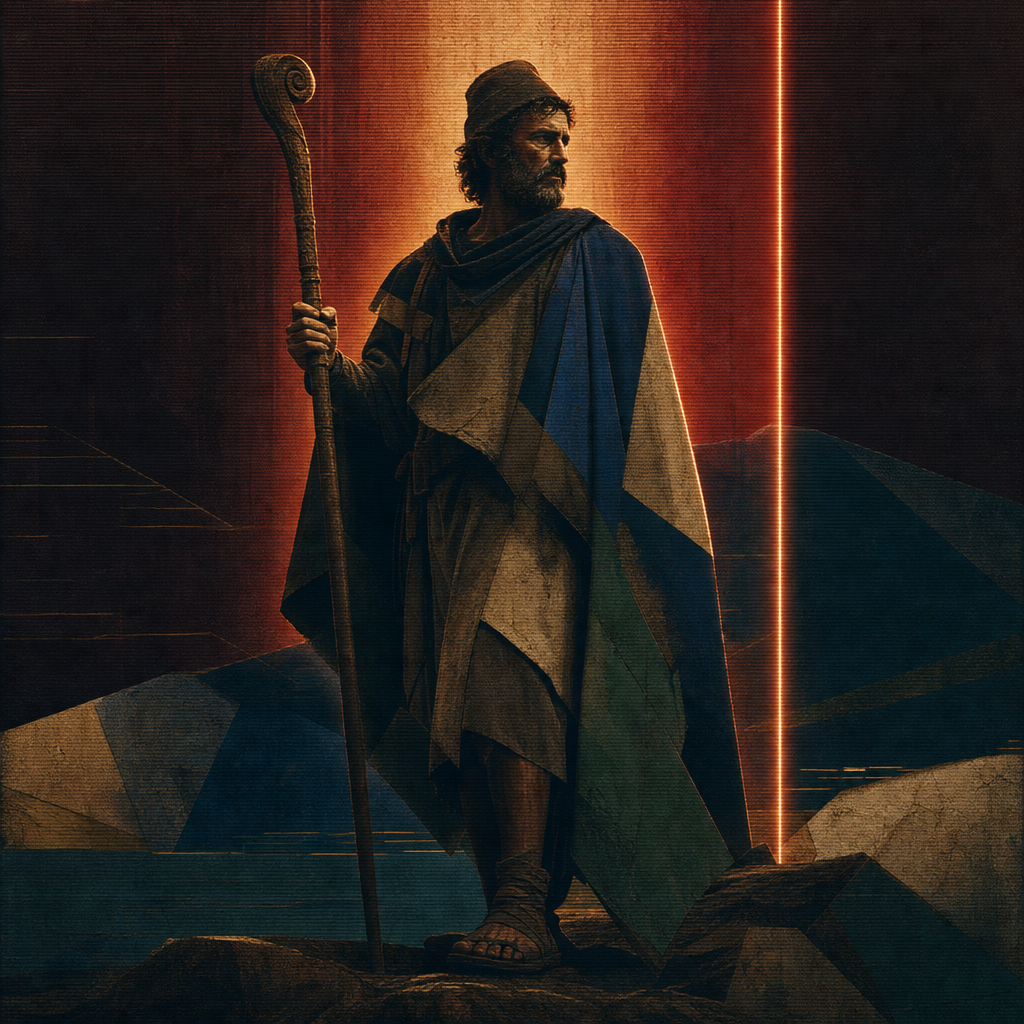
Odysseus, master of schemes, stripped off his rags and leaped onto the great threshold with his bow and quiver full of arrows. He spilled the swift arrows at his feet and addressed the suitors. “That decisive contest is finished. Now I’ll see if I can hit another target, one no man has struck before, and may Apollo give me glory.” He aimed a bitter arrow at Antinous. Antinous was about to raise a beautiful golden cup with two handles. Already he was turning it in his hands to drink the wine, with no thought of murder in his heart. Who would imagine that one man among so many at a feast, however strong he was, could bring him an evil death and black doom?
Read Ancient Greek Source (Odyssey.22.1–Odyssey.22.14)
Odysseus aimed and struck him in the throat. The point went straight through his soft neck. He toppled sideways; the cup fell from his hand as he was hit, and a thick jet of human blood came through his nostrils. He kicked the table away, scattering the food on the ground; bread and roast meat were befouled. The suitors roared through the house when they saw the man fall. In alarm they sprang from their chairs and looked everywhere along the well-built walls, but there was no shield or strong spear anywhere to take. They abused Odysseus angrily. “Stranger, this is a wicked way to shoot at men! You won’t take part in any more contests. Your own sheer destruction is certain now. You have killed the finest young man by far in Ithaca. The vultures will eat you here.” Each man said such things, for they thought he had killed the man unintentionally. Fools, they did not understand that the bonds of destruction had fastened on them all.
Read Ancient Greek Source (Odyssey.22.15–Odyssey.22.33)
Odysseus, master of schemes, looked at them darkly. “You dogs! You thought I would never come home again from the land of Troy. You wasted my house, forced the enslaved women to lie with you, and courted my wife while I was still alive. You feared neither the gods who hold the wide heaven nor any human vengeance that might come afterward. Now the bonds of destruction have fastened on you all.” Pale terror seized every man. Each looked around for a way to flee sheer destruction.
Read Ancient Greek Source (Odyssey.22.34–Odyssey.22.43)
Eurymachus alone answered him. “If you truly are Odysseus of Ithaca, returned, then you have spoken fairly of what the Achaeans have done, many reckless things in the house and many in the fields. But the man responsible for it all lies dead already: Antinous. He set these deeds in motion, not so much because he wanted or needed marriage, but with other thoughts in mind, which Cronus’ son did not fulfill: to rule over the land of well-built Ithaca himself, and ambush and kill your son. Now he has met his allotted death. Spare your people. Afterward we will make amends for all that has been eaten and drunk in your hall, collecting through the land. Each of us will bring the value of twenty cattle, and we will repay you in bronze and gold until your heart is warmed. Until then no one can blame you for your anger.”
Read Ancient Greek Source (Odyssey.22.44–Odyssey.22.59)
Odysseus, master of schemes, looked at him darkly. “Eurymachus, even if you gave me all your inherited property, everything you now possess, and added more from elsewhere, I would still not stop my hands from killing until the suitors had paid for all their transgressions. Now the choice lies before you: fight me face to face, or flee, whoever can escape death and doom. But I don’t think any of you will escape sheer destruction.” Their knees and hearts gave way. Eurymachus addressed them a second time. “Friends, this man will not restrain his invincible hands. Now he has the polished bow and quiver, he will shoot from the smooth threshold until he kills us all. Think of battle! Draw your swords and hold tables up against his death-dealing arrows. Let us all rush him together, see if we can drive him from the threshold and doors, get out through the town and raise the alarm at once. Then he would soon have shot his last.”
Read Ancient Greek Source (Odyssey.22.60–Odyssey.22.78)
He drew his sharp bronze sword, honed on both edges, and leaped at Odysseus with a terrible shout. At the same instant godlike Odysseus loosed an arrow and struck his chest beside the nipple, driving the swift shaft into his liver. His sword dropped from his hand to the ground. Doubled over, he pitched across a table, spilling the food and a two-handled cup onto the ground. In agony he beat the earth with his forehead and kicked the chair with both feet, shaking it. Darkness poured over his eyes. Amphinomus rushed straight at glorious Odysseus with his sharp sword drawn, hoping to make him yield the doors. But Telemachus struck first from behind with his bronze-shod spear, between the shoulders, driving it through his chest. He fell with a thud, striking the ground with his whole forehead. Telemachus sprang away, leaving his long-shadowed spear in Amphinomus. He feared that, as he drew it out, an Achaean might rush him with a sword, or strike him while he bent forward.
Read Ancient Greek Source (Odyssey.22.79–Odyssey.22.98)
He ran and quickly reached his dear father. Standing near, he spoke these flying words. “Father, I’ll bring you a shield, two spears and an all-bronze helmet fitted to your temples. I’ll arm myself as well, and bring other armor for the swineherd and cattle keeper. We’d do better armed.” Odysseus, master of schemes, answered him. “Run and bring them while I still have arrows to defend us, before they drive me from the doors, alone as I am.” Telemachus obeyed his dear father and went to the storeroom where their splendid weapons lay. He took out four shields, eight spears and four bronze-shod helmets thick with horsehair. Carrying them, he quickly reached his dear father. First he put the bronze armor on himself; the two slaves likewise put on their fine equipment and stood around wise Odysseus of the many schemes.
Read Ancient Greek Source (Odyssey.22.99–Odyssey.22.115)
As long as he had arrows to defend himself, Odysseus kept aiming and hitting one suitor after another in his own house, and they fell close together. When the arrows failed the shooting lord, he leaned the bow against a pillar of the well-built hall, beside the shining front wall. He slung a four-layered shield over his shoulders and set a well-made horsehair-crested helmet on his strong head; the plume nodded terribly above it. He took two strong spears tipped with bronze. There was a raised side door in the well-built wall, and by the far end of the threshold a way led into a passage, closed by closely fitted boards. Odysseus told the noble swineherd to stand near and guard it: there was only one way to attack there. Agelaus spoke out for all the others to hear. “Friends, couldn’t someone climb up to the side door and tell the people, so the alarm could be raised at once? Then this man would soon have shot his last.” Melanthius the goatherd answered him. “There’s no way, Agelaus, fostered by Zeus. The fine courtyard gates and the difficult mouth of the passage are terribly close. One man with courage could hold everyone back.
Read Ancient Greek Source (Odyssey.22.116–Odyssey.22.138)
“But come, I’ll bring you equipment from the storeroom so you can arm yourselves. I think Odysseus and his splendid son put the weapons there, nowhere else.” Melanthius went up through the narrow ways of the hall to Odysseus’ storerooms. He took out twelve shields, as many spears and as many bronze-shod helmets thick with horsehair. He quickly brought them and gave them to the suitors. Odysseus’ knees and heart gave way when he saw them putting on armor and brandishing long spears. The task looked enormous to him. At once he spoke to Telemachus. “Telemachus, some woman in the house, or Melanthius, is stirring up a cruel war against us.” Sensible Telemachus answered him. “Father, I alone made this mistake. No one else is to blame. I left the storeroom’s closely fitted door ajar, and their lookout was better than ours. Go, noble Eumaeus, shut the storeroom door and see whether some woman is doing this, or Dolius’ son Melanthius, as I suspect.”
Read Ancient Greek Source (Odyssey.22.139–Odyssey.22.159)
As they spoke together, Melanthius the goatherd went back to the storeroom to bring more fine equipment. The noble swineherd noticed him and at once spoke to Odysseus, who was close by. “Son of Zeus’ line, Laertes’ son, Odysseus of the many devices, there goes that destructive man again, the very one we suspected, making for the storeroom. Tell me truly: shall I kill him if I can overpower him, or bring him here for you to make him pay for all the many transgressions he has devised in your house?” Odysseus, master of schemes, answered him. “Telemachus and I will hold the proud suitors inside the hall, eager as they are. You two twist his feet and hands behind him, throw him into the storeroom and fasten the boards behind you. Attach a plaited rope to his body, draw him up the tall pillar and bring him close to the rafters, so he can stay alive a long time and suffer bitter pain.”
Read Ancient Greek Source (Odyssey.22.160–Odyssey.22.177)
They listened and obeyed. They went to the storeroom without his noticing them inside. He was searching for equipment in its depths; they stood waiting, one beside each doorpost. When Melanthius the goatherd stepped over the threshold, carrying a fine helmet in one hand and an old broad shield, fouled with mildew, in the other—the shield the hero Laertes had carried in his youth, long laid aside now, its straps’ stitching loose—they sprang at him, seized him and dragged him inside by the hair. They flung him onto the floor, sick at heart, twisted his hands and feet right back and bound them tightly with a painful cord, as Laertes’ son, steadfast, godlike Odysseus, had ordered. They attached a plaited rope to him, hauled him up the tall pillar and brought him close to the rafters. Then you mocked him, Eumaeus the swineherd: “Now, Melanthius, you’ll certainly keep watch all night, lying on a soft bed, as you deserve. Early-born Dawn, coming from Ocean’s streams on her golden throne, won’t catch you napping when it’s time to bring the suitors goats to prepare their feast in the house.” They left him there, stretched in a deadly bond. The two put on their armor, shut the shining door and went back to wise Odysseus of the many schemes.
Read Ancient Greek Source (Odyssey.22.178–Odyssey.22.202)
There they stood breathing fury, four men on the threshold, while inside the house were many brave opponents. Zeus’ daughter Athena came near, like Mentor in body and voice. Odysseus rejoiced at the sight of her and said, “Mentor, ward off disaster! Remember your dear companion, who used to do you good. You are my age.” So he spoke, suspecting she was Athena who rallies the people. On the other side the suitors shouted through the hall. Agelaus, Damastor’s son, was first to rebuke her. “Mentor, don’t let Odysseus talk you into fighting the suitors and helping him. This is how I think our purpose will be fulfilled: when we kill these two, father and son, you will be killed with them for what you intend to do in the hall. You’ll pay with your own head. Once we have taken your strength away with bronze, we will mix everything you own, inside and outside, with Odysseus’ possessions. We won’t let your sons or daughters live in the house, or your faithful wife go about the town of Ithaca.”
Read Ancient Greek Source (Odyssey.22.203–Odyssey.22.223)
Athena grew angrier still in her heart and rebuked Odysseus with angry words. “Odysseus, you no longer have the strength and courage you had when you fought the Trojans unceasingly for nine years for white-armed Helen, daughter of a noble father. You killed many men in dreadful fighting, and your plan took Priam’s city of broad streets. Why now, when you have reached your own house and possessions, do you lament rather than stand bravely against the suitors? Come here, friend. Stand beside me and watch my deeds, so you can see how Mentor, Alcimus’ son, repays kindness among enemy men.” Yet she did not grant them complete, one-sided victory. She was still testing the strength and courage of Odysseus and his glorious son. She sprang up to a roof beam of the smoke-darkened hall and perched there, like a swallow to look at.
Read Ancient Greek Source (Odyssey.22.224–Odyssey.22.240)
Agelaus, Damastor’s son, urged on the suitors, with Eurynomus, Amphimedon, Demoptolemus, Peisander son of Polyctor, and wise Polybus. These were by far the best in prowess of the suitors still alive and fighting for their lives. The bow and close-flying arrows had already brought the others down. Agelaus spoke for all to hear. “Friends, this man will soon hold back his invincible hands. Mentor has gone after speaking empty boasts, and they are left alone by the outer doors. Don’t all cast your long spears at once. You six throw first. Perhaps Zeus will grant that Odysseus is hit and we win glory. The others are no concern once he falls.” Eagerly they all threw as he commanded, but Athena made every cast useless. One struck a pillar of the well-built hall, another the closely fitted door; another’s bronze-weighted ash spear fell against the wall.
Read Ancient Greek Source (Odyssey.22.241–Odyssey.22.259)
When they had dodged the suitors’ spears, steadfast, godlike Odysseus began to speak. “Friends, now I would tell us too to cast into the crowd of suitors, who are eager to kill us and strip our armor, adding that to their earlier crimes.” They all aimed straight and cast their sharp spears. Odysseus struck Demoptolemus, Telemachus Euryades, the swineherd Elatus, and the cattle keeper killed Peisander. All four bit the vast earth at once. The suitors withdrew to the back of the hall, and the others rushed forward to pull their spears from the dead. Again the suitors eagerly threw their sharp spears. Athena made most of the casts useless: one struck a pillar of the well-built hall, another the closely fitted door; another’s bronze-weighted ash spear fell against the wall. But Amphimedon grazed Telemachus’ hand at the wrist, and the bronze damaged the skin’s surface. Ctesippus’ long spear scraped Eumaeus’ shoulder above his shield, flew on beyond and fell to the ground.
Read Ancient Greek Source (Odyssey.22.260–Odyssey.22.280)
Then the men around wise Odysseus of the many schemes cast their sharp spears into the crowd of suitors. Odysseus, sacker of cities, struck Eurydamas, Telemachus Amphimedon, and the swineherd Polybus. The cattle keeper struck Ctesippus in the chest and spoke over him in triumph. “Son of Polytherses, lover of mockery, never give way entirely to folly and speak so grandly. Leave speech to the gods; they are far stronger. Here is your guest-gift in return for the foot you once gave godlike Odysseus as he wandered through his house.” So spoke the keeper of the crumple-horned cattle. Odysseus struck Damastor’s son at close quarters with his long spear, and Telemachus struck Leocritus, Euenor’s son, in the middle of his flank, driving the bronze right through. He fell face down, striking the earth with his whole forehead.
Read Ancient Greek Source (Odyssey.22.281–Odyssey.22.296)
Then Athena raised the man-destroying aegis high from the roof, and their minds were terrified. They fled through the hall like cattle in a herd when the darting gadfly rushes upon them and drives them frantic in spring, as the days grow long. The others were like crooked-clawed, hook-beaked birds of prey that come from the mountains and swoop on smaller birds. The birds flee in clouds across the plain, cowering, but the predators leap upon them and kill. There is neither defense nor escape, and men rejoice at the catch. So they rushed at the suitors through the house and struck them on every side. Hideous groaning rose as heads were battered, and the whole floor seethed with blood.
Read Ancient Greek Source (Odyssey.22.297–Odyssey.22.309)
Leodes rushed up to Odysseus, clasped his knees and begged him with flying words. “I clasp your knees, Odysseus! Respect me and pity me. I tell you, I never spoke or did anything reckless to any woman in the hall. I even tried to stop the other suitors whenever one did such things. But they would not listen to me and keep their hands from evil. That is why their reckless acts have brought them a shameful fate. Yet I, their diviner, who have done nothing, will lie dead among them. There is no thanks afterward for doing good.” Odysseus, master of schemes, looked at him darkly. “If you claim to have been their diviner, you must often have prayed in the hall that the fulfillment of my sweet return would remain far away, and that my dear wife would follow you and bear you children. So you will not escape grievous death.” With his thick hand he took up a sword lying there, which Agelaus had dropped to the ground as he was killed, and struck Leodes through the middle of the neck. While he was still speaking, his head mingled with the dust.
Read Ancient Greek Source (Odyssey.22.310–Odyssey.22.329)
The singer Phemius, Terpius’ son, was still trying to escape black doom. He had sung among the suitors under compulsion. He stood near the raised side door, holding his clear-toned lyre, and considered two courses: should he slip out of the hall and sit at the altar built for great Zeus of the courtyard, where Laertes and Odysseus had burned many cattle thighbones, or rush to Odysseus and clasp his knees in supplication? As he thought, it seemed better to clasp the knees of Odysseus, Laertes’ son. He set the hollow lyre on the ground between the mixing bowl and the silver-studded chair, rushed to Odysseus himself and took his knees. “I clasp your knees, Odysseus! Respect me and pity me. You will suffer grief yourself hereafter if you kill a singer who sings for gods and men. I taught myself, and a god planted in my mind all kinds of paths of song. I could sing beside you as beside a god. Don’t be eager to cut my throat. Telemachus, your dear son, could tell you this too: I did not come willingly to your house, or with any desire to sing for the suitors at their feasts. They were far more numerous and stronger, and brought me by force.”
Read Ancient Greek Source (Odyssey.22.330–Odyssey.22.353)
Telemachus heard him and at once spoke to his father, who was nearby. “Stop! Don’t strike this innocent man with bronze. Let us save the herald Medon too, who always cared for me in our house when I was a child—unless Philoetius or the swineherd has killed him already, or he met you as you raged through the house.” Sensible Medon heard. He lay cowering beneath a chair, wrapped in a freshly flayed oxhide to escape black doom. At once he sprang from beneath the chair, quickly threw off the hide, rushed to Telemachus and clasped his knees. “Dear friend, here I am! Hold back and tell your father not to harm me with sharp bronze in his overwhelming strength, angry as he is with the suitors who wasted his possessions in the hall and, fools that they were, paid you no respect.” Odysseus, master of schemes, smiled at him. “Take courage. This young man has protected and saved you, so you may know in your heart and tell another how much better good deeds are than evil. But leave the hall, you and the much-famed singer, and sit outside in the courtyard, away from the slaughter, while I attend to what I must do in the house.”
Read Ancient Greek Source (Odyssey.22.354–Odyssey.22.377)
The two went out of the hall and sat beside the altar of great Zeus, looking all around them, still expecting murder at any moment. Odysseus searched his house to see whether any man was still alive, hiding and trying to escape black doom. He saw them all fallen, many men in blood and dust, like fish that fishermen have drawn from the gray sea in a many-meshed net onto a curving beach. They lie in heaps on the sand, longing for the sea’s waves, while the shining Sun takes their lives away. So the suitors lay piled on one another. Then Odysseus, master of schemes, addressed Telemachus. “Telemachus, call the nurse Eurycleia for me, so I can tell her what is in my mind.”
Read Ancient Greek Source (Odyssey.22.378–Odyssey.22.392)
Telemachus obeyed his dear father. He moved the door and called to the nurse Eurycleia. “Get up and come here, old woman, born long ago, who watches over the enslaved women in our hall. Come, my father is calling you to tell you something.” She took his words to heart, opened the doors of the well-appointed rooms and went, with Telemachus leading. She found Odysseus among the slain bodies, spattered with blood and gore like a lion that comes from feeding on a field-grazing ox: its whole chest and both cheeks run with blood, a terrible sight face to face. So Odysseus was spattered over his feet and hands. When she saw the bodies and the boundless blood, she began to raise a cry of triumph at the mighty deed she saw. But Odysseus restrained her and stopped her, eager though she was. “Rejoice in your heart, old woman. Restrain yourself and don’t cry out. It is not holy to exult over dead men. The gods’ fate and their own cruel deeds overcame these men. They honored no mortal who came to them, neither bad nor good. That is why their reckless acts brought them a shameful fate. But tell me of the women in the house, those who dishonor me and those who are innocent.”
Read Ancient Greek Source (Odyssey.22.393–Odyssey.22.418)
His dear nurse Eurycleia answered him. “Child, I will tell you the truth. You have fifty enslaved women in the hall, whom we taught to do their work, to comb wool and endure slavery. Twelve of them in all have taken the path of shamelessness, respecting neither me nor Penelope herself. Telemachus had only lately grown up, and his mother would not let him command the enslaved women. But let me go up to the bright upper rooms and tell your wife, on whom some god has cast sleep.” Odysseus, master of schemes, answered her. “Don’t wake her yet. Tell the women who devised shameful things before to come here.” The old woman went through the hall to tell them and urge them to come. Odysseus called Telemachus, the cattle keeper and the swineherd to him. “Begin carrying out the bodies, and order the women to help. Then clean the beautiful chairs and tables with water and porous sponges. When you have put the whole house in order, lead the enslaved women out of the well-built hall between the round building and the fine courtyard wall, and strike them with long-edged swords until you have taken all their lives away. Let them forget Aphrodite, whom they enjoyed with the suitors as they slept with them in secret.”
Read Ancient Greek Source (Odyssey.22.419–Odyssey.22.445)
The women all came together, wailing terribly and shedding thick tears. First they carried the dead bodies out and laid them beneath the portico of the well-enclosed courtyard, propping them against one another. Odysseus himself directed them and hurried them on. They carried the bodies out under compulsion. Then they cleaned the beautiful chairs and tables with water and porous sponges. Telemachus, the cattle keeper and the swineherd scraped the floor of the strongly built house with shovels, and the enslaved women carried the scrapings outside. When they had put the whole hall in order, the men led the women out of the well-built hall between the round building and the fine courtyard wall, and penned them in a narrow place from which there was no escape.
Read Ancient Greek Source (Odyssey.22.446–Odyssey.22.460)
Sensible Telemachus began to speak. “I will not take the lives of these women with a clean death, when they have poured disgrace over my head and my mother’s, and slept beside the suitors.” He fastened a cable from a dark-prowed ship to a tall pillar and stretched it around the round building, high enough that none could touch the ground with her feet. As long-winged thrushes or doves fly into a net set in a thicket, seeking a roost but finding a hateful bed, so the women held their heads in a row, nooses around all their necks, so they would die most pitiably. Their feet struggled a little while, not very long. Then they led Melanthius out through the entrance and courtyard. They cut off his nose and ears with merciless bronze, tore out his genitals for the dogs to eat raw, and hacked off his hands and feet in their anger. When they had washed their own hands and feet, they went into the house to Odysseus. The work was finished.
Read Ancient Greek Source (Odyssey.22.461–Odyssey.22.479)
Odysseus spoke to his dear nurse Eurycleia. “Bring sulfur, old woman, a remedy for evils, and bring me fire, so I can cleanse the hall with sulfur. Tell Penelope to come here with her women attendants, and urge all the enslaved women to come through the house.” His dear nurse Eurycleia answered him. “Yes, my child, everything you say is right. But let me bring you clothes, a cloak and tunic. Don’t stand in the hall with your broad shoulders covered in rags like this. It would bring reproach.” Odysseus, master of schemes, answered her. “First let me have a fire in the hall.” His dear nurse Eurycleia obeyed. She brought fire and sulfur, and Odysseus thoroughly cleansed the hall, the house and the courtyard with sulfur.
Read Ancient Greek Source (Odyssey.22.480–Odyssey.22.494)
The old woman went back through Odysseus’ fine house to tell the women and urge them to come. They came from their rooms carrying torches. They poured around Odysseus, welcoming him, lovingly kissing his head and shoulders and taking his hands. Sweet longing seized him to weep and groan, and in his heart he knew them all.