Book 17: Telemachus Returns to the Palace; Argos Recognizes Odysseus
Ὀδύσσεια · Book 17 · Classix Modern English Reading Edition
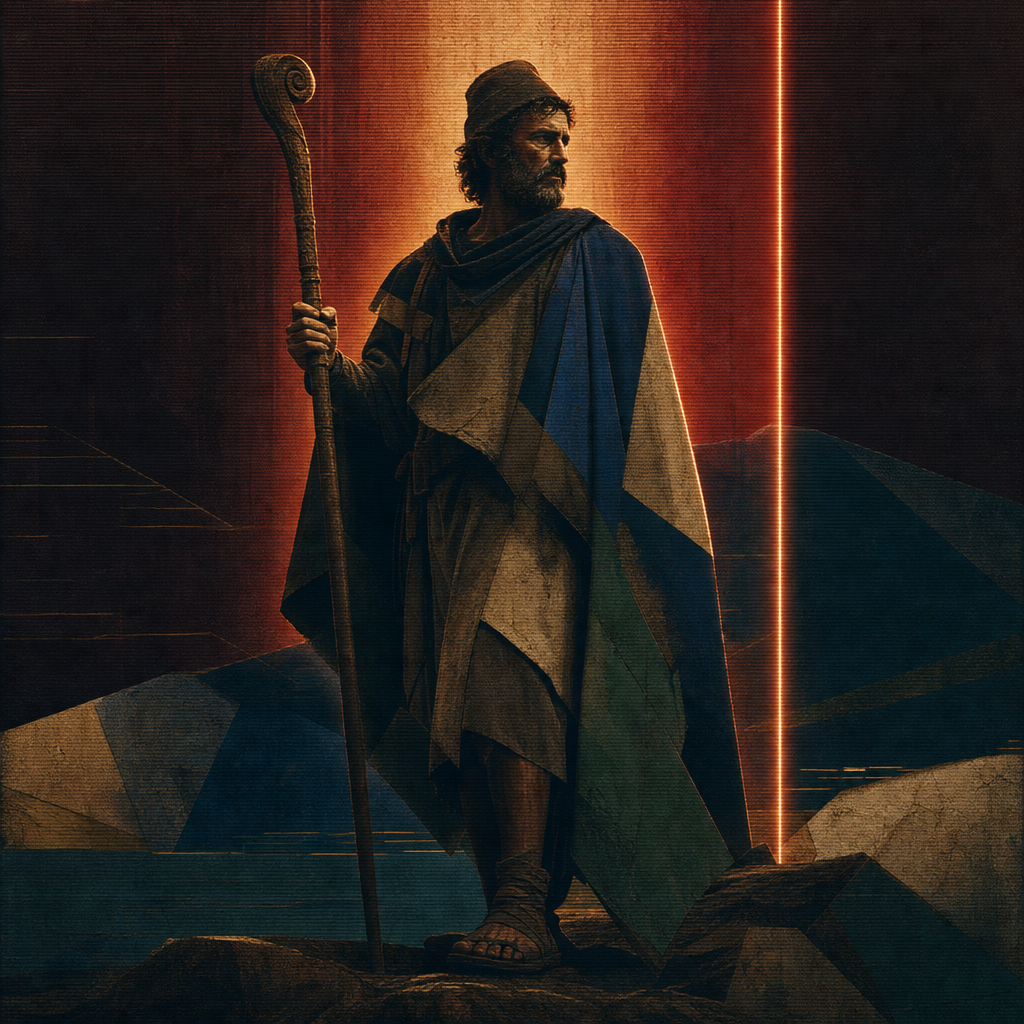
When early-born, rosy-fingered Dawn appeared, Telemachus, dear son of godlike Odysseus, tied his fine sandals under his feet and took the sturdy spear that fitted his grasp. Eager to go to town, he said to his swineherd: “Father, I am going to the city so my mother can see me. I do not think she will stop her bitter weeping and tearful lament until she sees me herself. Here are your orders: take the unfortunate stranger to town so he can beg for his meal there. Whoever wishes will give him bread and a cup of drink. I cannot support every human being when I have sorrows in my own heart. If the stranger is very angry, it will be worse for him. I prefer to tell the truth.”
Read Ancient Greek Source (Odyssey.17.1–Odyssey.17.15)
Resourceful Odysseus answered: “Friend, I have no wish to be held here myself. It is better for a beggar to beg his dinner in town than in the fields. Whoever wishes will give to me. I am too old now to stay on a farm and obey every order a foreman gives. Go on. This man you command will lead me, once I have warmed myself at the fire and the day grows warm. These clothes I wear are miserably bad. The morning frost might overcome me, and you say the town is far away.” Telemachus strode swiftly through the farm, planting trouble for the suitors. When he reached his well-settled house, he carried his spear to a tall pillar and stood it there. Then he went inside and crossed the stone threshold. His nurse Eurycleia saw him first of all as she spread fleeces over the decorated seats. Weeping, she came straight toward him. The other enslaved women of enduring Odysseus gathered around and warmly kissed his head and shoulders.
Read Ancient Greek Source (Odyssey.17.16–Odyssey.17.35)
Thoughtful Penelope came from her room, like Artemis or golden Aphrodite. Weeping, she threw her arms around her dear son and kissed his head and both his beautiful eyes. She spoke these winged words in sorrow: “You have come, Telemachus, sweet light of my life! I thought I would never see you again after you secretly sailed for Pylos against my will, seeking news of your dear father. Tell me what you learned.” Sensible Telemachus answered: “Mother, do not stir up weeping or trouble the heart in my breast when I have escaped sheer destruction. Wash, put clean clothes against your skin, and go upstairs with your women attendants. Vow to offer all the gods complete sacrifices of a hundred victims if Zeus ever brings the deeds of vengeance to pass. I will go to the assembly place to summon a stranger who came back here with me. I sent him ahead with my godlike companions and told Peiraeus to take him home and welcome and honor him kindly until I came.” His words did not fly past her. She washed, put on clean clothes, and vowed to offer all the gods complete sacrifices of a hundred victims if Zeus ever brought the deeds of vengeance to pass.
Read Ancient Greek Source (Odyssey.17.36–Odyssey.17.60)
Telemachus went through the hall with his spear, and two swift dogs followed him. Athena poured a marvelous grace over him, and all the people admired him as he approached. The proud suitors gathered around him, saying kind things while building evil deep in their hearts. He avoided their crowd and went to sit where Mentor, Antiphus, and Halitherses sat, old companions of his father. They asked about everything. Peiraeus, famed for his spear, came near, bringing the stranger through the city to the assembly place. Telemachus did not stay apart from the stranger for long, but came beside him. Peiraeus spoke first: “Telemachus, send women quickly to my house so I can send you the gifts Menelaus gave you.” Sensible Telemachus answered: “Peiraeus, we do not know how this business will turn out. If the proud suitors secretly kill me in the hall and divide all my father’s property, I would rather you kept and enjoyed the gifts than any of them. But if I plant death and doom for them, then bring the gifts gladly to my house, and I will gladly receive them.”
Read Ancient Greek Source (Odyssey.17.61–Odyssey.17.83)
He led the much-tried stranger home. When they reached the well-settled house, they laid their cloaks on chairs and seats and stepped into polished tubs to wash. The enslaved women bathed them, anointed them with oil, and put thick cloaks and tunics around them. Then they came out of the tubs and sat on chairs. An attendant brought water in a lovely golden pitcher and poured it over a silver basin for them to wash their hands, then drew a polished table beside them. The respected housekeeper brought bread and set out many foods, giving freely from the stores. His mother sat opposite beside a pillar of the hall, leaning back in her chair and spinning fine yarn. They reached for the good food set before them. When they had satisfied their desire for food and drink, thoughtful Penelope spoke first: “Telemachus, I will go upstairs and lie on my bed, which has become a place of groaning, always wet with my tears since Odysseus went to Ilium with the sons of Atreus. Yet you have not brought yourself to tell me plainly, before the proud suitors come into this house, what you heard of your father’s return.”
Read Ancient Greek Source (Odyssey.17.84–Odyssey.17.106)
Sensible Telemachus answered: “Mother, I will tell you the truth. We went to Pylos and Nestor, shepherd of the people. He welcomed me in his high house and treated me warmly, as a father treats a son newly home after a long time abroad. He and his glorious sons cared for me kindly. But he said he had heard nothing from anyone on earth about enduring Odysseus, alive or dead. He sent me on with horses and a jointed chariot to Menelaus, son of Atreus, famed for his spear. There I saw Helen of Argos, for whose sake Argives and Trojans suffered much by the will of the gods. Menelaus, good at the battle cry, immediately asked what need had brought me to holy Lacedaemon. I told him the whole truth. Then he answered me:
Read Ancient Greek Source (Odyssey.17.107–Odyssey.17.123)
“‘Ah, so those weaklings want to lie in a strong-hearted man’s bed! As a deer lays her newborn, milk-fed fawns in a mighty lion’s thicket, then ranges over the slopes and grassy valleys to graze, and the lion comes back to his den and brings a shameful fate upon them both—so Odysseus will bring a shameful fate upon those men. If only, father Zeus, Athena, and Apollo, he would meet the suitors as he was on well-built Lesbos, when he stood up to wrestle Philomeleides in a challenge and threw him mightily, while all the Achaeans rejoiced! If Odysseus met the suitors like that, they would all meet a quick death and a bitter wedding.
Read Ancient Greek Source (Odyssey.17.124–Odyssey.17.137)
“‘As for what you ask and beg me to tell, I will not speak evasively, turn aside, or deceive you. I will hide or withhold no word of what the truthful Old Man of the Sea told me. He said he saw Odysseus on an island, suffering terribly in the halls of the nymph Calypso, who holds him there by force. He cannot reach his own country: he has no oared ships or companions to carry him over the sea’s broad back.’ That was what Menelaus, son of Atreus, famed for his spear, said. When I had finished my business, I set off home. The immortals gave me a following wind and quickly brought me to my own country.” His words stirred the heart in her breast.
Read Ancient Greek Source (Odyssey.17.138–Odyssey.17.150)
Godlike Theoclymenus spoke too: “Honored wife of Odysseus, son of Laertes, he does not know for certain. Listen to me. I will prophesy truly and hide nothing. Let Zeus, first of the gods, be my witness, and this table of hospitality and the hearth of excellent Odysseus to which I have come: Odysseus is already in his own country, sitting or moving about, learning of these evil deeds. He is here, planting trouble for all the suitors. Such was the omen I observed while sitting aboard the well-benched ship, and I told Telemachus.” Thoughtful Penelope answered: “Stranger, if only your words would come true! You would soon know such kindness and so many gifts from me that anyone who met you would call you fortunate.”
Read Ancient Greek Source (Odyssey.17.151–Odyssey.17.165)
While they talked, the suitors enjoyed throwing discuses and javelins before Odysseus’s hall, on the leveled ground where they used to display their insolence. When it was time for the meal and the animals came in from every side of the fields, brought by their usual herdsmen, Medon addressed them. Of all the heralds, he pleased them most and attended their feasts. “Young men, now that you have all enjoyed the contests, go to the house so we can prepare the feast. It is no bad thing to eat at the proper time.” They rose and obeyed. When they reached the well-settled house, they laid their cloaks on chairs and seats. They sacrificed great sheep and fat goats, fattened hogs and a cow from the herd, preparing the feast. Meanwhile Odysseus and the noble swineherd were getting ready to leave the farm for town.
Read Ancient Greek Source (Odyssey.17.166–Odyssey.17.183)
The swineherd, leader of men, spoke first: “Stranger, since you mean to go to town today, as my young master ordered—though I would rather leave you here to guard the farm, I respect and fear him, lest he rebuke me afterward; a master’s scolding is hard to bear—come, let us go. Most of the day has passed, and toward evening it will soon be colder for you.” Resourceful Odysseus answered: “I understand; I take your meaning. You are giving orders to someone who can think. Let us go, and lead me all the way. If you have a cut staff anywhere, give it to me to lean on, since you say the road is very slippery.” He put his wretched bag around his shoulders, torn in many places, with a twisted cord for its strap. Eumaeus gave him a staff to his liking. The two set out, leaving the dogs and herdsmen behind to guard the farm. He led his master toward the city. Odysseus looked like a wretched old beggar, leaning on a staff, with miserable clothes against his skin.
Read Ancient Greek Source (Odyssey.17.184–Odyssey.17.203)
They followed the rocky road. Near the city they came to the built fountain with its lovely flow, where the townspeople drew water. Ithacus, Neritus, and Polyctor had made it. A circular grove of water-nourished poplars surrounded it on every side, and cold water flowed down from a high rock. Above it stood an altar of the nymphs where every traveler made offerings. There Melanthius, son of Dolius, met them, bringing the finest goats from all the herds for the suitors’ dinner. Two herdsmen followed him. At the sight he reviled them outrageously and shamefully, stirring Odysseus’s heart: “Now one worthless man is truly leading another! A god always brings like to like. Where are you taking this glutton, you miserable swineherd, this tiresome beggar who spoils men’s feasts?
Read Ancient Greek Source (Odyssey.17.204–Odyssey.17.220)
“He will stand at many doorposts rubbing his shoulders, begging for scraps, not swords or cauldrons. If you gave him to me to guard the farm, sweep the pens, and carry leafy branches for the kids, he could grow strong thighs drinking whey. But he has learned bad habits and will not go to work. He would rather skulk around the people and beg to feed his insatiable belly. I will tell you plainly, and it will happen: if he comes to godlike Odysseus’s house, many a stool flung from men’s hands will graze his head and sides as they pelt him through the hall.” As he passed, in his folly he sprang out and kicked Odysseus on the hip. He did not knock him off the path; he stood firm. Odysseus considered whether to leap after him and take his life with the staff, or lift him bodily and smash his head on the ground. But he endured and held himself back.
Read Ancient Greek Source (Odyssey.17.221–Odyssey.17.238)
The swineherd looked Melanthius in the face and rebuked him, then raised his hands and prayed aloud: “Nymphs of the springs, daughters of Zeus, if Odysseus ever burned for you the thigh bones of lambs or kids, wrapped in rich fat, fulfill this wish for me. Let that man return; let a divine power lead him!” Then he turned his words against the goatherd: “He would scatter all that finery you now parade in your insolence, always wandering through town while bad herdsmen ruin the flocks!” Melanthius the goatherd answered: “Ah, listen to that dog, full of destructive thoughts! One day I will take him far from Ithaca in a well-benched black ship so he can fetch me a good livelihood. If only Apollo of the silver bow would strike Telemachus in the hall today, or the suitors overcome him, as surely as Odysseus has lost his day of return far away!”
Read Ancient Greek Source (Odyssey.17.239–Odyssey.17.253)
He left the two moving slowly on their way, went ahead himself, and quickly reached his master’s house. He went straight inside and sat among the suitors opposite Eurymachus, whom he liked best. The men at work set a share of meat beside him, and the respected housekeeper brought bread for him to eat. Odysseus and the noble swineherd stopped nearby as they approached. The sound of the hollow lyre came around them: Phemius was striking up his song for the suitors. Odysseus took the swineherd’s hand and said: “Eumaeus, these are surely the fine halls of Odysseus! They are easy to recognize, even among many houses. One building follows another; the yard is finished with a wall and coping, and its double doors are well defended. No man could easily overbear it. I know many men are feasting inside: the smell of fat rises, and the lyre sounds, which the gods made the companion of a feast.”
Read Ancient Greek Source (Odyssey.17.254–Odyssey.17.271)
You answered him, Eumaeus the swineherd: “You recognized it easily, as you are not without sense in other things either. Come, let us consider what to do. Either go first into the well-settled house and enter the crowd of suitors while I wait here, or stay if you wish, and I will go ahead. But do not delay, or someone who notices you outside may throw something at you or strike you. Think about that, I tell you.” Long-suffering noble Odysseus answered: “I understand; I take your meaning. You are giving orders to someone who can think. Go ahead, and I will stay here. I am no stranger to blows or things thrown at me. My spirit endures: I have suffered much in waves and war. Let this be added to those things. But there is no hiding the eager belly, accursed thing that gives men so many troubles. For its sake well-benched ships are fitted out on the barren sea, bringing harm to enemies.”
Read Ancient Greek Source (Odyssey.17.272–Odyssey.17.289)
While they talked, a dog lying there raised his head and ears: Argos, the dog of enduring Odysseus. Odysseus had raised him but never had the use of him before he left for holy Ilium. In the old days young men used to take him hunting wild goats, deer, and hares. Now he lay neglected while his master was away, in the great heap of mule and cattle manure piled before the doors until Odysseus’s enslaved men could carry it off to fertilize his great estate. There Argos lay, full of ticks. When he noticed Odysseus close by, he wagged his tail and lowered both ears, but could no longer come nearer to his master. Odysseus looked away and wiped off a tear, easily hiding it from Eumaeus. At once he asked: “Eumaeus, it is a wonder that this dog lies in the manure. He has a fine body, but I cannot tell whether his speed once matched his looks, or whether he is merely one of those dogs men keep at their tables, cared for by masters for show.”
Read Ancient Greek Source (Odyssey.17.290–Odyssey.17.310)
You answered him, Eumaeus the swineherd: “Yes, he is the dog of a man who died far away. If he were now in body and deeds what he was when Odysseus left him for Troy, you would soon marvel at his speed and courage. No creature he pursued escaped him in the depths of the thick woods, for he was superb at tracking. Now misery holds him. His master perished far from home, and the careless women do not look after him. When masters no longer rule, slaves no longer wish to do their proper work. Far-seeing Zeus takes half a man’s worth away when the day of slavery seizes him.” He went inside the well-settled house and straight into the hall among the noble suitors. But the fate of black death took Argos, just after he had seen Odysseus in the twentieth year.
Read Ancient Greek Source (Odyssey.17.311–Odyssey.17.327)
Godlike Telemachus was first to see the swineherd coming through the house. He quickly nodded and called him over. Looking about, the swineherd took a stool that lay there, where the carver used to sit while distributing great quantities of meat among the suitors feasting in the hall. He carried it to Telemachus’s table, set it opposite, and sat. A herald took a share of meat and bread from the basket and set it before him. Close behind, Odysseus entered the house, looking like a wretched old beggar, leaning on a staff, with miserable clothes against his skin. He sat on the ash-wood threshold inside the doors and leaned against a cypress doorpost a craftsman had skillfully smoothed and straightened to the line. Telemachus called the swineherd over, took a whole loaf from the fine basket and as much meat as his hands could hold, and said: “Take these to the stranger. Tell him to go round all the suitors and beg from every one. A man in need is not helped by shame.”
Read Ancient Greek Source (Odyssey.17.328–Odyssey.17.347)
The swineherd heard and went. Standing near, he spoke these winged words: “Stranger, Telemachus gives you these things and tells you to go round all the suitors and beg from every one. He says shame is no help to a beggar.” Resourceful Odysseus answered: “Lord Zeus, may Telemachus be fortunate among men, and may everything he wishes in his heart come to pass!” He took the food in both hands and laid it on his wretched bag before his feet. He ate while the singer sang in the hall. When he finished dining, the inspired singer stopped, and the suitors raised a clamor through the hall. Athena came close to Odysseus, son of Laertes, and urged him to gather bread from the suitors, so he could learn which were just and which lawless. Even so, she was not going to save any of them from disaster.
Read Ancient Greek Source (Odyssey.17.348–Odyssey.17.364)
He went to beg from each man in turn, moving to the right, stretching his hand out everywhere as if he had long been a beggar. They pitied him and gave, marveling at him and asking one another who he was and where he came from. Melanthius the goatherd said: “Suitors of our far-famed queen, listen to me about this stranger. I have seen him before. The swineherd led him here. I do not know for certain who he is or where he claims to come from.” Antinous rebuked the swineherd: “You know-it-all swineherd, why did you bring this man to town? Have we not enough other vagabonds, tiresome beggars who spoil men’s feasts? Do you begrudge us gathering here and eating up your master’s livelihood, so you have invited this man too?” You answered him, Eumaeus the swineherd: “Antinous, noble though you are, your words are not fine. Who goes out of his way to invite a stranger from elsewhere, unless he is one of those who work for the public—a seer, a healer of illness, a carpenter, or an inspired singer to delight us with song? Those men are invited all over the boundless earth. No one would invite a beggar to wear him out. But of all the suitors you are always the harshest to Odysseus’s enslaved people, and most of all to me. I do not care, as long as sensible Penelope and godlike Telemachus live in the hall.”
Read Ancient Greek Source (Odyssey.17.365–Odyssey.17.391)
Sensible Telemachus said: “Quiet. Do not answer him at length for my sake. Antinous is always used to provoking us cruelly with harsh words, and urges the others on.” Then he spoke winged words to Antinous: “Antinous, how well you care for me, like a father for his son! You order us to drive this stranger from the hall with a command that leaves him no choice. May a god never bring that about. Take something and give it to him. I do not begrudge it; I am telling you to do it. Do not hold back out of respect for my mother or any of the slaves in godlike Odysseus’s house. But that is not the thought in your heart. You would far rather eat yourself than give to another.” Antinous answered: “Telemachus, loud talker, uncontrolled in spirit, what a thing to say! If all the suitors offered him as much as I will, this house would keep him far away for three months.” He picked up and displayed the footstool that lay beneath his table, where he rested his shining feet as he feasted.
Read Ancient Greek Source (Odyssey.17.392–Odyssey.17.410)
All the others gave and filled his bag with bread and meat. Odysseus was about to return to the threshold and taste the Achaeans’ freely given bounty. But he stood beside Antinous and said: “Give, friend. You do not look to me like the worst of the Achaeans, but the best: you look like a king. You ought to give more bread than the others, and I will spread your fame over the boundless earth. I too once lived among men as a fortunate man in a rich house. I often gave to a wanderer, whatever sort he was and whatever need had brought him. I had countless slaves and many other things that let a man live well and be called rich. But Zeus, son of Cronus, stripped me of it—he must have wished it—and sent me with far-wandering raiders on the long road to Egypt, to perish.
Read Ancient Greek Source (Odyssey.17.411–Odyssey.17.426)
“I moored my curved ships in the river of Egypt. There I ordered my trusty companions to stay beside the ships and guard them, and sent scouts to the lookout points. But yielding to violence and following their own impulses, the men quickly ravaged the Egyptians’ beautiful fields, carried off their wives and little children, and killed the men themselves. The outcry soon reached the city. Hearing the alarm, the people came at dawn. The whole plain filled with foot soldiers, horses, and the flash of bronze. Zeus who delights in thunder threw my companions into a disastrous panic. Not one dared stand and face the enemy: danger surrounded us on every side. They killed many of us with sharp bronze and led the rest away alive to work for them by force. But me they gave to a guest-friend they met, Dmetor, son of Iasus, who ruled Cyprus mightily. From there I have now come here, suffering trouble.”
Read Ancient Greek Source (Odyssey.17.427–Odyssey.17.444)
Antinous answered: “What divine power has brought this plague here, this nuisance at the feast? Stand out there in the middle, away from my table, or you may soon find Egypt and Cyprus bitter places! What a bold, shameless beggar you are. You stand beside everyone in turn, and they give thoughtlessly. They have no restraint or pity about giving away someone else’s goods, when each has plenty beside him.” Resourceful Odysseus drew back and said: “Ah, your mind does not match your looks after all! You would not give even salt from your own house to a man at your door. Now you sit among another man’s goods and cannot bring yourself to take a piece of bread and give it to me, though there is plenty here.”
Read Ancient Greek Source (Odyssey.17.445–Odyssey.17.457)
Antinous grew angrier still in his heart. He glared and spoke winged words: “Now I do not think you will make a fine retreat out of the hall, since you are even throwing insults!” He took the footstool and struck him on the right shoulder, at the top of the back. Odysseus stood firm as a rock. Antinous’s missile did not shake him. He silently shook his head, building evil deep in his heart. He went back to the threshold and sat down, set down his well-filled bag, and addressed the suitors: “Suitors of our far-famed queen, listen to me while I say what the heart in my breast urges. A man feels no grief or sorrow in his heart when he is struck fighting for his possessions, his cattle or white-fleeced sheep. But Antinous has struck me for the sake of my wretched belly, accursed thing that gives men so many troubles. If beggars too have gods and avenging Furies, may death overtake Antinous before his wedding!”
Read Ancient Greek Source (Odyssey.17.458–Odyssey.17.476)
Antinous, son of Eupeithes, answered: “Sit and eat in peace, stranger, or go somewhere else. For talking like this, the young men may drag you through the house by foot or hand and scrape your skin all over.” They were all deeply indignant. One of the overbearing young men would say: “Antinous, it was wrong to strike the unhappy wanderer! Accursed man, what if he is a god from heaven? The gods take the form of strangers from abroad, assume every kind of shape, and go about cities, observing men’s violence and their good order.” So the suitors spoke, but he paid no heed. Telemachus nursed a great grief in his heart at the blow, but did not let a tear fall from his eyes. He silently shook his head, building evil deep in his heart.
Read Ancient Greek Source (Odyssey.17.477–Odyssey.17.491)
When thoughtful Penelope heard that the stranger had been struck in the hall, she said among her enslaved women: “If only Apollo of the famous bow would strike you yourself like that!” Eurynome the housekeeper answered: “If our prayers were fulfilled, not one of them would reach Dawn of the lovely throne.” Thoughtful Penelope said: “Nurse, they are all hateful to me, since they plan evil. But Antinous is most like black death. Some unfortunate stranger wanders through the hall begging from the men, driven by need. All the others gave and filled his bag, but this man struck him at the back of the right shoulder with a footstool.” She spoke among the enslaved women as she sat in her room, while noble Odysseus ate. She called the noble swineherd over and said: “Go, noble Eumaeus. Tell the stranger to come, so I can welcome him and ask whether he has heard of enduring Odysseus or seen him with his own eyes. He looks like a man who has wandered far.”
Read Ancient Greek Source (Odyssey.17.492–Odyssey.17.511)
You answered her, Eumaeus the swineherd: “My queen, if only the Achaeans would be quiet! The things he tells would enchant your heart. I had him with me for three nights and kept him three days in my hut. He came to me first after escaping from a ship, and still he did not finish telling his sorrows. As a man watches a singer who has learned from the gods to sing lovely words to mortals, and people long without end to hear him whenever he sings—so he enchanted me as he sat in my house. He says he is an inherited guest-friend of Odysseus, living in Crete where Minos’s line is. From there, suffering trouble, he has now come here, driven from place to place. He claims to have heard that Odysseus is alive nearby in the rich land of the Thesprotians, bringing many treasures to this house.”
Read Ancient Greek Source (Odyssey.17.512–Odyssey.17.527)
Thoughtful Penelope said: “Go and call him here, so he can tell me face to face. Let these men amuse themselves outside the doors or here in the hall, since their hearts are so cheerful! Their own possessions lie untouched at home, bread and sweet wine for their household people to consume, while they come to our house every day, sacrifice cattle, sheep, and fat goats, feast, and drink gleaming wine to no purpose. Much is being used up. There is no man like Odysseus to ward destruction from the house. If Odysseus returned and reached his native land, he would soon take revenge for these men’s violence with his son.” As she spoke, Telemachus sneezed loudly, and a terrible sound rang through the house. Penelope laughed and at once spoke winged words to Eumaeus: “Go and call the stranger here before me. Do you not see that my son sneezed at everything I said? Then death for all the suitors would not go unfulfilled. None would escape death and doom. I will tell you something else; take it to heart. If I find that he tells the truth in everything, I will give him a fine cloak and tunic to wear.”
Read Ancient Greek Source (Odyssey.17.528–Odyssey.17.550)
The swineherd heard and went. Standing beside Odysseus, he spoke these winged words: “Old friend, thoughtful Penelope, Telemachus’s mother, calls you. Her heart urges her, despite all her sorrows, to ask about her husband. If she finds you telling the truth in everything, she will give you a cloak and tunic, the things you most need. As for food, you can feed your belly by begging among the people. Whoever wishes will give to you.” Long-suffering noble Odysseus answered: “Eumaeus, I could quickly tell the whole truth to Icarius’s daughter, thoughtful Penelope. I know about him well, and we have endured the same misery. But I fear the crowd of harsh suitors, whose outrage and violence reach the iron sky. Just now, when that man struck me as I went through the hall, though I had done no harm, and gave me over to pain, neither Telemachus nor anyone else helped me. Tell Penelope to wait in the hall until sunset, eager though she is. Then let her ask me about her husband’s day of return, after seating me closer beside the fire. My clothes are miserable. You know that yourself, since you were the first man I appealed to.”
Read Ancient Greek Source (Odyssey.17.551–Odyssey.17.573)
The swineherd heard and went. As he crossed her threshold, Penelope said: “You are not bringing him, Eumaeus. What is the wanderer thinking? Is he afraid of someone’s brutality, or just ashamed to come through the house? A shamefaced beggar does badly.” You answered her, Eumaeus the swineherd: “He speaks sensibly, as anyone else would think too, avoiding the violence of overbearing men. He asks you to wait until sunset. It is much better for you yourself, my queen, to speak to the stranger and hear him alone.” Thoughtful Penelope said: “The stranger is no fool. He sees things as they are. Surely no mortal men behave with such outrage and devise such reckless acts as these.”
Read Ancient Greek Source (Odyssey.17.574–Odyssey.17.588)
When the noble swineherd had made everything clear, he went back to the crowd of suitors. At once he spoke winged words to Telemachus, holding his head close so the others would not hear: “Friend, I am going away to guard the pigs and the things out there, your livelihood and mine. See to everything here yourself. Above all, keep yourself safe and consider how not to come to harm. Many Achaeans mean you evil. May Zeus destroy them before they become a trouble to us.” Sensible Telemachus answered: “It will be so, father. Go after your meal. Come at dawn and bring fine victims for sacrifice. I and the immortals will see to everything here.” He sat again on a polished stool, satisfied his desire for food and drink, then left the enclosure and hall, full of diners, and went back to his pigs. The others delighted in dancing and song, for late afternoon had already come.