Book 5: Hermes Visits Calypso; Odysseus Builds His Raft
Ὀδύσσεια · Book 5 · Classix Modern English Reading Edition
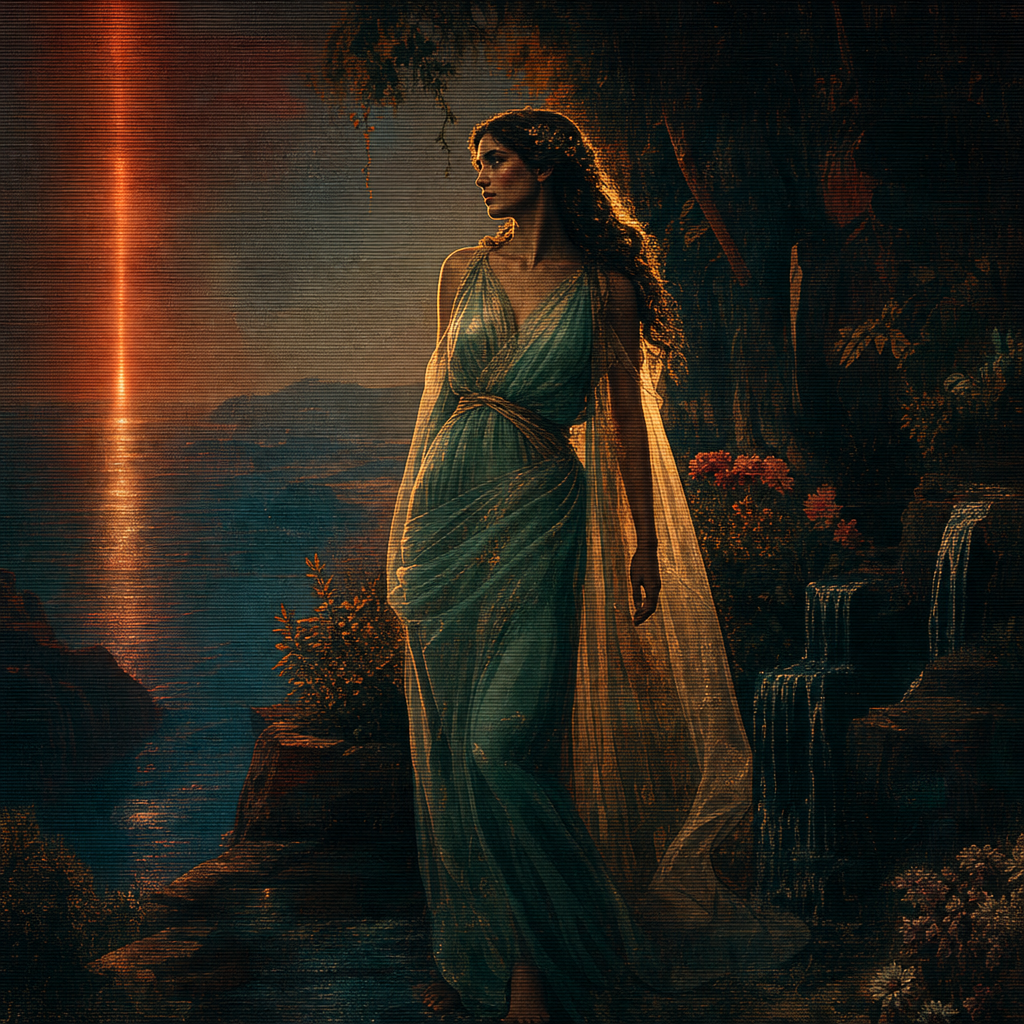
Dawn rose from her bed beside noble Tithonus to bring light to immortals and to mortals alike. The gods took their seats in assembly, and among them sat high-thundering Zeus, whose power is greatest. To them Athena spoke of the many griefs of Odysseus, calling him to mind, for it weighed on her that he was in the nymph's halls:
Read Ancient Greek Source (Odyssey.5.1–Odyssey.5.6)
“Father Zeus, and you other blessed gods who live forever, let no king who bears the scepter ever be kind and gentle again, or keep justice in his heart. Let him be harsh and do lawless deeds, since no one among the people Odysseus ruled remembers him, though he was gentle as a father. Now he lies on an island suffering bitter pain in the halls of the nymph Calypso, who holds him back by force, and he cannot reach his native land; for he has no oared ships at hand and no companions to carry him over the broad back of the sea. And now they are eager to kill his beloved son on his way home, after he went for news of his father to sacred Pylos and splendid Lacedaemon.”
Read Ancient Greek Source (Odyssey.5.7–Odyssey.5.20)
Cloud-gathering Zeus answered her: “My child, what a word has slipped past the barrier of your teeth! Did you not plan this design yourself, that Odysseus should return and pay those men back? As for Telemachus, guide him skillfully yourself—you have the power—so that he reaches his native land completely unharmed, while the suitors sail back again in their ship, empty-handed.”
Read Ancient Greek Source (Odyssey.5.21–Odyssey.5.27)
So he spoke, and he turned to Hermes, his dear son: “Hermes, you are our messenger in other matters too. Tell the nymph with lovely braids our unfailing decree about steadfast Odysseus’ homecoming. He is to return without an escort of gods or mortal men. On a tightly lashed raft, suffering hardships, he is to reach fertile Scheria on the twentieth day, the land of the Phaeacians, who are close kin to the gods. They will honor him with all their hearts, as though he were a god, and send him home in a ship. They will give him bronze, gold and clothes in abundance, more than he would ever have brought from Troy even if he had returned unharmed with his share of the plunder. It is his fate to see his loved ones and reach his high-roofed house and his native land.”
Read Ancient Greek Source (Odyssey.5.28–Odyssey.5.42)
So he spoke, and the guide, the slayer of Argus, did not disobey. At once he bound beneath his feet his lovely sandals, immortal, golden, which carried him over the water and over the boundless earth with the blasts of the wind. He took up the wand with which he charms the eyes of men whom he wishes, and wakes others again from sleep. Holding this in his hands, the strong slayer of Argus flew. Stepping onto Pieria, he plunged from the upper air into the sea, and then skimmed over the waves like a gull, which down the terrible hollows of the barren sea hunts for fish and drenches its thick plumage in the brine. Just like that bird, Hermes rode over the thronging waves.
Read Ancient Greek Source (Odyssey.5.43–Odyssey.5.54)
But when at last he reached that distant island, he stepped out of the violet-dark sea onto the land and walked on until he came to the great cave where the nymph with lovely braids lived, and he found her within. A great fire burned on the hearth. Far across the island drifted the scent of well-split cedar and aromatic wood as they burned. Inside, Calypso sang in a lovely voice as she moved at her loom, weaving with a golden shuttle.
Read Ancient Greek Source (Odyssey.5.55–Odyssey.5.62)
Around the cave a flourishing wood had grown up—alder and black poplar and fragrant cypress. There long-winged birds roosted at night: horned owls and falcons and long-tongued crows of the sea, whose work lies upon the waters. Right around the hollow cave stretched a thriving garden vine, heavy with clusters of grapes. Four springs in a row flowed with bright water, close to one another at their source, then turning each its own way. All around, soft meadows of violet and wild celery were in bloom. Even an immortal god who came there would gaze in wonder at the sight and delight in his heart. Standing there, the guide, the slayer of Argus, gazed in wonder.
Read Ancient Greek Source (Odyssey.5.63–Odyssey.5.75)
Then, when he had marveled at it all in his heart, he went straight into the wide cave; and seeing him face to face, Calypso, shining among goddesses, knew at once who he was, for the immortal gods are never strangers to one another, not even if one of them makes a home far away. Yet he did not find great-hearted Odysseus inside; he was sitting out on the headland, weeping as always, tearing his spirit with tears and groans and grief, staring out over the barren sea while his tears fell.
Read Ancient Greek Source (Odyssey.5.76–Odyssey.5.84)
Calypso, shining among goddesses, questioned Hermes after seating him on a bright, gleaming chair: “Why have you come, Hermes of the golden wand? You are honored and welcome here, but you seldom visit. Tell me what you have in mind. My heart urges me to do it, if I can and if it may be done. But come further in, so I can offer you food and drink.”
Read Ancient Greek Source (Odyssey.5.85–Odyssey.5.91)
So speaking, the goddess set a table beside him, filled it with ambrosia, and mixed red nectar. Then the guide, the slayer of Argus, ate and drank. And when he had dined and refreshed his spirit with food, he answered her in these words:
Read Ancient Greek Source (Odyssey.5.92–Odyssey.5.96)
“You ask why I have come, goddess to god, and I will tell you the truth, since you ask. Zeus ordered me here against my will. Who would willingly cross this vast, endless stretch of salt water? There is not even a city of mortals nearby to offer sacrifices and choice hecatombs to the gods. But no other god can evade or frustrate the will of Zeus who bears the aegis.
Read Ancient Greek Source (Odyssey.5.97–Odyssey.5.104)
“He says there is a man with you here, the most wretched of all those warriors who fought around the city of Priam for nine years, and in the tenth sacked the city and set out for home; but on the voyage back they offended Athena, and she raised an evil wind and long waves against them. Then all the rest of his noble companions perished, while the wind and waves bore him here and drove him ashore. Now he commands you to send this man away as quickly as you can, for it is not his fate to perish here, far from his loved ones. No, it is still his destiny to see his loved ones and return to his high-roofed house and his native land.”
Read Ancient Greek Source (Odyssey.5.105–Odyssey.5.115)
So he spoke, and Calypso, shining among goddesses, shuddered, and she raised her voice and spoke winged words to him: “You are ruthless, you gods, jealous above all others, who begrudge goddesses sleeping beside mortal men openly, if ever one takes a dear husband for her own. So it was when rose-fingered Dawn took Orion: you gods who live at ease begrudged her all the while, until in Ortygia chaste Artemis on her golden throne came upon him and killed him with her gentle arrows.
Read Ancient Greek Source (Odyssey.5.116–Odyssey.5.124)
“And when Demeter of the lovely braids followed her heart and lay in love with Iasion in a field plowed three times, Zeus soon heard of it. He struck him with a blazing thunderbolt and killed him. And so now again, you gods, you begrudge me having a mortal man beside me. I saved him myself as he straddled the keel of his ship, all alone, after a blazing thunderbolt hit his swift ship when Zeus struck and split it in the middle of the wine-dark sea. There all the rest of his noble companions perished, while the wind and waves bore him along and brought him here. I welcomed him with love and nourished him, and I said I would make him immortal and ageless for all days to come.
Read Ancient Greek Source (Odyssey.5.125–Odyssey.5.136)
“But since the purpose of Zeus who bears the aegis can never be evaded by any other god, nor brought to nothing, let him be gone, if that god urges and commands him, out over the barren sea. Yet I cannot give him passage myself, for I have no oared ships at hand, and no crewmen to carry him across the broad back of the sea. Still, I will gladly advise him, and hide nothing, so that he may reach his native land completely unharmed.”
Read Ancient Greek Source (Odyssey.5.137–Odyssey.5.144)
Then the guide, slayer of Argus, answered her: “Send him off like that now, and beware the wrath of Zeus, or in time to come his anger may turn harsh against you.” With those words the mighty slayer of Argus departed. And the revered nymph set out toward great-hearted Odysseus, going on her way once she had heard the message of Zeus.
Read Ancient Greek Source (Odyssey.5.145–Odyssey.5.150)
She found him sitting on the headland. His eyes were never dry of tears, and his sweet life ebbed away as he mourned for home. The nymph no longer pleased him. At night he had to lie in the hollow caves beside her, unwilling beside the willing goddess. By day he sat on the rocks and beaches, racking his heart with tears and groans and grief, gazing out over the barren sea as his tears fell.
Read Ancient Greek Source (Odyssey.5.151–Odyssey.5.158)
Standing near him, the shining goddess spoke: “Unhappy man, stop weeping here. Do not let your life waste away. Now I will gladly send you off. Cut long timbers with bronze and join them into a broad raft. Fasten a deck high upon it to carry you over the misty sea. I will stow plenty of bread, water and red wine aboard to keep hunger from you, give you clothes and send a fair wind behind you, so you can reach your native land unharmed—if the gods who hold wide heaven are willing. They are stronger than I in planning and fulfilling their plans.”
Read Ancient Greek Source (Odyssey.5.159–Odyssey.5.170)
So she spoke, and much-enduring noble Odysseus shuddered, and he raised his voice and spoke winged words to her: “Goddess, you are planning something other than my passage when you tell me to cross the great gulf of the sea on a raft. It is a fearful, difficult crossing, even for well-balanced, fast-sailing ships rejoicing in a fair wind from Zeus. I would not board a raft against your will, and I will not board unless you can bring yourself to swear a solemn oath that you are planning no further harm against me.”
Read Ancient Greek Source (Odyssey.5.171–Odyssey.5.179)
So he spoke, and Calypso, shining among goddesses, smiled, stroked him with her hand, and spoke and called him by name: “You really are a rascal, and no fool in your thoughts, to have thought of speaking such words as these! Now let Earth be my witness, and wide Heaven above, and the cascading water of the Styx, which is the greatest and most dreadful oath among the blessed gods, that I am not plotting any other evil harm against you. No, I am thinking and planning only what I would devise for my own self, if such a need ever came upon me. For my mind too is fair and just, and inside my chest my heart is not made of iron, but full of pity.”
Read Ancient Greek Source (Odyssey.5.180–Odyssey.5.191)
With those words the shining goddess led the way swiftly, and he walked behind in the footsteps of the goddess. They came to the hollow cave, the goddess and the man. Odysseus sat in the chair Hermes had left, and the nymph set before him all kinds of food and drink such as mortals eat. She sat opposite him, and enslaved women set ambrosia and nectar beside her. They reached for the good food ready before them.
Read Ancient Greek Source (Odyssey.5.192–Odyssey.5.200)
When they had taken their fill of food and drink, Calypso, shining among goddesses, was the first to speak: “Son of Laertes, descended from Zeus, resourceful Odysseus, do you really want to go home to your native land at once? Even so, I wish you well. But if you knew how much suffering fate still has in store for you before you reach home, you would stay here with me, keeping this house, and be immortal, despite your longing to see the wife you yearn for every day. I claim to be no less than she in body or stature. Mortal women cannot rival immortals in form and beauty.”
Read Ancient Greek Source (Odyssey.5.201–Odyssey.5.213)
Then Odysseus of many counsels answered her: “Lady goddess, do not be angry with me. I know very well that thoughtful Penelope is less than you in beauty and stature when one looks at you both. She is mortal; you are immortal and ageless. Even so, every day I long and yearn to go home and see the day of my return. If a god wrecks me again on the wine-dark sea, I will endure it with the grief-enduring heart in my chest. I have suffered and struggled so much already, in the waves and in war. Let this be added to the rest.”
Read Ancient Greek Source (Odyssey.5.214–Odyssey.5.224)
So he spoke, and the sun went down and dusk came on. Then the two of them went into the deep recess of the hollow cave and took their pleasure in love, staying beside each other.
Read Ancient Greek Source (Odyssey.5.225–Odyssey.5.227)
When early-born, rosy-fingered Dawn appeared, Odysseus at once put on a cloak and tunic, while the nymph herself dressed in a long, silver-shining robe, fine-woven and graceful; around her waist she fastened a belt of beautiful gold, and set a veil over her head. Then she prepared to send great-hearted Odysseus on his way. She gave him a heavy axe well balanced for his hands, made of bronze and sharpened on both edges; and set inside it was a handsome olive-wood handle, fitted tight. Next she gave him a polished adze, and led the way to the far edge of the island, where tall trees grew—alder and black poplar, and fir reaching to the sky, long dry and well seasoned, timber that would float lightly for him.
Read Ancient Greek Source (Odyssey.5.228–Odyssey.5.240)
Once she had shown him where the tall trees grew, Calypso, bright among goddesses, went back to her home, and he set to cutting timber, his work moving quickly. He felled twenty trees in all, hewed them with bronze, planed them skillfully and trued them to the line. Meanwhile Calypso, bright among goddesses, brought augers. He bored all the timbers and fitted them together, fastening the raft with pegs and joints. Odysseus made his broad raft as wide as a skilled shipwright would mark out the bottom of a broad cargo ship. He built a deck, fitting it to close-set uprights, and finished it with long side pieces.
Read Ancient Greek Source (Odyssey.5.241–Odyssey.5.253)
In it he made a mast, with a yardarm fitted to it, and added a steering oar as well, to guide his course. He fenced it from end to end with woven willow hurdles as a bulwark against the waves, and heaped in plenty of brushwood. Meanwhile Calypso, bright among goddesses, brought cloth to make into sails, and he crafted those skillfully too. He rigged the braces, halyards, and sheets aboard her, and with levers worked her down into the bright sea.
Read Ancient Greek Source (Odyssey.5.254–Odyssey.5.261)
It was the fourth day, and all his work was done. On the fifth, bright Calypso sent him off from the island, after she had bathed him and dressed him in fragrant clothes. The goddess stowed a skin of dark wine aboard, another large skin of water, and provisions in a sack, with plenty of satisfying food to go with them. She sent a gentle, warm, harmless wind behind him.
Read Ancient Greek Source (Odyssey.5.262–Odyssey.5.268)
Glad of the wind, noble Odysseus spread his sail. He sat steering skillfully, and sleep never fell on his eyelids as he watched the Pleiades, late-setting Bootes, and the Bear, also called the Wagon. The Bear wheels in place, watching Orion, and alone has no share in the baths of Ocean. Calypso, bright among goddesses, had told him to sail with the Bear on his left. For seventeen days he crossed the open sea. On the eighteenth the shadowy mountains of the Phaeacians’ land came into view at the point nearest him. It looked like a shield on the misty sea.
Read Ancient Greek Source (Odyssey.5.269–Odyssey.5.281)
Returning from the Ethiopians, lord Poseidon the Earth-Shaker saw Odysseus from far off, from the mountains of the Solymi, sailing over the sea. The sight made the god still angrier. He shook his head and spoke to his own spirit: “So the gods have changed their plans for Odysseus while I was among the Ethiopians! He is already close to the Phaeacians’ land, where he is fated to escape the great bond of misery that holds him. Even so, I will give him his fill of trouble yet.”
Read Ancient Greek Source (Odyssey.5.282–Odyssey.5.290)
With that he gathered the clouds and churned the sea, gripping the trident in his hands. He roused every blast of all the winds, and shrouded in clouds earth and sea alike; night rushed down from the sky. Together the East Wind and the South Wind clashed, and the hard-blowing West Wind, and the North Wind born in the clear upper air, rolling up a huge wave.
Read Ancient Greek Source (Odyssey.5.291–Odyssey.5.296)
Then Odysseus's knees and heart went slack, and with a groan he spoke to his own great-hearted spirit: “Misery is mine—what will become of me in the end? I fear the goddess spoke nothing but the truth when she said that out on the sea, before I ever reached my native land, I would fill up my measure of sorrow; and now all of it is coming true. Look at the clouds with which he crowns the wide sky—Zeus has churned up the sea, and the squalls drive hard from every quarter of the winds. Now my sheer destruction is certain. Three and four times blessed are the Danaans who perished then in wide Troy, doing service for the sons of Atreus! Would that I too had died and met my fate on that day when so many bronze-tipped spears were hurled at me by the Trojans over the dead son of Peleus! Then I would have received my funeral rites, and the Achaeans would have spread my fame; but now I am fated to be caught by a miserable death.”
Read Ancient Greek Source (Odyssey.5.297–Odyssey.5.312)
Even as he spoke, a huge wave struck him from above, crashing down in fury, and spun the raft around. He himself was thrown far from the raft, and let the steering oar fly from his hands; the mast snapped in two under a fierce squall of clashing winds that struck it, and sail and yardarm plunged far out into the sea. The wave held him underwater a long time, and he could not rise quickly from under the rush of the great surge, weighed down by the clothes bright Calypso had given him. At last he surfaced and spat from his mouth the brine, bitter and streaming in torrents from his head.
Read Ancient Greek Source (Odyssey.5.313–Odyssey.5.323)
Battered as he was, he did not forget his raft. He lunged after it through the waves, caught hold and sat in the middle, trying to escape death. The great waves carried it along the current this way and that. As when the autumn North Wind drives thistles across a plain, and they cling tangled in a tight mass, so the winds drove the raft across the open sea this way and that: now the South Wind tossed it to the North Wind to sweep along, and now the East Wind yielded it to the West Wind to chase.
Read Ancient Greek Source (Odyssey.5.324–Odyssey.5.332)
But Cadmus's daughter saw him—graceful-ankled Ino, Leucothea, who once had been a mortal speaking with human voice, though now in the salt depths of the sea she shares in the honor of the gods. She pitied Odysseus as he drifted in torment; rising from the surge on the wing like a shearwater, she perched on his tightly lashed raft and spoke to him:
Read Ancient Greek Source (Odyssey.5.333–Odyssey.5.338)
“Unhappy man, why is Poseidon the Earth-Shaker so fiercely angry with you, planting so much misery in your path? For all his fury, he will not destroy you. Do this—you seem to have your wits about you. Strip off those clothes and leave the raft for the winds to carry. Swim with your arms toward safety on the Phaeacians’ coast, where you are fated to escape. Here, stretch this immortal veil beneath your chest. You need not fear harm or death. When your hands touch land, untie it and throw it far out from shore into the wine-dark sea, then turn your face away.”
Read Ancient Greek Source (Odyssey.5.339–Odyssey.5.350)
With those words the goddess gave him the veil, and she herself plunged back into the heaving sea like a shearwater, and the dark wave closed over her.
Read Ancient Greek Source (Odyssey.5.351–Odyssey.5.353)
Then long-enduring, godlike Odysseus weighed the matter, and with a heavy groan he spoke to his own great heart: “Ah, misery—I fear some one of the immortals is weaving another trap for me in telling me to abandon the raft. No, I will not obey just yet, for with my own eyes I saw how far off the land lies where she said I would find refuge. Instead I will do this, which seems to me the best course: so long as the timbers hold fast in their joints, I will stay right here and endure whatever pain I must; but once a wave shatters my raft to pieces, I will swim, since no better plan offers itself.”
Read Ancient Greek Source (Odyssey.5.354–Odyssey.5.364)
While he was turning these things over in his mind and heart, Poseidon the Earth-Shaker drove a massive wave against him, terrible and crushing, arching high overhead, and it struck him full force. As a fierce gust scatters a heap of dry chaff in every direction, so the wave scattered the long timbers. Odysseus straddled one beam like a man riding a racehorse and stripped off the clothes bright Calypso had given him. He stretched the veil beneath his chest, plunged headfirst into the sea and spread his arms to swim. The lord Earth-Shaker watched, shook his head and spoke to his own heart:
Read Ancient Greek Source (Odyssey.5.365–Odyssey.5.376)
“So then—after all you have suffered, go drifting across the sea until you come among people cherished by Zeus. Even so, I do not think you will complain that your misery was too light.” With that he lashed his fine-maned horses and came to Aegae, where his glorious palace stands.
Read Ancient Greek Source (Odyssey.5.377–Odyssey.5.381)
Athena, daughter of Zeus, had another plan. She barred the paths of all the other winds, ordering them to stop and rest. She roused the swift North Wind and broke the waves before Zeus-born Odysseus until he could reach the oar-loving Phaeacians, escaping death and doom.
Read Ancient Greek Source (Odyssey.5.382–Odyssey.5.387)
For two nights and two days he drifted on the heavy swell, his heart foreseeing death again and again. When Dawn with her lovely braids brought the third day, the wind stopped and a breathless calm settled over the sea. Lifted on a great wave, he peered ahead and saw land close by. As welcome as a father’s life seems to his children when he has lain long wasting in sickness, suffering terrible pain under a hateful spirit’s assault, and the gods at last release him from his misery—so welcome to Odysseus were the land and woods. He swam hard, longing to set his feet on shore.
Read Ancient Greek Source (Odyssey.5.388–Odyssey.5.399)
But when he was as close to shore as a man's shout carries, he heard the thunder of the sea against the reefs: for the great surf roared against the dry rock of the coast, belching terribly, and everything was veiled in salt spray. There were no harbors to hold ships, no sheltered coves, only jutting headlands, jagged reefs, and crags.
Read Ancient Greek Source (Odyssey.5.400–Odyssey.5.405)
Then Odysseus's knees and his dear heart went slack, and with a heavy groan he spoke to his own great heart: “Ah, misery—even after Zeus has let me see land beyond all hope, and I have cut my way across this gulf to the other side, nowhere can I see a way out of the gray sea. Offshore stand sharp crags, and around them the surging wave roars; behind them a sheer cliff rises smooth and steep, and the water is deep right up to the rock, so there is no way to plant both feet on the bottom and escape destruction. If I try to come ashore, a great wave may snatch me up and hurl me against the jagged stone, making my effort useless. But if I swim still further along the coast to see if I can find shelving beaches and harbors of the sea, I fear a storm gust may snatch me up all over again and carry me out over the fish-filled sea, groaning heavily, or a god may even set some great sea-monster upon me out of the salt depths, such as glorious Amphitrite breeds in great numbers; for I know how fiercely the glorious Earthshaker is enraged against me.”
Read Ancient Greek Source (Odyssey.5.406–Odyssey.5.423)
While he was turning these things over in his mind and heart, a great wave bore him onto the rugged shore. There his skin would have been torn away and his bones crushed together, had the goddess, bright-eyed Athena, not put a thought in his mind: lunging forward, he seized the rock with both hands, and clung to it groaning until the great wave passed by. So he escaped that wave, but surging back again it rushed upon him, struck him, and flung him far out to sea. Just as when an octopus is dragged from its lair and pebbles cling thick to its suckers, so against the rocks, from his bold hands, the skin was torn away, and the great wave covered him over.
Read Ancient Greek Source (Odyssey.5.424–Odyssey.5.435)
Then wretched Odysseus would have perished beyond his fate, had bright-eyed Athena not given him presence of mind. Rising out of the waves that spew against the shore, he swam along outside the surf, looking toward the land to see if he could find shelving beaches and harbors of the sea.
Read Ancient Greek Source (Odyssey.5.436–Odyssey.5.440)
Swimming on, he reached the mouth of a river with a lovely flow. This seemed the best place, free of rocks and sheltered from the wind. He felt the current running out and prayed in his heart: “Hear me, lord, whoever you are. I come to you with earnest prayers, fleeing from the sea and Poseidon’s threats. Even the immortal gods respect a man who comes to them as a wanderer. So I come to your stream and your knees after much suffering. Pity me, lord. I declare myself your suppliant.”
Read Ancient Greek Source (Odyssey.5.441–Odyssey.5.450)
At once the river stopped his current, held back the wave, made a calm before Odysseus and brought him safely into the river’s mouth. Odysseus’ knees buckled and his strong hands gave way: the sea had broken his strength. His whole body was swollen, and seawater gushed from his mouth and nostrils. Breathless and speechless, he lay almost powerless, overcome by terrible exhaustion.
Read Ancient Greek Source (Odyssey.5.451–Odyssey.5.457)
When he caught his breath and his spirit rallied, he untied the goddess’ veil and let it go into the briny river. A great wave carried it back down the current, and Ino at once received it in her hands. Odysseus moved away from the river, sank down among the rushes and kissed the grain-giving earth.
Read Ancient Greek Source (Odyssey.5.458–Odyssey.5.463)
Deeply troubled, he spoke to his own great heart: “Alas for me, what will become of me? What will happen to me at last? If I stay awake here by the river through the wretched night, I fear that the bitter frost and the fresh dew together may overcome my gasping spirit in my weakness; and a cold breeze blows from a river before dawn. But if I climb up the slope to the deeply shaded woods and lie down to sleep in the thick brush, if I should be relieved of the chill and exhaustion, and sweet sleep should come over me, I fear I may become prey and spoil for wild beasts.”
Read Ancient Greek Source (Odyssey.5.464–Odyssey.5.473)
As he considered this, it seemed to him the better course: he set out for the woods, and found them near the water in an open clearing; and he crept beneath two bushes growing from the same spot, one a wild olive, the other a cultivated olive. No force of damp-blowing wind could penetrate them, nor the shining sun’s rays, nor rain: so thickly had their branches grown intertwined. Odysseus crawled beneath them and at once heaped up a broad bed with his hands. There was a great drift of leaves, enough to shelter two or three men through even the harshest winter weather.
Read Ancient Greek Source (Odyssey.5.474–Odyssey.5.485)
Seeing it, much-enduring noble Odysseus rejoiced, and he lay down in the middle and heaped the drift of leaves over himself. As a man with no neighbors, living on a distant farm, buries a brand in black ashes, saving a seed of fire so he need not seek a light elsewhere, so Odysseus covered himself with leaves. Athena poured sleep over his eyes to cover his eyelids and quickly release him from his painful exhaustion.