Book 5: The Aristeia of Diomedes
Ἰλιάς · Book 5 · Classix Modern English Reading Edition
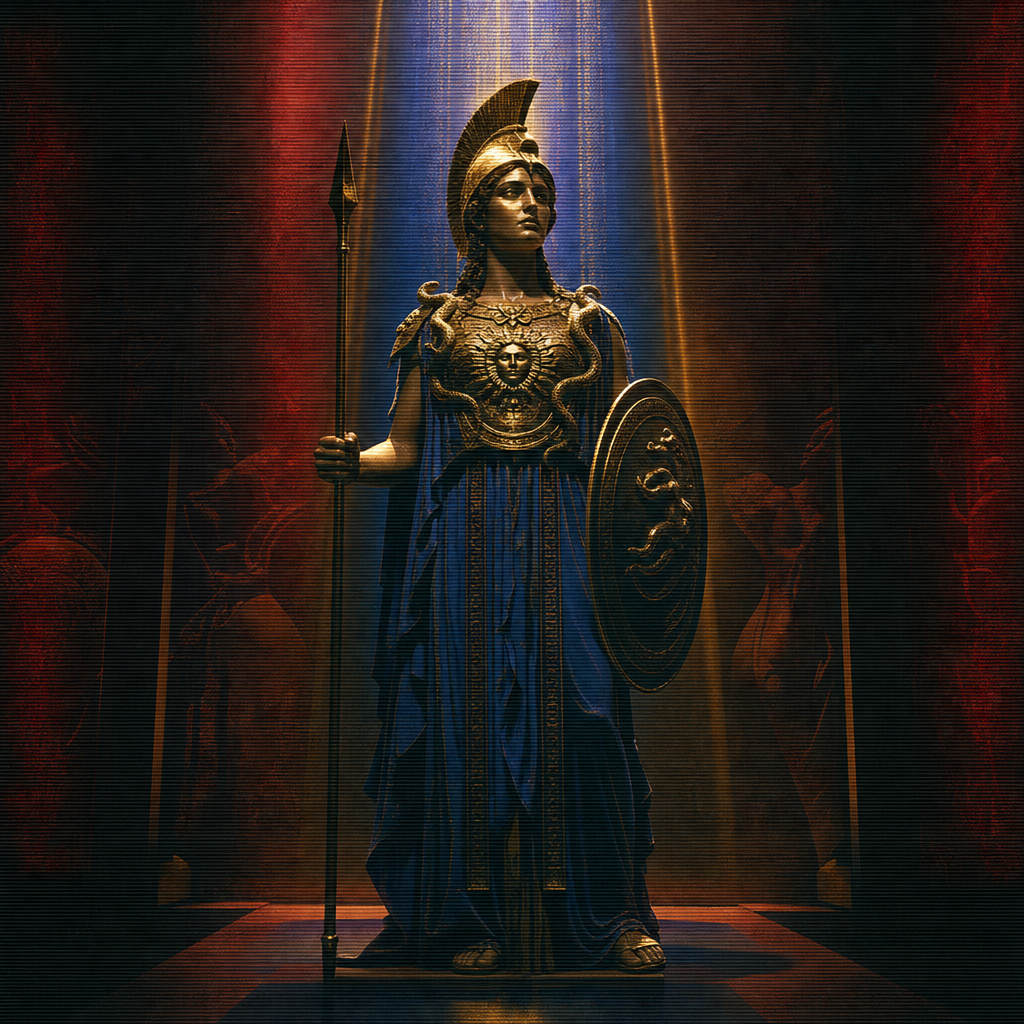
Then Pallas Athena gave Tydeus' son Diomedes fierce strength and daring, so that he would stand out among all the Argives and win noble glory. From his helmet and shield she kindled tireless fire, like the star of late summer that shines brightest of all when it rises freshly bathed from Oceanus. Such was the fire she kindled from his head and shoulders, and she drove him into the middle where the thickest crowds were churning.
Read Ancient Greek Source (Iliad.5.1–Iliad.5.8)
Among the Trojans there was a man named Dares, rich and blameless, a priest of Hephaestus; and he had two sons, Phegeus and Idaeus, both well skilled in every kind of fighting. Breaking away from their ranks, the two charged straight at Diomedes—they from their horse-drawn chariot, while he attacked from the ground on foot. When they had closed the distance, advancing on one another, Phegeus was first to hurl his long-shadowed spear. The point of the spear passed over the left shoulder of Tydeus' son and did not hit him. Next Tydeus' son attacked with the bronze, and the weapon did not fly in vain from his hand, but struck Phegeus' chest between the nipples and hurled him from the chariot. Idaeus leaped down, abandoning the beautiful chariot, and did not dare stand over his slain brother to defend him; indeed, he would not have escaped black death himself, had not Hephaestus guarded him and saved him by wrapping him in darkness, so that the old man, his priest, would not be left utterly overwhelmed with grief. Then the son of great-hearted Tydeus drove off the horses and gave them to his companions to lead down to the hollow ships.
Read Ancient Greek Source (Iliad.5.9–Iliad.5.26)
When the great-hearted Trojans saw the two sons of Dares—one fleeing in retreat, the other killed beside his chariot—every man's spirit was shaken. Then bright-eyed Athena took furious Ares by the hand and spoke to him: "Ares, Ares, bane of mortals, blood-stained stormer of walls, should we not leave the Trojans and Achaeans to fight it out, whichever side Father Zeus grants glory, while the two of us draw back and avoid Zeus's wrath?" With those words she led furious Ares out of the battle and seated him along the high banks of the Scamander.
Read Ancient Greek Source (Iliad.5.27–Iliad.5.36)
Then the Danaans turned the Trojans back, and each of the commanders killed his man. First of all, Agamemnon, lord of men, hurled great Odius, leader of the Halizones, from his chariot: for as Odius was the first to wheel in flight, Agamemnon planted a spear in his back between the shoulders and drove it straight through his chest. He fell with a thud, and his armor clattered upon him. Next Idomeneus killed Phaestus, the son of Maeonian Borus, who had come from Tarne's rich soil. Spear-famed Idomeneus stabbed him in the right shoulder with his long lance just as he was mounting his chariot; he toppled from the car, and hateful darkness seized him. Idomeneus' attendants stripped the armor from his body.
Read Ancient Greek Source (Iliad.5.37–Iliad.5.48)
Atreus' son Menelaus with his sharp spear killed Strophius' son Scamandrius, skilled in the chase—a fine huntsman, for Artemis herself had taught him to shoot every wild creature that the mountain forest feeds. Yet Artemis who showers arrows was no help to him then, nor were the far-shooting skills in which he had excelled before; instead, Atreus' son, spear-famed Menelaus, struck him in the back with a spear as he fled before him, right between the shoulders, and drove it through his chest. He fell face-down, and his armor clattered upon him.
Read Ancient Greek Source (Iliad.5.49–Iliad.5.58)
Meriones killed Phereclus, son of the master builder Harmonides, who knew how to fashion all kinds of intricate work with his hands (for Pallas Athena loved him above others) and who had also built for Alexander the balanced ships that began the misery, bringing ruin to all the Trojans and to himself, since he knew nothing of the decrees of the gods. When Meriones chased him down and overtook him, he struck him in the right buttock, and the spear-point drove clean through under the pelvic bone along the bladder. He dropped to his knees with a groan, and death closed around him.
Read Ancient Greek Source (Iliad.5.59–Iliad.5.68)
Meges slew Pedaeus, the son of Antenor; though he was born out of wedlock, noble Theano had raised him with care, treating him like her own dear children to please her husband. Coming up close, Phyleus' spear-famed son struck him in the back of the head at the nape with his sharp spear; the bronze sliced straight through under his tongue and out among his teeth, and he fell in the dust, biting the cold bronze with his teeth. Then Eurypylus, Euaemon's son, killed noble Hypsenor, the son of proud-spirited Dolopion, who had been made priest of the Scamander and was honored like a god by the people. Eurypylus, the splendid son of Euaemon, chasing after Hypsenor as he fled ahead, lunged with his sword, slashed his shoulder, and lopped off his heavy arm. The bloody arm fell to the plain, and dark death and overpowering fate swept down over his eyes.
Read Ancient Greek Source (Iliad.5.69–Iliad.5.83)
So they labored on through the fierce battle. As for Tydeus' son, you could not have told which side he belonged to, whether he was fighting in the ranks of the Trojans or with the Achaeans. For he raged across the plain like a swollen river, a winter torrent that sweeps away causeways in its swift rush: neither the reinforced causeways can hold it back, nor do the walls of flourishing orchards check it when it comes on suddenly as the rain of Zeus pours down in force, and beneath it many fine works of strong young men collapse in ruin. Just so, before Tydeus' son the dense phalanxes of the Trojans were thrown into chaos, and they would not stand their ground against him, many though they were.
Read Ancient Greek Source (Iliad.5.84–Iliad.5.94)
When the splendid son of Lycaon caught sight of him raging across the plain and routing the phalanxes ahead of him, at once he drew his curved bow against Tydeus' son and hit him as he charged forward, striking the curved plate of the corselet on his right shoulder. The bitter arrow flew through and bored clean out the other side, and his corselet was spattered with blood. Over him the splendid son of Lycaon shouted aloud: "Charge, great-hearted Trojans, lashers of horses! The best of the Achaeans has been hit, and I say he will not endure the strong shaft for long, if truly the lord, Zeus's son, sped me on my way when I set out from Lycia."
Read Ancient Greek Source (Iliad.5.95–Iliad.5.105)
So he spoke in boast; yet the swift shaft did not bring Diomedes down. He stepped back, stood firm in front of his horses and chariot, and spoke to Sthenelus, Capaneus' son: "Quickly, dear friend, son of Capaneus, step down from the chariot, so that you can pull this bitter arrow out of my shoulder." So he spoke, and Sthenelus leaped from the chariot to the ground, stood beside him, and pulled the swift arrow clean through from his shoulder; and blood spurted up through his woven tunic. Then Diomedes, good at the war cry, prayed: "Hear me, tireless child of aegis-bearing Zeus! If ever with a kindly heart you stood by my father and me in the fierce war, show me your love now again, Athena: grant that I bring down that man, and that he come within the rush of my spear—the man who struck me first and boasts over me, and says I will not look much longer upon the bright light of the sun."
Read Ancient Greek Source (Iliad.5.106–Iliad.5.120)
So he spoke in prayer, and Pallas Athena heard him. She made his feet and hands light and, standing close beside him, spoke winged words: "Take heart now, Diomedes, to fight against the Trojans. For I have put into your chest the fearless strength of your father, such as the shield-brandishing horseman Tydeus had. And I have lifted from your eyes the mist that covered them before, so that you may clearly tell a god from a mortal man. Therefore now, if any god comes here to test you, do not fight face-to-face against any of the other immortal gods; but if Zeus's daughter Aphrodite enters the battle, wound her with your sharp bronze."
Read Ancient Greek Source (Iliad.5.121–Iliad.5.132)
With those words bright-eyed Athena departed, and the son of Tydeus went back and plunged into the front ranks. Even before, his heart had been eager to fight the Trojans, but now three times the fury seized him—like a lion that a shepherd in the field, guarding his thick-fleeced sheep, grazes as it leaps the courtyard wall, yet fails to kill: he only rouses the beast's strength, and after that cannot beat it off, but ducks inside the sheds while the forsaken sheep flee in terror; they lie heaped close upon one another, and in his fury the beast bounds out over the high wall of the yard. Just so, in his fury, strong Diomedes plunged among the Trojans.
Read Ancient Greek Source (Iliad.5.133–Iliad.5.143)
There he killed Astynous and Hypeiron, shepherd of the people: one he struck above the nipple with his bronze-tipped spear, and the other he slashed with his great sword at the collarbone by the shoulder, severing the shoulder from his neck and back. He left them there and went after Abas and Polyidus, sons of Eurydamas, the old reader of dreams; when they set out, the old man did not interpret dreams for them, and strong Diomedes slew them and stripped their armor. Then he went after Xanthus and Thoon, the two sons of Phaenops, both dearly loved; their father was worn down by bitter old age, and had fathered no other son to inherit his possessions. There Diomedes killed them and took the life from them both, leaving their father lamentation and bitter grief, since he never welcomed them home alive from battle; and distant kinsmen divided up his estate. Then he caught two sons of Priam, descendant of Dardanus, riding in a single chariot—Echemmon and Chromius. As a lion leaps among cattle and snaps the neck of a heifer or a cow grazing in a wooded thicket, so the son of Tydeus violently hurled them both from their chariot against their will, stripped their armor, and gave their horses to his companions to drive to the ships.
Read Ancient Greek Source (Iliad.5.144–Iliad.5.165)
Aeneas saw him laying waste the ranks of men, and set out through the battle and the tumult of spears, searching for godlike Pandarus, if anywhere he might find him. He found the blameless and strong son of Lycaon, stood before him, and spoke to him face-to-face: "Pandarus, where now are your bow and your winged arrows, and your renown, in which no man here can rival you, nor does anyone in Lycia boast that he is your better? Come then, lift your hands to Zeus and shoot an arrow at this man—whoever he is who dominates the field and has already done much harm to the Trojans, for he has unstrung the knees of many brave men—unless he is some god furious with the Trojans, angered over sacrifices; and heavy is a god's wrath."
Read Ancient Greek Source (Iliad.5.166–Iliad.5.178)
Then the splendid son of Lycaon answered him: "Aeneas, counselor of the bronze-armored Trojans, in every way I judge him to be the warlike son of Tydeus, recognizing him by his shield and his visored helmet, and looking upon his horses; yet I do not know for sure if he is a god. Still, if this man is who I say—the warlike son of Tydeus—he does not rage like this without a god; one of the immortals stands close beside him with shoulders wrapped in cloud, and turned aside my swift arrow even as it reached him. For I already shot an arrow at him, and struck him on the right shoulder, clean through the curved plate of his breastplate; and I thought I would send him down to Aidoneus, yet even so I did not bring him down. Truly he must be some angry god.
Read Ancient Greek Source (Iliad.5.179–Iliad.5.191)
"And I have no horses or chariot here that I could mount—though back in Lycaon's halls there are eleven chariots, fine ones, newly framed and freshly built, with cloths spread over them; and beside each one a pair of team-horses stand champing white barley and spelt. Indeed, the old spearman Lycaon urged me again and again in our well-built house as I was setting out: he told me to mount a chariot with my horses and lead the Trojans in the fierce clashes of battle. But I did not listen—though it would have been far better—out of care for the horses, fearing they might go short of fodder with our men hemmed in, when they were used to eating their fill. So I left them behind, and came on foot to Ilion trusting in my bow; yet it was not going to do me any good. I have already shot at two of their best men, the son of Tydeus and the son of Atreus. I hit both men and drew real blood, yet only roused them further. So under an evil fate I took my curved bow down from its peg that day I led the Trojans to lovely Ilion as a favor to brilliant Hector. And if ever I return home and look with my own eyes upon my native land, my wife, and my great high-roofed hall, then let an enemy cut my head from my shoulders on the spot if I do not snap this bow with my own hands and throw it into the blazing fire—for it goes with me as a useless thing."
Read Ancient Greek Source (Iliad.5.192–Iliad.5.216)
Then Aeneas, leader of the Trojans, answered him: "Do not talk that way. Things will not change until the two of us go against this man with horses and chariot and meet him face-to-face to test him in arms. Come then, step up into my chariot, so you can see what the horses of Tros are like—how skilled they are across the plain to race this way and that in swift pursuit or flight. The pair of them will bring us safely to the city, even if once more Zeus grants glory to Diomedes son of Tydeus. Come now, take up the whip and the glossy reins, and I will step down from the chariot so that I may fight; or else you face this man, and leave the horses to me."
Read Ancient Greek Source (Iliad.5.217–Iliad.5.228)
Then the splendid son of Lycaon answered him: "Aeneas, hold the reins yourself and guide your own two horses. Under the driver they know, they will pull the curved chariot far better, if once again we must flee the son of Tydeus. Otherwise they may take fright and balk, refusing to carry us out of the fighting because they miss your voice; and then the son of great-hearted Tydeus could rush upon us, kill us both, and drive off your single-hoofed horses. No, drive your own chariot and your own two horses yourself, and I will meet him with my sharp spear as he comes on." So they spoke, and mounting the inlaid chariot they drove the swift horses eagerly against the son of Tydeus.
Read Ancient Greek Source (Iliad.5.229–Iliad.5.240)
Sthenelus, the splendid son of Capaneus, saw them, and at once spoke winged words to the son of Tydeus: "Diomedes son of Tydeus, dear to my heart, I see two powerful men eager to fight against you, endowed with measureless strength. One is skilled with the bow, Pandarus, and boasts that he is the son of Lycaon; while Aeneas boasts that he was born the son of blameless Anchises, and his mother is Aphrodite. Come then, let us pull back in our chariot; do not rage like this through the front fighters, or you may lose your own life."
Read Ancient Greek Source (Iliad.5.241–Iliad.5.250)
Looking at him darkly, powerful Diomedes replied: "Do not speak to me of flight, since I do not think you will persuade me. It is not in my blood to skulk in battle or to cower; my strength is still firm within me. I refuse to mount the chariot; no, just as I am I will go out to meet them. Pallas Athena does not let me tremble. Their swift horses will not carry both of those two back again away from us, even if one should escape. And I will tell you another thing—keep it firmly in mind: if Athena, rich in counsel, grants me the glory of killing them both, hold these swift horses of ours right here, tying the reins taut to the chariot rail, and remember to rush for Aeneas's horses and drive them out from the Trojans to the Achaeans in fine leg armor. They come from that very breed which far-seeing Zeus gave to Tros in compensation for his son Ganymede, because they were the finest of all the horses under the dawn and the sun. Anchises, lord of men, stole from that bloodline by putting his mares to them without Laomedon's knowledge. From them a stock of six were born to him in his halls: four he kept for himself and reared at the manger, while the other two, masters of rout, he gave to Aeneas. If we could take those two, we would win noble glory."
Read Ancient Greek Source (Iliad.5.251–Iliad.5.273)
So they spoke to one another, and the other two soon came up close, driving their swift horses. The splendid son of Lycaon spoke to him first: "Fierce-hearted, battle-minded son of proud Tydeus, my swift shaft, the bitter arrow, did not bring you down; now I will try with my spear to see if I can hit you." He spoke, poised his long-shadowed spear, and hurled it, striking the shield of the son of Tydeus; the flying bronze point tore right through it and came up against his breastplate. Over him the splendid son of Lycaon shouted aloud: "You are struck clean through the flank, and I do not think you will hold out much longer; you have given me a great triumph!"
Read Ancient Greek Source (Iliad.5.274–Iliad.5.285)
Unshaken, powerful Diomedes answered him: "You missed and did not hit me; yet I do not think the two of you will quit this fight before one of you falls and gluts Ares, the warrior with the bull's-hide shield, with his blood." So speaking, he hurled; and Athena guided the shaft into the nose beside the eye, and it smashed through his white teeth. The tireless bronze sheared off his tongue at the root, and the spear-point came out beneath the base of his chin. He toppled from the chariot, and his flashing, gleaming armor clattered upon him; his swift-footed horses shied aside, and right there his life and strength were unloosed.
Read Ancient Greek Source (Iliad.5.286–Iliad.5.296)
Aeneas leaped down with his shield and long spear, afraid that the Achaeans might somehow drag the corpse away from him. He straddled the body like a lion trusting in its strength, holding before him his spear and his evenly rounded shield, shouting terribly, eager to kill any man who came against him. Then the son of Tydeus seized a boulder in his hand—a massive thing that not even two men could carry, such as mortals are today; yet he swung it easily all alone. With it he struck Aeneas on the hip, where the thighbone turns in the hip, the joint men call the cup-socket. It crushed his cup-socket and snapped both tendons as well, and the jagged stone tore the skin away. The hero dropped to his knees and stayed there, bracing his heavy hand against the earth, and black night covered both his eyes. And now Aeneas, lord of men, would have perished right there, had not Zeus's daughter Aphrodite been quick to notice—his mother, who bore him to Anchises as he tended his cattle. About her dear son she flung her white arms, and in front of him she spread a fold of her radiant robe to be a barrier against missiles, so that none of the fast-riding Danaans might hurl bronze into his chest and take his life.
Read Ancient Greek Source (Iliad.5.297–Iliad.5.317)
As she was carrying her dear son out of the war, the son of Capaneus did not forget the instructions that Diomedes, good at the war cry, had given him. He held back his own single-hoofed horses away from the tumult, tying the reins taut to the chariot rail; then he rushed upon Aeneas's sleek-maned horses and drove them out from the Trojans to the Achaeans in fine leg armor. He gave them to Deipylus, his dear companion, whom he honored above all others of his own age because their minds were in harmony, to drive to the hollow ships. Then Sthenelus mounted his own chariot, took up the glossy reins, and at once drove his strong-hoofed horses in eager haste after the son of Tydeus. Meanwhile Diomedes went after Cypris with the pitiless bronze, knowing that she was a goddess without strength for battle, not one of those goddesses who lord it over the warfare of men—neither Athena nor Enyo, sacker of cities.
Read Ancient Greek Source (Iliad.5.318–Iliad.5.333)
When at last he caught up with her after chasing her through the dense crowd, the son of great-hearted Tydeus lunged out, leaped after her with his sharp spear, and wounded the surface of her delicate hand. At once the spear tore into the flesh right through the ambrosial robe that the Graces themselves had made for her, at the base of the hand above the palm, and the immortal blood of the goddess flowed out—ichor, such as flows in the blessed gods; for they eat no bread and drink no dark-gleaming wine, and therefore they are bloodless and are called immortal. With a loud cry she dropped her son from her arms; and Phoebus Apollo caught and saved him in his own hands, wrapping him in a dark cloud, so that none of the fast-riding Danaans might hurl bronze into his chest and take his life. Then Diomedes, good at the war cry, shouted loudly after her: "Draw back, daughter of Zeus, from war and the slaughter of battle! Is it not enough that you beguile defenseless women? If you keep coming into war, I think you will shudder at battle even if you only hear of it somewhere far away."
Read Ancient Greek Source (Iliad.5.334–Iliad.5.351)
So he spoke, and she went away distraught, racked with terrible pain. Wind-footed Iris took hold of her and led her out of the throng, weighed down with agony, while her lovely skin grew dark. Then Aphrodite found furious Ares sitting to the left of the battle; his spear and his two swift horses rested in a bank of mist. Falling to her knees before her dear brother, she begged him earnestly and asked for his horses with their golden frontlets: "Dear brother, rescue me and give me your horses, so that I may reach Olympus, where the seat of the immortals is. I am in terrible pain from a wound that a mortal man gave me—the son of Tydeus, who right now would fight even Father Zeus." So she spoke, and Ares gave her the horses with their golden frontlets. She climbed into the chariot, grieving at heart, and Iris stepped in beside her, took the reins in her hands, and whipped the horses on to run; and the pair flew willingly ahead. Quickly then they reached steep Olympus, the seat of the gods. There swift, wind-footed Iris brought the horses to a halt, unyoked them from the chariot, and cast ambrosial fodder beside them.
Read Ancient Greek Source (Iliad.5.352–Iliad.5.369)
And shining Aphrodite fell across the knees of her mother Dione. Dione gathered her daughter into her arms, stroked her with her hand, and spoke to her, calling her by name: "Who of the heavenly gods has done such a thing to you, dear child, so recklessly, as though you were caught doing some wrong out in the open?" Laughter-loving Aphrodite answered her: "Tydeus' proud-hearted son Diomedes wounded me, because I was carrying my dear son out of the battle—Aeneas, who is dearest of all to me by far. For the dread battle is no longer between Trojans and Achaeans alone; now the Danaans are fighting even against the immortals."
Read Ancient Greek Source (Iliad.5.370–Iliad.5.380)
Then Dione, shining among goddesses, answered her: "Endure it, my child, and bear up, though you are in pain. For many of us who hold the homes of Olympus have endured harsh pains from mortal men, while we lay sufferings upon one another. Ares endured it when Otus and strong Ephialtes, the sons of Aloeus, bound him in harsh bonds: he lay bound in a bronze jar for thirteen months. And there Ares, insatiable of war, would have perished, had not their stepmother, beautiful Eeriboea, brought word to Hermes; and he stole Ares away when he was already failing, worn down by the cruel bonds. Hera endured it when the strong son of Amphitryon struck her in the right breast with a three-barbed arrow; then incurable pain seized her too. And monstrous Hades among them endured a swift arrow, when that same man, the son of aegis-bearing Zeus, shot him at Pylos among the dead and gave him over to agony. Yet he went to the house of Zeus and high Olympus, grieving at heart and pierced with pain, for the arrow had been driven into his brawny shoulder and distressed his spirit; and Paeeon sprinkled pain-killing herbs upon him and healed him, since he was not made to be mortal.
Read Ancient Greek Source (Iliad.5.381–Iliad.5.402)
"Reckless, violent doer of deeds, who cared nothing for working outrage, who with his bow afflicted the gods who hold Olympus! As for you, the goddess bright-eyed Athena set this man upon you. Fool that he is, the son of Tydeus does not know in his heart that a man who fights the immortals does not live long, nor do children ever call him father at his knees when he returns from war and the dread clash of battle. Therefore let the son of Tydeus, strong though he is, take care now lest someone stronger than you fight against him, and lest wise Aegialeia, daughter of Adrestus and noble wife of horse-taming Diomedes, soon wake her dear household from sleep with her wailing, longing for her wedded husband, the best of the Achaeans." She spoke, and with both hands wiped the ichor from her hand; the hand was healed, and the heavy pains subsided.
Read Ancient Greek Source (Iliad.5.403–Iliad.5.417)
Looking on, Athena and Hera provoked Zeus, son of Cronus, with taunting words. Among them the goddess bright-eyed Athena began to speak: "Father Zeus, will you be angry with me at all for what I say? Surely Cypris was urging one of the Achaean women to follow after the Trojans, whom she now loves so terribly, and while caressing one of those Achaean women in their fine robes, she scratched her delicate hand on a golden brooch." So she spoke, and the father of men and gods smiled, and calling golden Aphrodite to him he said: "Works of war have not been given to you, my child. Devote yourself instead to the lovely works of marriage; all these things will be the care of swift Ares and Athena."
Read Ancient Greek Source (Iliad.5.418–Iliad.5.430)
While they were speaking such words to one another, Diomedes, good at the war cry, charged at Aeneas, though he recognized that Apollo himself was holding his hands over him; yet he did not shrink even before the great god, and still pressed on to kill Aeneas and strip away his glorious armor. Three times then he lunged forward, eager to kill him, and three times Apollo beat back his shining shield. But when for the fourth time he rushed on like a god, far-working Apollo shouted a terrible warning and spoke to him: "Think, son of Tydeus, and draw back! Do not think yourself the gods’ equal, since the race of immortal gods and the race of men who walk the earth are never the same." So he spoke, and the son of Tydeus backed away a short step, avoiding the wrath of far-shooting Apollo.
Read Ancient Greek Source (Iliad.5.431–Iliad.5.444)
Then Apollo set Aeneas apart from the throng on sacred Pergamus, where his temple had been built. There Leto and Artemis, mover of arrows, healed him and restored his glory in the great inner sanctuary; meanwhile Apollo of the silver bow fashioned a phantom like Aeneas himself and armed just like him, and around the phantom the Trojans and brilliant Achaeans hacked at the well-rounded ox-hide shields and light bucklers at one another's chests. Then Phoebus Apollo spoke to furious Ares: "Ares, Ares, bane of mortals, blood-stained stormer of walls, will you not go into the battle and drag this man away—the son of Tydeus, who right now would fight even Father Zeus? First he wounded Cypris at close quarters on the hand at the wrist, and then he rushed upon me myself like a god." Having spoken, he took his seat upon the crest of Pergamus.
Read Ancient Greek Source (Iliad.5.445–Iliad.5.460)
Meanwhile destructive Ares went among the Trojan ranks and urged them on, taking the likeness of swift Acamas, leader of the Thracians. He called out to the Zeus-nourished sons of Priam: "Sons of Priam, the Zeus-nourished king, how much longer will you let your people be slaughtered by the Achaeans? Until they are fighting around the well-built gates? A man lies fallen whom we honored on a par with brilliant Hector—Aeneas, son of great-hearted Anchises. Come, let us rescue our noble companion from the tumult!" With those words he stirred the strength and spirit of every man.
Read Ancient Greek Source (Iliad.5.461–Iliad.5.470)
Then Sarpedon sharply rebuked brilliant Hector: "Hector, where has the courage gone that you used to have? You used to say, I think, that you would hold the city without your army and your allies, alone with your brothers-in-law and your own brothers. Now I cannot see or find a single one of them; instead they cower like dogs around a lion, while we who are here as allies bear the fighting. For I myself am an ally who has come from very far away; far off is Lycia by the swirling Xanthus, where I left my dear wife and my infant son, and many possessions behind that any man in need longs for. Yet even so I urge on the Lycians and am eager myself to fight my man, though I have nothing here of the sort that the Achaeans could carry or drive away; while you just stand there, and do not even command the rest of your people to hold their ground and defend their wives. Take care that you are not caught as if in the meshes of an all-catching flaxen net, becoming prey and spoil for hostile men, who will soon sack your well-peopled city. Make all this your concern night and day: plead with the leaders of your far-famed allies to hold firm without flinching, and so ward off harsh reproach against you."
Read Ancient Greek Source (Iliad.5.471–Iliad.5.492)
So spoke Sarpedon, and his words stung Hector to the heart. At once he leaped from his chariot to the ground in his armor, and brandishing two sharp spears he went everywhere through the army, urging them to fight, and roused the dread din of battle. The Trojans wheeled around and stood facing the Achaeans, while the Argives held their ground in close formation and did not flee. As the wind carries chaff across sacred threshing floors when men are winnowing, when fair-haired Demeter separates the grain and the chaff under the rushing winds and the chaff-heaps grow white below, just so the Achaeans grew white overhead with the dust that the hooves of the horses beat up through their ranks to the bronze vault of heaven as they closed in battle again, and the charioteers wheeled their teams around.
Read Ancient Greek Source (Iliad.5.493–Iliad.5.505)
They struck straight ahead with all their strength; and furious Ares ranged everywhere and wrapped the battle in night to aid the Trojans, fulfilling the commands of Phoebus Apollo of the golden sword, who had bidden him rouse the spirit of the Trojans once he saw that Pallas Athena had departed, for she had been the helper of the Danaans. And Apollo himself sent Aeneas forth from the rich inner sanctuary, and put strength into the chest of the shepherd of the people. Aeneas took his place among his companions, and they rejoiced when they saw him coming forward alive and whole and full of noble strength; yet they asked him no questions, for another labor did not allow it—the one stirred up by the god of the silver bow, and Ares the bane of mortals, and Strife raging relentlessly.
Read Ancient Greek Source (Iliad.5.506–Iliad.5.518)
On the other side, the two Ajaxes, Odysseus, and Diomedes urged the Danaans to fight. Even on their own they did not shrink before the Trojans' force or their onslaughts, but stood firm like clouds that the son of Cronus sets motionless upon the high mountain peaks in windless weather, while the fury of Boreas sleeps along with the other blustering winds that scatter the shadowy clouds with their shrill blasts when they blow; just so the Danaans stood firm against the Trojans and did not flee. The son of Atreus ranged through the throng with many words of command: "Friends, be men and take up a brave heart, and have shame before one another in the fierce clashes of battle. When men hold one another in respect, more are saved than slain; but when they flee, neither glory nor any defense arises." He spoke, and swiftly hurled his spear, striking a front-rank fighter, a companion of great-hearted Aeneas—Deicoon, son of Pergasus, whom the Trojans honored on a par with Priam's children because he was quick to fight among the foremost. Lord Agamemnon struck his shield with his spear; the shield did not stop the lance, and the bronze drove clean through, piercing the lower belly through his belt. He fell with a thud, and his armor clattered upon him.
Read Ancient Greek Source (Iliad.5.519–Iliad.5.540)
Then in turn Aeneas killed two of the best men of the Danaans, Crethon and Orsilochus, the sons of Diocles. Their father lived in well-built Phere, rich in substance, and his lineage came from the river Alpheus, which flows broad through the land of the Pylians. Alpheus fathered Ortilochus to be lord over many men, and Ortilochus fathered great-hearted Diocles; and from Diocles twin sons were born, Crethon and Orsilochus, well skilled in every kind of fighting. When the two reached manhood, they followed the Argives on the black ships to Ilion, land of fine horses, winning honor for the sons of Atreus, Agamemnon and Menelaus; and there the end of death covered them both. Like two lions reared by their mother on the mountain peaks in the thickets of a deep forest, which carry off cattle and fat sheep and ravage the farmsteads of men until they themselves are killed with sharp bronze at the hands of men—such were the two who fell beneath the hands of Aeneas, like tall fir trees.
Read Ancient Greek Source (Iliad.5.541–Iliad.5.560)
Warlike Menelaus pitied them as they fell, and strode through the front fighters, helmeted in gleaming bronze and brandishing his spear; and Ares stirred up his strength, intending that he be brought down at the hands of Aeneas. But Antilochus, son of great-hearted Nestor, saw him and strode through the front fighters; for he was terribly afraid for the shepherd of the people, lest harm to him undo all their efforts. Already Menelaus and Aeneas were holding their hands and sharp spears out against each other, eager to fight, when Antilochus came and stood right beside the shepherd of the people. Aeneas did not hold his ground, swift fighter though he was, when he saw two men standing side by side. Then, once they had dragged the corpses back to the army of the Achaeans, they placed the two poor youths into the hands of their companions, turned back around, and fought among the foremost.
Read Ancient Greek Source (Iliad.5.561–Iliad.5.575)
There they killed Pylaemenes, a match for Ares, leader of the great-hearted Paphlagonian shield-fighters. Atreus' son, spear-famed Menelaus, struck him with his spear as he stood there, hitting him on the collarbone; and Antilochus struck Mydon, his charioteer and attendant, the noble son of Atymnius, just as he was wheeling the single-hoofed horses around, hitting him squarely on the elbow with a stone. The reins, white with ivory, fell from his hands to the ground in the dust. Antilochus rushed in and drove his sword into his temple; gasping, Mydon pitched headfirst from the well-made chariot into the dust onto the crown of his head and his shoulders. For a long while he stood stuck there—for he had hit deep sand—until his two horses kicked him and knocked him flat in the dust; and Antilochus lashed them and drove them to the army of the Achaeans.
Read Ancient Greek Source (Iliad.5.576–Iliad.5.589)
Hector caught sight of them across the ranks and charged at them with a shout, and the strong phalanxes of the Trojans followed with him. Leading them were Ares and dread Enyo—she bringing the shameless Turmoil of battle, while Ares wielded a monstrous spear in his hands and strode now in front of Hector, now behind him. Seeing him, Diomedes, good at the war cry, shuddered. As a helpless man crossing a vast plain halts at a swift-flowing river rushing out to the sea, sees it boiling with foam, and springs back again, so the son of Tydeus drew back then and spoke to the army: "Friends, how we marvel at brilliant Hector for being a spearman and a bold fighter! Yet at his side there is always at least one of the gods to ward off ruin; and right now Ares is beside him there in the likeness of a mortal man. Keep your faces turned toward the Trojans, but give ground backward step by step, and do not be eager to fight in strength against gods." So he spoke, and the Trojans came right up close to them.
Read Ancient Greek Source (Iliad.5.590–Iliad.5.607)
There Hector killed two men skilled in battle who were riding in a single chariot, Menesthes and Anchialus. Great Telamonian Ajax pitied them as they fell; he came right up close, halted, and hurled his shining spear, striking Amphius, son of Selagus, who lived in Paesus rich in substance and rich in grain-lands; but fate had led him to come as an ally to Priam and his sons. Telamonian Ajax struck him on the belt, and the long-shadowed spear lodged in his lower belly, and he fell with a thud. Illustrious Ajax ran in to strip his armor, and the Trojans showered sharp, gleaming spears upon him, and his shield took many of them. Planting his heel on the corpse, he wrenched his bronze spear out, yet he could not strip the rest of the fine armor from his shoulders, for he was hard pressed by missiles. He feared the strong ring of proud Trojans closing around the body—many brave men pressing upon him with spears in hand, who shoved him back from them, huge, mighty, and noble though he was; and he gave ground, shaken back.
Read Ancient Greek Source (Iliad.5.608–Iliad.5.626)
So they labored on through the fierce battle. Meanwhile overpowering fate drove Heracles' son Tlepolemus, brave and tall, against godlike Sarpedon. When they had closed the distance, advancing on one another—the son and the grandson of cloud-gathering Zeus—Tlepolemus spoke to him first: "Sarpedon, counselor of the Lycians, what compulsion makes you cower here, a man unskilled in battle? Those who call you the offspring of aegis-bearing Zeus are lying, since you fall far short of those men who were born of Zeus in the generations of men before us. What a man they say mighty Heracles was—my father, bold-enduring, lion-hearted—who once came here on account of Laomedon's horses with only six ships and a smaller band of men, and sacked the city of Ilion and left its streets desolate! Your spirit is cowardly, and your people are wasting away. I do not think your coming from Lycia will be any defense for the Trojans, not even if you are very strong; instead you will be brought down at my hands and pass through the gates of Hades."
Read Ancient Greek Source (Iliad.5.627–Iliad.5.646)
Then Sarpedon, leader of the Lycians, answered him: "Tlepolemus, it is true that he destroyed sacred Ilion through the folly of the man, proud Laomedon, who rebuked him with harsh words after he had done him a great service, and did not give up the horses for whose sake he had come from far away. For you, however, I say that slaughter and black fate will be dealt out here by my hand, and that brought down beneath my spear you will give glory to me and your soul to Hades of the famed horses." So spoke Sarpedon, and Tlepolemus raised his ash spear; and at the same moment the long spears flew from both their hands. Sarpedon struck the middle of his neck, and the painful point drove clean through, and dark night covered his eyes. Meanwhile Tlepolemus had struck Sarpedon in the left thigh with his long spear, and the eager point tore through, grazing the bone, though his father still warded off ruin. His noble companions carried godlike Sarpedon out of the battle, and the long spear weighed him down as it dragged; in their haste none of them noticed or thought to pull the ash spear from his thigh so that he could walk, such was the struggle they had tending him.
Read Ancient Greek Source (Iliad.5.647–Iliad.5.667)
On the other side, the Achaeans in fine leg armor were carrying Tlepolemus out of the battle. Brilliant Odysseus, with his enduring spirit, saw it, and his heart surged within him; then he debated in mind and heart whether he should pursue the son of loud-thundering Zeus further, or take the lives of more of the Lycian rank and file. But it was not fated for great-hearted Odysseus to kill the mighty son of Zeus with the sharp bronze, and therefore Athena turned his fury against the multitude of the Lycians. There he killed Coeranus, Alastor, and Chromius, Alcandrus, Halius, Noemon, and Prytanis. And brilliant Odysseus would have killed still more of the Lycians had not great Hector of the flashing helmet been quick to notice. He strode through the front fighters, helmeted in gleaming bronze, bringing terror to the Danaans; and Zeus's son Sarpedon rejoiced at his approach and spoke a pitiful word:
Read Ancient Greek Source (Iliad.5.668–Iliad.5.683)
"Son of Priam, do not leave me lying here as prey for the Danaans, but defend me! After that, life may leave me in your city, since it was not meant to be that I should return home to my dear native land to gladden my dear wife and my infant son." So he spoke, and Hector of the flashing helmet said nothing to him in reply, but rushed past in eager haste to drive back the Argives as quickly as he could and take the lives of many. Then his noble companions seated godlike Sarpedon beneath the lovely oak tree of aegis-bearing Zeus, and mighty Pelagon, who was his dear companion, pushed the ash spear out from his thigh. His spirit left him, and mist poured down over his eyes; yet he breathed again, as the breath of Boreas blowing around him revived him while he gasped painfully for his life.
Read Ancient Greek Source (Iliad.5.684–Iliad.5.698)
Under the assault of Ares and bronze-armored Hector, the Argives neither turned in headlong flight toward the black ships nor ever charged forward in battle, but kept giving ground backward once they learned that Ares was among the Trojans. Whom first, then, and whom last did Hector, son of Priam, and brazen Ares slay? Godlike Teuthras, and after him Orestes, driver of horses; Trechus the Aetolian spearman, and Oenomaus; Helenus, son of Oenops, and Oresbius with his glancing waist-guard, who lived in Hyle caring greatly for his wealth, dwelling beside Lake Cephisis, and beside him lived other Boeotians holding a very rich land.
Read Ancient Greek Source (Iliad.5.699–Iliad.5.710)
When the white-armed goddess Hera saw them slaughtering the Argives in the fierce battle, at once she spoke winged words to Athena: "Outrageous! Tireless child of aegis-bearing Zeus, vain indeed was the promise we made to Menelaus—that he would sack well-walled Ilion and return home—if we let destructive Ares rage like this. Come then, let the two of us also turn our minds to furious valor!" So she spoke, and the goddess bright-eyed Athena did not disobey. Hera, the revered goddess, daughter of great Cronus, went about harnessing the horses with their golden frontlets. Hebe swiftly fitted the curved wheels to the chariot, eight-spoked wheels of bronze at either end of the iron axle. Their felloes are of imperishable gold, and over them bronze tires are fitted fast, a wonder to behold; the revolving hubs on either side are of silver; the chariot platform is slung with straps of gold and silver, and two curved rails run around it. From it projected a silver pole, and at its tip she bound the fine golden yoke and cast the lovely golden breast-straps upon it; and Hera led the swift-footed horses under the yoke, eager for strife and the battle cry.
Read Ancient Greek Source (Iliad.5.711–Iliad.5.732)
Meanwhile Athena, daughter of aegis-bearing Zeus, let her soft, richly worked robe slip down onto her father's floor—the robe she herself had made and labored over with her hands; and putting on the tunic of cloud-gathering Zeus, she armed herself in gear for tearful war. Around her shoulders she flung the tasseled aegis, terrible, ringed all around with Rout: on it is Strife, on it is Valor, on it is chilling Onslaught, and on it is the Gorgon head of the dread monster, grim and terrifying, the portent of aegis-bearing Zeus. Upon her head she set a two-crested, four-bossed helmet of gold, fitted with the foot-soldiers of a hundred cities. She stepped into the blazing chariot and grasped her spear—heavy, huge, and stout, with which she, daughter of a mighty father, subdues the ranks of hero-men with whom she is angry. Hera swiftly touched the horses with the whip, and of their own accord the gates of heaven groaned open, which the Seasons keep—to whom great heaven and Olympus are entrusted, both to push back the dense cloud and to close it again. Right through those gates they drove the goaded horses, and found the son of Cronus sitting apart from the other gods on the highest peak of many-ridged Olympus.
Read Ancient Greek Source (Iliad.5.733–Iliad.5.754)
There the white-armed goddess Hera halted the horses, questioned supreme Zeus, son of Cronus, and said to him: "Father Zeus, are you not indignant with Ares for these violent deeds—that he has destroyed so great and fine a host of the Achaeans recklessly and out of all order, to my grief, while Cypris and Apollo of the silver bow take their pleasure at ease after setting this madman loose, who knows no law of right? Father Zeus, will you be angry with me at all if I strike Ares a painful blow and drive him out of the battle?" Cloud-gathering Zeus answered her: "Go on, then, set upon him Athena, driver of spoil, who most of all is accustomed to bring him into bitter pain."
Read Ancient Greek Source (Iliad.5.755–Iliad.5.766)
So he spoke, and the white-armed goddess Hera did not disobey. She whipped the horses, and the pair flew willingly on between earth and starry heaven. As far into the haze as a man sees with his eyes when he sits on a lookout point gazing over the wine-dark sea, so far do the loud-neighing horses of the gods leap at a bound. When they reached Troy and the two flowing rivers, where the Simois and the Scamander join their streams, there the white-armed goddess Hera halted the horses, unyoked them from the chariot, and poured thick mist around them; and the Simois made ambrosia spring up for them to graze. Then the two goddesses went on, their steps like those of shy doves, eager to defend the Argive men.
Read Ancient Greek Source (Iliad.5.767–Iliad.5.779)
When they came where the most and the best men stood packed around mighty horse-taming Diomedes, like raw-flesh-eating lions or wild boars whose strength is not easily spent, there the white-armed goddess Hera stood and shouted, taking the likeness of great-hearted, bronze-voiced Stentor, whose shout was as loud as fifty other men's: "Shame, Argives! Base disgraces, admirable only in appearance! As long as brilliant Achilles used to come into the war, the Trojans never ventured out in front of the Dardanian gates, for they dreaded his mighty spear; yet now they are fighting far from the city right by the hollow ships!" With those words she stirred the strength and spirit of every man.
Read Ancient Greek Source (Iliad.5.780–Iliad.5.792)
The goddess bright-eyed Athena hastened to the son of Tydeus, and found the lord beside his horses and chariot cooling the wound that Pandarus had dealt him with his arrow. For sweat was chafing him beneath the broad strap of his well-rounded shield; he was worn down by it and his arm was weary, and he was lifting up the strap and wiping away the dark blood. The goddess laid her hand on the horses' yoke and spoke: "How little Tydeus’s son resembles his father! Tydeus was small in stature, but a fighter. Even when I would not allow him to fight or rush out fiercely—that time he came without the Achaeans as a messenger to Thebes among the many Cadmeans, and I bade him feast quietly in their halls—even then, keeping the same fierce spirit he always had, he challenged the young men of the Cadmeans and defeated them in every contest with ease, such a helper was I to him. Yet by you I stand and keep watch over you, and with all my heart I bid you fight the Trojans; but either weariness from the rushing battle has sunk into your limbs, or else some spiritless fear holds you back. After this, you are no true son of warlike Tydeus, son of Oeneus."
Read Ancient Greek Source (Iliad.5.793–Iliad.5.813)
Powerful Diomedes answered her: "I recognize you, goddess, daughter of aegis-bearing Zeus, and so I will speak to you frankly and hide nothing. Neither spiritless fear nor any reluctance holds me back, but I still remember the instructions you gave me. You did not allow me to fight face-to-face against any of the other blessed gods, though if Zeus's daughter Aphrodite entered the battle, I was to wound her with my sharp bronze. That is why I myself am giving ground now and have ordered all the other Argives to gather here; for I see Ares lording it over the battle." Then the goddess bright-eyed Athena answered him: "Diomedes son of Tydeus, dear to my heart, do not fear Ares in this, nor any other of the immortals, such a helper am I to you. Come, drive your single-hoofed horses straight at Ares first! Strike him at close quarters and have no awe of furious Ares, this raving madman, evil through and through, this turncoat who just lately promised Hera and me that he would fight against the Trojans and aid the Argives, yet now consorts with the Trojans and has forgotten the Argives."
Read Ancient Greek Source (Iliad.5.814–Iliad.5.834)
Speaking thus, she pulled Sthenelus back with her hand and pushed him from the chariot to the ground, and he leaped down at once. Then the eager goddess stepped into the chariot beside brilliant Diomedes, and the oak axle groaned aloud under the weight, for it carried a dread goddess and the best of men. Pallas Athena seized the whip and reins, and at once drove the single-hoofed horses straight at Ares first. Just then blood-stained Ares was stripping giant Periphas, the splendid son of Ochesius and by far the best of the Aetolians. Blood-stained Ares was stripping him, and Athena put on the helmet of Hades so that mighty Ares would not see her. When Ares, bane of mortals, saw brilliant Diomedes, he left giant Periphas lying right there where he had first killed him and taken his life, and went straight at horse-taming Diomedes. When they had closed the distance, advancing on one another, Ares lunged first over the yoke and the horses' reins with his bronze spear, eager to take Diomedes' life; but the goddess bright-eyed Athena caught the spear in her hand and shoved it past the chariot to fly in vain. Next Diomedes, good at the war cry, thrust out with his bronze spear, and Pallas Athena drove it home into the bottom of Ares' flank, where he was girded with his waist-guard. There he struck and wounded him, tearing through his fair flesh, and wrenched the spear out again. Brazen Ares bellowed as loud as nine or ten thousand men shout in war when they join the strife of Ares; and trembling seized the Achaeans and Trojans alike in their terror, so loud bellowed Ares, insatiable of war.
Read Ancient Greek Source (Iliad.5.835–Iliad.5.863)
As a dark murk appears out of the clouds when a blustering wind rises from scorching heat, so brazen Ares appeared to Tydeus' son Diomedes as he went up together with the clouds into broad heaven. Quickly he reached steep Olympus, the seat of the gods, and sat down beside Zeus, son of Cronus, grieving in spirit, showed him the immortal blood flowing down from the wound, and with a groan spoke winged words: "Father Zeus, are you not indignant when you see these violent deeds? Always we gods suffer the most horrible things through one another's will as we do favors for mortal men. Our quarrel is all with you, for you fathered a mad, ruinous daughter whose mind is always set on lawless deeds. All the rest of us, as many gods as there are on Olympus, obey you, and each of us is subject to you; yet her you never check by word or by deed, but let her have her way, because you yourself gave birth to this destructive child. Now she has set on Tydeus' arrogant son Diomedes to rage in fury against the immortal gods. First he wounded Cypris at close quarters on the hand at the wrist, and then he rushed upon me myself like a god. My swift feet carried me away; otherwise I would long have suffered torments there among the grisly heaps of the dead, or been left alive but strengthless from the blows of the bronze."
Read Ancient Greek Source (Iliad.5.864–Iliad.5.887)
Looking at him darkly, cloud-gathering Zeus replied: "Do not sit beside me and whine, you turncoat. To me you are the most hateful of all the gods who hold Olympus, for strife is always dear to you, and wars and battles. You have the uncontrollable, unyielding temper of your mother Hera; even I can barely bend her to my will with words, and so I think you suffer this through her promptings. Still, I will not endure seeing you in pain much longer, for you are my own offspring, and it was to me that your mother bore you. Had you been born so destructive from any other god, long ago you would have been lower than the sons of Uranus." So he spoke, and ordered Paeeon to heal him. Sprinkling pain-killing herbs upon him, Paeeon healed him, for he was not made to be mortal. As fig-juice curdles white milk in a moment, liquid though it is, and it thickens rapidly as a man stirs it, just so swiftly he healed furious Ares. Hebe bathed him and clothed him in lovely garments, and he sat down beside Zeus, son of Cronus, exulting in his glory. Then Argive Hera and Alalcomenean Athena returned again to the house of great Zeus, having stopped Ares, the bane of mortals, from his slaughter of men.