Book 2: The Dream, the Assembly, and the Catalogue of Ships
Ἰλιάς · Book 2 · Classix Modern English Reading Edition
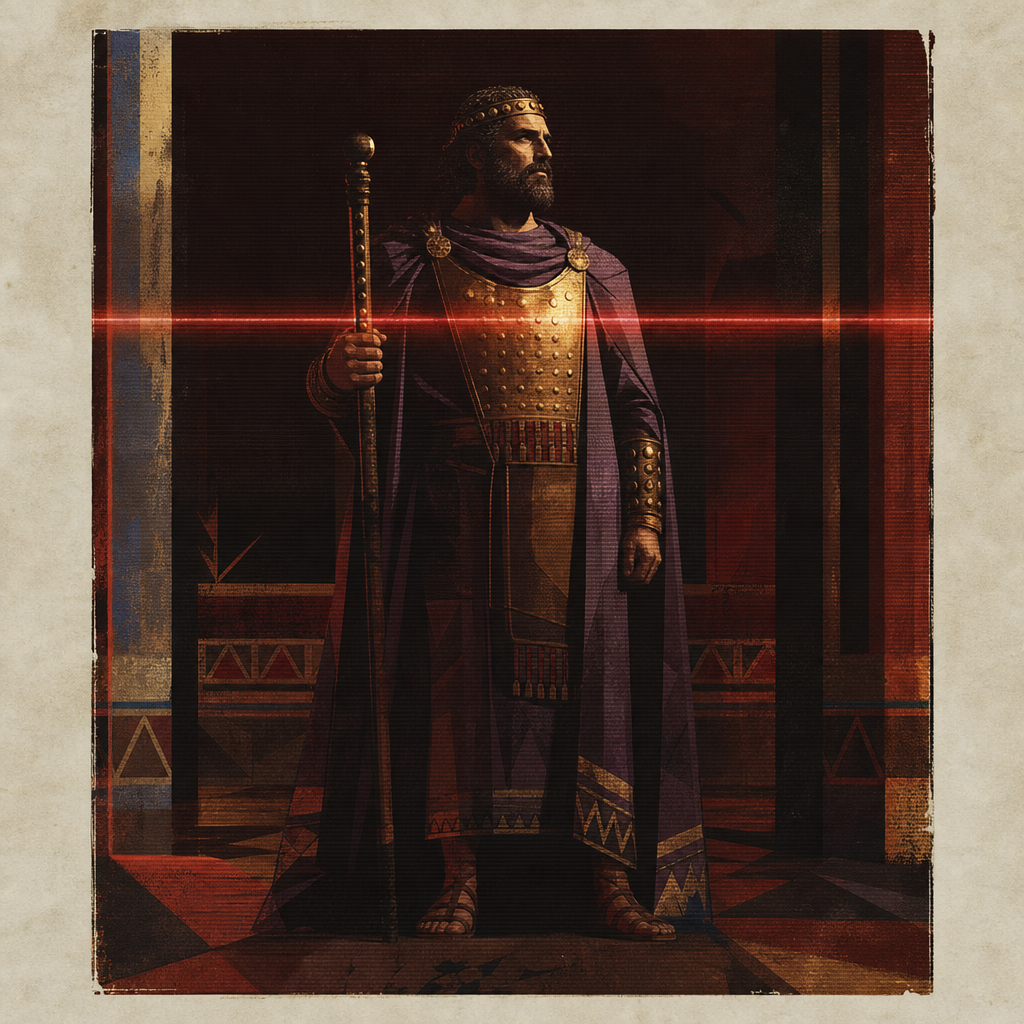
Now the other gods and the chariot-fighting men slept all night long, but sweet sleep did not hold Zeus. Instead, he turned over in his mind how he might honor Achilles and destroy many men beside the Achaeans' ships. To his heart this plan seemed best: to send a ruinous Dream to Agamemnon, son of Atreus. He called to it and spoke winged words:
Read Ancient Greek Source (Iliad.2.1–Iliad.2.7)
"Go now, ruinous Dream, to the swift ships of the Achaeans. Enter the shelter of Agamemnon, son of Atreus, and tell him everything word for word, just as I command. Order him to arm the long-haired Achaeans in full force, for now he may take the wide-streeted city of the Trojans. The immortals who hold the halls of Olympus are no longer divided in counsel; Hera has bent them all by her pleading, and sorrows hang over the Trojans."
Read Ancient Greek Source (Iliad.2.8–Iliad.2.15)
So he spoke, and the Dream set out once it heard his word. Quickly it reached the swift ships of the Achaeans and went to Agamemnon, son of Atreus. It found him sleeping in his shelter, with immortal sleep poured around him. Taking the form of Neleus' son Nestor, whom Agamemnon honored most among the elders, the divine Dream stood above his head and spoke to him:
Read Ancient Greek Source (Iliad.2.16–Iliad.2.22)
"You are sleeping, son of warlike Atreus, breaker of horses. A man of counsel must not sleep all night long when armies are entrusted to him and so many cares are his. Now listen to me quickly; I am a messenger to you from Zeus, who, far off though he is, cares greatly for you and pities you. He ordered you to arm the long-haired Achaeans in full force, for now you may take the wide-streeted city of the Trojans. The immortals who hold the halls of Olympus are no longer divided in counsel; Hera has bent them all by her pleading, and sorrows from Zeus hang over the Trojans. Keep this in your mind, and do not let forgetfulness seize you when honey-sweet sleep releases you."
Read Ancient Greek Source (Iliad.2.23–Iliad.2.34)
With these words it departed and left him there turning over in his heart things that were not going to be fulfilled. He thought he would take Priam's city on that very day—fool that he was, knowing nothing of the work Zeus was planning. For Zeus was yet to lay pain and groaning upon both Trojans and Danaans through hard-fought battles. Agamemnon woke from sleep with the divine voice still poured around him. He sat upright and put on a soft tunic, fine and newly woven, and threw a great cloak around himself. Under his shining feet he bound his fine sandals, slung his silver-studded sword across his shoulders, and took up his ancestral scepter, imperishable forever. With it he walked among the ships of the bronze-armored Achaeans.
Read Ancient Greek Source (Iliad.2.35–Iliad.2.47)
Now the goddess Dawn climbed high Olympus to announce the light to Zeus and the other immortals. Meanwhile Agamemnon ordered the clear-voiced heralds to summon the long-haired Achaeans to assembly. They gave the call, and the men gathered very quickly. First, however, he seated a council of great-hearted elders beside the ship of Nestor, the Pylos-born king. Calling them together, he laid out a shrewd plan:
Read Ancient Greek Source (Iliad.2.48–Iliad.2.55)
"Hear me, friends. A divine Dream came to me in my sleep through the immortal night; to godlike Nestor most of all it was closest in appearance, height, and build. It stood above my head and spoke to me: 'You are sleeping, son of warlike Atreus, breaker of horses. A man of counsel must not sleep all night long when armies are entrusted to him and so many cares are his. Now listen to me quickly; I am a messenger to you from Zeus, who, far off though he is, cares greatly for you and pities you. He ordered you to arm the long-haired Achaeans in full force, for now you may take the wide-streeted city of the Trojans. The immortals who hold the halls of Olympus are no longer divided in counsel; Hera has bent them all by her pleading, and sorrows from Zeus hang over the Trojans. Keep this in your mind.' With those words it flew away and was gone, and sweet sleep released me. Come then, let us see if we can arm the sons of the Achaeans. First, as is right, I will test them with words and order them to flee with their many-benched ships; then you, each from your own place, hold them back with your words."
Read Ancient Greek Source (Iliad.2.56–Iliad.2.75)
Having spoken thus, he sat down, and among them rose Nestor, who was lord of sandy Pylos. With goodwill toward them he addressed the council: "Friends, leaders and rulers of the Argives, if any other of the Achaeans had told us this dream, we might call it a lie and turn away from it all the more. But as it is, the man who saw it claims to be the greatest of the Achaeans. Come then, let us see if we can arm the sons of the Achaeans." With these words he led the way out from the council. The scepter-bearing kings rose and obeyed the shepherd of the people, and the troops came surging after.
Read Ancient Greek Source (Iliad.2.76–Iliad.2.86)
Just as thick swarms of bees pour out from a hollow rock, always coming on in fresh waves, and fly in clusters over the spring flowers, some darting in thick clouds this way and others that way, so the many companies of men marched in ranks from the ships and shelters along the deep beach, troop after troop to the assembly. Among them blazed Rumor, messenger of Zeus, urging them to go, and they gathered. The assembly was in uproar, and the earth groaned beneath the troops as they took their seats. The din rose high, and nine heralds kept shouting to restrain them, so that they might stop their clamor and listen to the kings cherished by Zeus.
Read Ancient Greek Source (Iliad.2.87–Iliad.2.98)
With difficulty the troops sat down and were held to their seats, ceasing their uproar. Then lord Agamemnon stood up holding the scepter that Hephaestus had labored to make. Hephaestus gave it to Zeus, the lord, son of Cronus, and Zeus in turn gave it to his guide, the slayer of Argus; lord Hermes gave it to Pelops, driver of horses, and Pelops in turn gave it to Atreus, shepherd of the people. When Atreus died, he left it to Thyestes, rich in flocks, and Thyestes in turn left it for Agamemnon to bear, and so to rule over many islands and all of Argos. Leaning on it, he spoke to the Argives:
Read Ancient Greek Source (Iliad.2.99–Iliad.2.109)
"My friends, Danaan heroes, attendants of Ares, Zeus son of Cronus has bound me hard in heavy, blinding ruin—cruel god! Earlier he promised me and bowed his head in pledge that I would sack strong-walled Ilion before returning home; yet now he has devised a cruel deceit, and commands me to go back to Argos in disgrace, after I have lost so many men. So it must please Zeus in his overwhelming might, who has already toppled the crowns of many cities and will topple many more, for his power is the greatest. For this is a disgrace even for future men to hear: that so fine and vast an army of Achaeans is waging a fruitless war in vain and fighting on against fewer men, while no end has yet appeared.
Read Ancient Greek Source (Iliad.2.110–Iliad.2.122)
"For if we wished, both Achaeans and Trojans, to seal a binding truce with sacrifice and count both sides—if the Trojans were gathered, all who have hearths in the city, and we Achaeans were marshaled into companies of ten, and each company chose a single Trojan to pour our wine—many tens would go without a cupbearer. By so much, I say, the sons of the Achaeans outnumber the Trojans who live in the city. Yet there are allies from many cities, spear-wielding men, who drive me badly off course and will not let me, for all my desire, sack the well-settled citadel of Ilion. Nine years of great Zeus have already gone by, and the timbers of our ships have rotted and the rigging has come undone. Our wives and young children sit in our halls waiting for us, while for us the work for which we came here remains just as unfinished. Come then, let us all do as I say: let us flee with our ships to our dear native land, for we will never take wide-streeted Troy."
Read Ancient Greek Source (Iliad.2.123–Iliad.2.141)
So he spoke, and he stirred the hearts in the chests of all throughout the multitude who had not heard the council's plan. The assembly surged like the long waves of the Icarian Sea, which the East Wind and South Wind rouse as they rush down from the clouds of Father Zeus. And as when the West Wind comes and stirs a deep field of grain, sweeping down in a furious squall, and the crop bows with its ears, so their whole assembly was stirred. With a roar they rushed for the ships, and from beneath their feet the dust rose and hung in the air. They shouted to one another to lay hold of the ships and drag them down into the bright sea; they began clearing out the launching-channels, and the shouting of men eager for home reached the sky as they pulled the props from under the hulls.
Read Ancient Greek Source (Iliad.2.142–Iliad.2.154)
Then and there the Argives would have made their return home against fate, had not Hera spoken to Athena: "What a disgrace, tireless daughter of aegis-bearing Zeus! Will the Argives flee homeward like this to their dear native land across the broad back of the sea, and leave behind as a boast for Priam and the Trojans Argive Helen, for whose sake so many Achaeans have perished at Troy, far from their dear native land? Go now through the army of the bronze-armored Achaeans; with your gentle words hold back each man, and do not let them drag their curved ships into the sea."
Read Ancient Greek Source (Iliad.2.155–Iliad.2.165)
So she spoke, and the bright-eyed goddess Athena did not disobey. She darted down from the peaks of Olympus and swiftly reached the fast ships of the Achaeans. There she found Odysseus, the equal of Zeus in counsel, standing still; he had not laid a hand on his well-benched black ship, for grief had struck his heart and spirit. Standing close beside him, bright-eyed Athena spoke: "Royal son of Laertes, resourceful Odysseus, will you all flee homeward like this to your dear native land, tumbling into your many-benched ships, and leave behind as a boast for Priam and the Trojans Argive Helen, for whose sake so many Achaeans have perished at Troy, far from their dear native land? Go now through the army of the Achaeans—do not hold back—and with your gentle words restrain each man, and do not let them drag their curved ships into the sea."
Read Ancient Greek Source (Iliad.2.166–Iliad.2.181)
So she spoke, and he recognized the voice of the goddess speaking. He set off at a run and flung away his cloak, which was gathered up by the herald Eurybates of Ithaca, who attended him. Going straight to Agamemnon, son of Atreus, Odysseus received from him the ancestral scepter, imperishable forever, and with it he strode among the ships of the bronze-armored Achaeans. Whenever he met any king or man of rank, he would stand beside him and hold him back with gentle words: "My friend, it does not suit you to panic like a coward; sit down yourself, and make the rest of your people sit. For you do not yet clearly know the mind of Atreus' son: right now he is testing us, and soon he will come down hard on the sons of the Achaeans. Not all of us heard what he said in the council. Beware lest in his anger he do some harm to the sons of the Achaeans. Great is the temper of kings cherished by Zeus; a king’s honor comes from Zeus, and Zeus the counselor loves him."
Read Ancient Greek Source (Iliad.2.182–Iliad.2.197)
But whenever he saw a man of the common crowd and found him shouting, he would strike him with the scepter and berate him sharply: "Sit still, you fool, and listen to the words of others who are better men than you, while you are unwarlike and weak, counted for nothing either in battle or in council. We Achaeans cannot all be kings here; the rule of many is not a good thing. Let there be one ruler, one king, to whom the son of crooked-counseling Cronus has given the scepter and the judgments, so that he may take counsel for his people." So he commanded and marshaled the army; and back to the assembly they surged again from the ships and shelters with a roar, as when a wave of the loud-surging sea thunders against a long beach, and the open water booms.
Read Ancient Greek Source (Iliad.2.198–Iliad.2.210)
The others sat down and were held to their places on the benches, but Thersites alone still chattered on without measure. His mind was full of unruly, endless talk, always ready to quarrel with the kings rashly and out of turn, saying whatever he thought would make the Argives laugh. He was the ugliest man who came beneath Ilion: he was bandy-legged and lame in one foot, and his two shoulders hunched together over his chest; above them, his head came to a point, with only sparse fuzz sprouting on top. He was most hateful of all to Achilles and Odysseus, for he was always railing at those two; but now at royal Agamemnon he screamed his shrill insults. The Achaeans were furious with him and deeply indignant in their hearts, yet shouting at the top of his voice, he lashed out at Agamemnon:
Read Ancient Greek Source (Iliad.2.211–Iliad.2.224)
"Son of Atreus, what are you complaining of now? What more do you crave? Your shelters are packed with bronze, and plenty of women are inside them, the choicest prizes, whom we Achaeans give to you first of all whenever we take a town. Or are you still hungry for gold that one of the horse-taming Trojans will bring out of Ilion as ransom for his son, whom I or some other Achaean have bound and led in—or for a young woman to sleep with in love, someone you can keep all to yourself? It is not right for their commander to lead the sons of the Achaeans into misery. You soft fools, you wretched disgraces—Achaean women, Achaean men no longer—let us sail home with our ships and leave this man right here in Troy to digest his prizes, so he can see whether we are any help to him or not. Even now he has dishonored Achilles, a man far better than he is: he took his prize of honor for himself and keeps her. Yet there is no gall in Achilles' heart; he lets things go. Otherwise, son of Atreus, this outrage would be your last."
Read Ancient Greek Source (Iliad.2.225–Iliad.2.242)
So Thersites spoke, railing at Agamemnon, shepherd of the people. Quickly royal Odysseus stepped up beside him, glared at him from beneath his brows, and rebuked him harshly: "Thersites, you reckless babbler, shrill speaker though you are, hold your tongue, and do not try to quarrel by yourself with kings. For I say there is no other mortal baser than you among all who came beneath Ilion with the sons of Atreus. You should not harangue the assembly with kings' names in your mouth, hurling insults at them and watching for your chance to sail home. We do not yet know clearly how these matters will turn out, whether we sons of the Achaeans will return home well or badly. Yet now you sit hurling insults at Agamemnon, son of Atreus, shepherd of the people, because the Danaan heroes give him so many gifts, while you hold forth with jeering taunts. But I will tell you this, and it will be carried out: if ever again I catch you raving like a fool as you are now, then may the head of Odysseus no longer rest on his shoulders, and may I no longer be called the father of Telemachus, if I do not seize you and strip away the clothes you wear, your cloak and tunic that cover your nakedness, and send you howling back to the swift ships, beating you out of the assembly with humiliating blows."
Read Ancient Greek Source (Iliad.2.243–Iliad.2.264)
So he spoke, and struck him across the back and shoulders with the scepter. Thersites doubled over, and a hot tear fell from his eyes as a bloody welt rose up on his back beneath the golden scepter. He sat down, trembling with fear, and in his pain, with a helpless stare, he wiped away the tear. Troubled though the men were, they laughed heartily at him, and one man would glance at his neighbor and say: "Gods above, Odysseus has done countless good things before now, leading us with sound counsel and marshaling the battle, but this is by far the best thing he has done among the Argives, stopping this foul-mouthed slanderer from haranguing the assembly. Surely his insolent spirit will not urge him again to rail at kings with insulting words."
Read Ancient Greek Source (Iliad.2.265–Iliad.2.277)
So the crowd spoke. Then Odysseus, sacker of cities, stood up holding the scepter; beside him bright-eyed Athena, taking the form of a herald, commanded the army to be silent, so that both the nearest and the farthest sons of the Achaeans might hear his words together and weigh his counsel. With goodwill toward them, he addressed the assembly: "Son of Atreus, my lord, now the Achaeans want to make you the most disgraced of all mortal men, and they will not fulfill the promise they made to you while they were still on their way here from horse-pasturing Argos: that you would return home only after sacking well-walled Ilion. For like young children or widowed women they wail to one another about going home. True, there is hardship enough to make a worn-out man want to return; for any man who stays away from his wife for even a single month grows restless aboard his many-benched ship when winter gales and a heaving sea pin him down. And for us this is the ninth revolving year that we have been waiting here; so I do not blame the Achaeans for growing restless beside the curved ships. Even so, it is a disgrace to stay so long and then go home empty-handed.
Read Ancient Greek Source (Iliad.2.278–Iliad.2.298)
"Bear up, my friends, and stay a while longer, so that we may learn whether Calchas prophesies the truth or not. For we know this well in our hearts, and you are all witnesses to it—all whom the fates of death have not carried away. It seems only yesterday or the day before that, when the ships of the Achaeans were gathering at Aulis, bringing ruin to Priam and the Trojans, we were around a spring at the sacred altars offering perfect hecatombs to the immortals beneath a fine plane tree where bright water flowed. There a great sign appeared: a serpent, blood-red along its back, a terrifying thing that the Olympian himself sent into the light, glided out from beneath the altar and darted straight to the plane tree. Right there were a sparrow's fledglings, helpless little ones, huddled under the leaves on the topmost branch—eight of them, and the mother who bore them made the ninth. There the serpent devoured them as they cheeped pitifully, while the mother fluttered around them, mourning her dear young; then coiling back, it caught her by the wing as she cried out around them. After it had devoured the sparrow's young and the mother herself, the god who revealed it made the serpent a sign for all to see: the son of crooked-counseling Cronus turned it to stone, while we stood there in amazement at what had happened.
Read Ancient Greek Source (Iliad.2.299–Iliad.2.320)
"So when this dread portent broke in upon the gods' hecatombs, Calchas at once spoke out in prophecy: 'Why have you fallen silent, long-haired Achaeans? Wise Zeus has shown us this great sign, late to come and late to be fulfilled, whose fame will never die. Just as this serpent devoured the sparrow's young and the mother herself—eight of them, and the mother who bore them made the ninth—so for that many years we shall fight the war there, and in the tenth year we shall take the wide-streeted city.' So he spoke, and now all of it is being fulfilled. Come, stay right here, all you Achaeans in fine leg armor, until we take Priam's great city."
Read Ancient Greek Source (Iliad.2.321–Iliad.2.332)
So he spoke, and the Argives shouted aloud, and all around them the ships rang terribly with the roar of the shouting Achaeans as they praised the words of godlike Odysseus. Then Nestor, the horseman of Gerenia, spoke among them: "Shame on you! You talk in assembly just like children—little children who care nothing for the work of war. Where will our agreements and our sworn oaths go now? Into the fire, then, let all our counsels go, and the plans of men, the libations of unmixed wine, and the clasped right hands we trusted! For we are only wrangling with words in vain, and cannot find any solution, for all the long time we have been here. Son of Atreus, keep your resolve unshaken, just as before, and command the Argives through the fierce press of battle. As for any one or two men who plot apart from the Achaeans to go back to Argos before we even know whether the promise of aegis-bearing Zeus is a lie or not, leave them to waste away—nothing will come of what they plan.
Read Ancient Greek Source (Iliad.2.333–Iliad.2.349)
"For I say that Cronus' all-powerful son nodded his assent on the day when the Argives boarded their fast-sailing ships, carrying slaughter and doom to the Trojans. Zeus flashed lightning on our right, showing favorable signs. So let no man be in a hurry to sail for home before he has lain in bed beside a Trojan's wife and avenged the struggles and groans of Helen. If any man is so desperate to return home, let him lay his hand on his well-benched black ship, so that before all the others he may meet his death and doom. Yet you yourself, my lord, plan well, and also listen to another; the word I am about to speak is not one to cast aside. Separate the men by tribes and by clans, Agamemnon, so that clan may support clan, and tribe support tribe. If you do this and the Achaeans obey you, you will soon know which of the leaders and which of the men is a coward, and which of them is brave, for each group will fight on its own. And you will know whether it is by the will of the gods that you do not take the city, or through the cowardice of your men and their folly in war."
Read Ancient Greek Source (Iliad.2.350–Iliad.2.368)
Lord Agamemnon answered him: "Old man, once again you surpass all the sons of the Achaeans in assembly. Father Zeus, Athena, and Apollo, I wish I had ten such counselors among the Achaeans! Then King Priam's city would soon bow down, taken and sacked by our hands. But aegis-bearing Zeus, son of Cronus, has given me sorrow, plunging me into fruitless quarrels and strife. For Achilles and I fought over a girl with bitter words, and I was the first to lose my temper. Yet if ever the two of us come to one mind again, the Trojans will have no reprieve from ruin, not even for a moment.
Read Ancient Greek Source (Iliad.2.369–Iliad.2.380)
"Now go to your meal, so that we may join battle. Let every man sharpen his spear well and ready his shield, let every man feed his swift-footed horses well, and let every man inspect his chariot all around and set his mind on war, so that all day long we may fight to the finish in hateful war. For there will be no respite at all, not even the slightest pause, until nightfall comes to part the fury of men. The strap of a man's body-shield will be soaked with sweat around his chest, and his hand will ache around his spear; and a man's horse will lather with sweat as it strains at the polished chariot. And anyone I see trying to hang back from the fighting, lingering beside the curved ships—nothing after that will save him from the dogs and the birds of prey."
Read Ancient Greek Source (Iliad.2.381–Iliad.2.393)
So he spoke, and the Argives gave a great roar, like a wave crashing against a high coast when the South Wind comes and drives it onto a jutting crag—a rock the waves never leave in peace, from whatever quarter the winds may rise and blow. The men stood up and hurried off, scattering among the ships, kindled fires among their shelters, and took their meal. Each man sacrificed to one or another of the everlasting gods, praying to escape death and the hard grind of war. Meanwhile Agamemnon, lord of men, sacrificed a fat five-year-old bull to Cronus' all-powerful son, and summoned the elders, the foremost chiefs of all the Achaeans: Nestor first of all, and lord Idomeneus, and after them the two Ajaxes and the son of Tydeus, and sixth, Odysseus, the equal of Zeus in counsel. Menelaus, strong at the war cry, came on his own without being called, for he knew in his heart what a burden his brother carried. They stood around the bull and took up the barley grains.
Read Ancient Greek Source (Iliad.2.394–Iliad.2.410)
Among them lord Agamemnon lifted his voice in prayer: "Zeus, most glorious and greatest, lord of the dark clouds, dwelling in the upper sky, do not let the sun go down and darkness fall before I hurl Priam's hall headlong to the ground, blackened with smoke, and burn its gates with consuming fire, and tear Hector's tunic around his chest, splitting it with bronze, while many of his comrades around him fall face-down in the dust and bite the earth." So he prayed, and the son of Cronus did not yet grant his wish; he accepted the sacrifices, but increased their unenviable toil.
Read Ancient Greek Source (Iliad.2.411–Iliad.2.420)
When they had prayed and scattered the barley grains, they first drew back the bull’s head, slit its throat, and flayed it. They cut out the thighbones and wrapped them in a double layer of fat, placing raw strips of meat on top. These they burned on leafless cleft wood, while they skewered the inner parts and held them over the fire of Hephaestus. Once the thighbones were burned and they had tasted the inner parts, they sliced the rest into pieces, threaded them on spits, roasted them carefully, and drew everything off. When they had finished their work and prepared the meal, they feasted, and no man's appetite lacked an equal share of the feast.
Read Ancient Greek Source (Iliad.2.421–Iliad.2.431)
When they had put aside their desire for food and drink, Nestor, the horseman of Gerenia, was first to speak among them: "Most glorious son of Atreus, Agamemnon, lord of men, let us sit talking here no longer, nor put off for long the work that the god is placing in our hands. Come, let the heralds of the bronze-armored Achaeans give the call and muster the army among the ships, while we go together like this through the wide camp of the Achaeans, so that we may rouse keen Ares all the sooner." So he spoke, and Agamemnon, lord of men, did not disobey. At once he ordered the clear-voiced heralds to summon the long-haired Achaeans to war. They gave the call, and the men gathered very quickly.
Read Ancient Greek Source (Iliad.2.432–Iliad.2.444)
The kings cherished by Zeus around the son of Atreus rushed about marshaling the men, and among them went bright-eyed Athena holding the priceless aegis, ageless and immortal; from it a hundred tassels of pure gold floated, all tightly woven, and each worth a hundred oxen. With it she flashed through the army of the Achaeans, urging them forward, and roused strength in every man's heart to wage war and fight without ceasing. At once war became sweeter to them than returning in their hollow ships to their dear native land.
Read Ancient Greek Source (Iliad.2.445–Iliad.2.454)
Just as a destructive fire blazes through a vast forest on the mountain peaks, and its glare is seen from far away, so as they marched the dazzling gleam from their wondrous bronze reached through the upper air to heaven. And as the many flocks of winged birds—geese or cranes or long-necked swans—in the Asian meadow around the streams of Caystrius fly this way and that, glorying in their wings, and settle ever forward with loud cries until the meadow resounds, so their many companies poured out from the ships and shelters onto the Scamandrian plain, and the earth beneath rang terribly under the tread of men and horses. They took their stand in the flowered Scamandrian meadow in tens of thousands, as many as the leaves and flowers that come forth in season.
Read Ancient Greek Source (Iliad.2.455–Iliad.2.468)
Just as the many thick swarms of flies that rove through a shepherd's steading in the spring season, when milk wets the pails, so many were the long-haired Achaeans who stood on the plain against the Trojans, eager to tear them apart. And just as goatherds easily separate wide-scattered flocks of goats after they have mingled in the pasture, so the leaders marshaled their men here and there to go into battle. Among them went lord Agamemnon, in eyes and head like Zeus who delights in thunder, in waist like Ares, and in chest like Poseidon. Just as a bull in a herd stands out far above all the rest, conspicuous among the gathered cattle, so Zeus made the son of Atreus on that day, conspicuous among the multitude and foremost among the heroes.
Read Ancient Greek Source (Iliad.2.469–Iliad.2.483)
Tell me now, you Muses who hold the halls of Olympus—for you are goddesses, you are present, and you know all things, while we hear only rumor and know nothing at all—who were the leaders and lords of the Danaans. The multitude itself I could not tell or name, not even if I had ten tongues and ten mouths, an unbreakable voice, and a heart of bronze within me, unless the Olympian Muses, daughters of aegis-bearing Zeus, called to mind all who came beneath Ilion. Now I will tell the commanders of the ships and all the ships in order.
Read Ancient Greek Source (Iliad.2.484–Iliad.2.493)
Peneleos and Leitus commanded the Boeotians, together with Arcesilaus, Prothoenor, and Clonius: those who lived in Hyria and rocky Aulis, Schoenus and Scolus and many-ridged Eteonus, Thespia, Graea, and spacious Mycalessus; those who dwelt around Harma, Eilesium, and Erythrae; those who held Eleon, Hyle, and Peteon, Ocalea and Medeon, the well-built citadel, Copae, Eutresis, and Thisbe haunted by doves; those who held Coronea and grassy Haliartus; those who held Plataea and those who lived in Glisas; those who held Hypothebae, the well-built citadel, and sacred Onchestus, Poseidon's bright grove; and those who held vine-rich Arne, Midea, sacred Nisa, and outlying Anthedon. Of these, fifty ships came, and in each embarked a hundred and twenty young men of the Boeotians.
Read Ancient Greek Source (Iliad.2.494–Iliad.2.510)
Those who lived in Aspledon and Minyan Orchomenus were led by Ascalaphus and Ialmenus, sons of Ares, whom Astyoche, a modest maiden, bore to mighty Ares in the house of Actor, son of Azeus. When she had gone up to the upper chamber, Ares lay with her in secret. With them thirty hollow ships were ranged in line. The Phocians were led by Schedius and Epistrophus, sons of great-hearted Iphitus, son of Naubolus: those who held Cyparissus and rocky Pytho, sacred Crisa, Daulis, and Panopeus; those who dwelt around Anemorea and Hyampolis; those who lived beside the noble river Cephisus; and those who held Lilaea at the springs of Cephisus. With them followed forty black ships. Their leaders busied themselves marshaling the ranks of the Phocians, and they armed for battle on the left, next to the Boeotians.
Read Ancient Greek Source (Iliad.2.511–Iliad.2.526)
The Locrians were led by swift Ajax, son of Oileus—the lesser Ajax, not as large as Telamonian Ajax, but much smaller. He was slight of build and wore a linen corselet, yet with the spear he surpassed all the Hellenes and Achaeans. He led those who lived in Cynus, Opoeis, and Calliarus, Bessa, Scarphe, and lovely Augeiae, Tarphe and Thronium around the streams of Boagrius. With him followed forty black ships of the Locrians, who live across from sacred Euboea. Those who held Euboea, the Abantes breathing fury—who held Chalcis, Eretria, and vine-rich Histiaea, Cerinthus by the sea and the steep citadel of Dium, and those who held Carystus and dwelt in Styra—were led by Elephenor, scion of Ares, son of Chalcodon and commander of the great-hearted Abantes. With him followed the swift Abantes, their hair streaming long at the back, spearmen eager to shatter the corselets on their enemies' chests with outstretched ash spears. With him followed forty black ships.
Read Ancient Greek Source (Iliad.2.527–Iliad.2.545)
Those who held Athens, the well-built citadel, the land of great-hearted Erechtheus—whom Athena, daughter of Zeus, once raised after the grain-giving earth bore him, and settled in Athens in her own rich temple, where the young men of the Athenians propitiate him with bulls and rams as the years roll round—were led by Menestheus, son of Peteos. No mortal man on earth was his equal in marshaling horses and shield-bearing men; Nestor alone vied with him, for he was the elder. With him followed fifty black ships. And Ajax led twelve ships from Salamis, and brought them to stand where the ranks of the Athenians were stationed.
Read Ancient Greek Source (Iliad.2.546–Iliad.2.558)
Those who held Argos and walled Tiryns, Hermione and Asine, which lie along a deep gulf, Troezen, Eiones, and vine-clad Epidaurus, and the young men of the Achaeans who held Aegina and Mases, were led by Diomedes, strong at the war cry, and Sthenelus, dear son of renowned Capaneus. With them went Euryalus as a third, a godlike man, son of King Mecisteus, son of Talaus; but Diomedes, strong at the war cry, commanded them all. With them followed eighty black ships. Those who held Mycenae, the well-built citadel, wealthy Corinth, and well-built Cleonae; those who lived in Orneiae, lovely Araethyrea, and Sicyon, where Adrastus was first to reign as king; and those who held Hyperesia and steep Gonoessa, Pellene and the land around Aegium, and all along the coast of Aegialus and around spacious Helice—of their hundred ships lord Agamemnon, son of Atreus, was commander. With him followed by far the most numerous and the finest troops; and among them he himself put on his gleaming bronze, glorying in his might, and stood out among all the heroes because he was the greatest king and led by far the largest force.
Read Ancient Greek Source (Iliad.2.559–Iliad.2.580)
Those who held hollow Lacedaemon with its deep ravines, Pharis, Sparta, and Messe haunted by doves; those who lived in Bryseiae and lovely Augeiae; those who held Amyclae and Helos, the citadel by the sea; and those who held Laas and dwelt around Oetylus—of their sixty ships his brother Menelaus, strong at the war cry, was commander, and they armed themselves apart from Agamemnon's men. Among them he himself went, confident in his own zeal, urging them to war; for above all others he longed in his heart to avenge the struggles and groans of Helen. Those who lived in Pylos and lovely Arene, and Thryon, the ford of the Alpheus, and well-built Aepy, and who inhabited Cyparisseis, Amphigeneia, Pteleos, Helos, and Dorium—where the Muses met Thamyris the Thracian as he came from Oechalia, from the house of Eurytus of Oechalia, and put an end to his singing; for he boasted that he would win even if the Muses themselves, daughters of aegis-bearing Zeus, were to sing against him, and in their anger they maimed him, took away his wondrous song, and made him forget how to play the lyre—these men were led by Nestor, the horseman of Gerenia. With him ninety hollow ships were ranged in line.
Read Ancient Greek Source (Iliad.2.581–Iliad.2.602)
Those who held Arcadia beneath the steep mountain of Cyllene, beside the tomb of Aepytus, where men fight hand to hand; those who lived in Pheneus and Orchomenus rich in flocks, Rhipe, Stratie, and windy Enispe; and those who held Tegea and lovely Mantinea, and held Stymphalus and lived in Parrhasia—of their sixty ships lord Agapenor, son of Ancaeus, was commander, and in each ship embarked many Arcadian men skilled in war. For Agamemnon, son of Atreus, lord of men, had himself given them well-benched ships to cross the wine-dark sea, since the work of the sea was no concern of theirs. Those who inhabited Buprasium and noble Elis, all that Hyrmine and outlying Myrsinus and the Olenian rock and Alesium enclose within their bounds, had four commanders; ten swift ships followed each man, and many Epeians embarked in them. Two divisions were led by Amphimachus and Thalpius—the one the son of Cteatus, the other of Eurytus, both sons of Actor; the third was led by mighty Diores, son of Amarynceus; and the fourth was led by godlike Polyxeinus, son of King Agasthenes, son of Augeas.
Read Ancient Greek Source (Iliad.2.603–Iliad.2.624)
Those from Dulichium and the sacred Echinades islands, which lie across the sea opposite Elis, were led by Meges, the equal of Ares, son of Phyleus, whom the horseman Phyleus, dear to Zeus, fathered—he who once moved away to Dulichium in anger at his father. With Meges followed forty black ships. Odysseus led the great-hearted Cephallenians: those who held Ithaca and Neriton with its rustling leaves, and lived in Crocyleia and rugged Aegilips; those who held Zacynthus and dwelt around Samos; and those who held the mainland and lived on the coast opposite the islands. These were led by Odysseus, the equal of Zeus in counsel, and with him followed twelve red-prowed ships. The Aetolians were led by Thoas, son of Andraemon: those who lived in Pleuron, Olenus, and Pylene, Chalcis by the sea, and rocky Calydon. For the sons of great-hearted Oeneus were no more, nor was Oeneus himself still living, and fair-haired Meleager was dead; so to Thoas had been entrusted full command to rule the Aetolians. With him followed forty black ships.
Read Ancient Greek Source (Iliad.2.625–Iliad.2.644)
Idomeneus, famed for his spear, led the Cretans: those who held Knossos and walled Gortyn, Lyctus, Miletus, and chalk-white Lycastus, Phaestus and Rhytium, well-settled cities, and all the others who dwelt throughout hundred-citied Crete. These were led by Idomeneus, famed for his spear, and Meriones, the equal of man-slaying Enyalius; with them followed eighty black ships. Tlepolemus, son of Heracles, a tall and valiant man, led nine ships of the proud Rhodians out of Rhodes, who dwelt throughout Rhodes ordered in three divisions—Lindus, Ialysus, and chalk-white Cameirus. These were led by Tlepolemus, famed for his spear, whom Astyocheia bore to the mighty Heracles; Heracles had brought her out of Ephyra from the river Selleis after sacking many cities of vigorous men cherished by Zeus. When Tlepolemus had grown to manhood in the well-built hall, he killed his own father's dear maternal uncle, Licymnius, scion of Ares, who was already growing old. At once he built ships, gathered a large following, and fled across the sea, for the other sons and grandsons of mighty Heracles threatened him. In his wanderings and hardships he came to Rhodes; there his people settled in three divisions by tribes, and were loved by Zeus, who rules over gods and men, and the son of Cronus poured wondrous wealth upon them.
Read Ancient Greek Source (Iliad.2.645–Iliad.2.670)
Nireus led three balanced ships from Syme—Nireus, son of Aglaea and King Charopus, Nireus, the handsomest man who came beneath Ilion of all the Danaans after the peerless son of Peleus; yet he was weak, and only a small force followed him. Those who held Nisyros, Crapathus, and Casus, and Cos, the city of Eurypylus, and the Calydnae islands, were led by Pheidippus and Antiphus, the two sons of King Thessalus, son of Heracles; with them thirty hollow ships were ranged in line.
Read Ancient Greek Source (Iliad.2.671–Iliad.2.680)
Now for all those who inhabited Pelasgian Argos—those who lived in Alos, Alope, and Trachis, and those who held Phthia and Hellas of fair women, and were called Myrmidons and Hellenes and Achaeans—of their fifty ships Achilles was commander. Yet these men gave no thought to harsh-sounding war, for there was no one to lead them into the ranks. Swift-footed, godlike Achilles lay idle among the ships, angry over the girl Briseis with her lovely hair, whom he had chosen out of Lyrnessus after great labor, when he sacked Lyrnessus and the walls of Thebe and struck down the spear-fighters Mynes and Epistrophus, sons of King Evenus, son of Selepius. Grieving for her he lay idle, though soon he was to rise again.
Read Ancient Greek Source (Iliad.2.681–Iliad.2.694)
Those who held Phylace and flowery Pyrasus, the sacred precinct of Demeter, Iton, mother of flocks, Antron by the sea, and Pteleos deep in grass, had been led by warlike Protesilaus while he lived; but by now the black earth held him fast. His wife, both cheeks torn in grief, had been left behind in Phylace, and his house stood half-finished; for a Dardanian man killed him as he leaped from his ship, by far the first of the Achaeans. Yet his men were not without a leader, though they longed for the one they had lost: Podarces, scion of Ares, marshaled them—the son of Iphiclus, rich in flocks, son of Phylacus, and own younger brother to great-hearted Protesilaus, though the warlike hero Protesilaus was both the elder and the braver man. So the troops did not lack a leader, though they longed for him, noble as he was. With him followed forty black ships.
Read Ancient Greek Source (Iliad.2.695–Iliad.2.710)
Those who lived in Pherae beside Lake Boebeis, and in Boebe, Glaphyrae, and well-built Iolcus, were led in eleven ships by the dear son of Admetus, Eumelus, whom Alcestis, noblest of women and loveliest in form of the daughters of Pelias, bore to Admetus. Those who lived in Methone and Thaumacia, and held Meliboea and rugged Olizon, had been led in seven ships by Philoctetes, skilled with the bow; in each ship fifty oarsmen had embarked, well skilled with the bow to fight with might. But Philoctetes lay on an island suffering fierce pains, on sacred Lemnos, where the sons of the Achaeans had left him in agony from the festering wound of a deadly water-snake. There he lay grieving; yet soon the Argives beside their ships were to remember King Philoctetes. Nor were his men without a leader, though they longed for the one they had lost: Medon marshaled them, the bastard son of Oileus, whom Rhene bore to Oileus, sacker of cities.
Read Ancient Greek Source (Iliad.2.711–Iliad.2.728)
Those who held Tricca and craggy Ithome, and those who held Oechalia, the city of Eurytus of Oechalia, were led by the two sons of Asclepius, the skilled healers Podalirius and Machaon; with them thirty hollow ships were ranged in line. Those who held Ormenium and the spring of Hypereia, and those who held Asterium and the white peaks of Titanus, were led by Eurypylus, the splendid son of Euaemon; with him followed forty black ships.
Read Ancient Greek Source (Iliad.2.729–Iliad.2.737)
Those who held Argissa and lived in Gyrtone, Orthe, Elone, and the white city of Oloosson, were led by steadfast Polypoetes, son of Pirithous (whom immortal Zeus fathered)—the son whom glorious Hippodamia bore to Pirithous on the day when Pirithous took vengeance on the shaggy Centaurs, driving them from Pelion and forcing them toward the Aethices. Polypoetes was not alone; with him was Leonteus, scion of Ares, son of high-hearted Coronus, son of Caeneus. With them followed forty black ships. Guneus led twenty-two ships from Cyphus; with him followed the Enienes and the steadfast Peraebi, who had made their homes around wintry Dodona and tilled the fields around lovely Titaresius, which sends its fair-flowing water into the Peneius. Yet it does not mingle with the silver-swirling Peneius, but flows on top of it like oil, for it is a branch of the water of Styx, the dread oath of the gods. Prothoos, son of Tenthredon, commanded the Magnetes, who lived around the Peneius and Pelion with its rustling leaves. Swift Prothoos led them, and with him followed forty black ships.
Read Ancient Greek Source (Iliad.2.738–Iliad.2.759)
These were the leaders and lords of the Danaans. Tell me now, Muse, who was by far the best among them—of the men themselves and of the horses that followed the sons of Atreus. The finest horses by far were the mares of the son of Pheres, which Eumelus drove, swift as birds, matched in coat and age, and level across the back as if measured by a plumb line; Apollo of the silver bow had bred them in Pereia, both of them mares, carrying the terror of Ares into battle. Among the men, Telamonian Ajax was by far the best so long as Achilles remained in his wrath; for Achilles was much the greatest, and so were the horses that carried the peerless son of Peleus. But he lay among his curved, seafaring ships, nursing his wrath against Agamemnon, son of Atreus, shepherd of the people. Meanwhile his men along the breaker-beaten shore amused themselves by hurling discuses and javelins and shooting with the bow. Their horses stood each beside its own chariot, cropping lotus and marsh-grown wild celery, while the lords' chariots stood well covered in the shelters; and the men, longing for their war-loving commander, wandered here and there through the camp and did not fight.
Read Ancient Greek Source (Iliad.2.760–Iliad.2.779)
The rest marched on as though the whole earth were being consumed by fire, and the ground groaned beneath them, just as under Zeus who delights in thunder when in his anger he lashes the earth around Typhoeus among the Arimi, where they say Typhoeus has his bed. So the earth groaned loudly beneath their feet as they advanced, and very quickly they crossed the plain. To the Trojans came wind-footed, swift Iris as a messenger from aegis-bearing Zeus with a grim message. They were holding assembly at Priam's gates, all gathered together, young men and elders alike. Standing close by, swift-footed Iris spoke; she took on the voice of Priam's son Polites, who sat as a lookout for the Trojans, trusting in his speed of foot, on the topmost mound of old Aesyetes' tomb, watching for when the Achaeans would sally out from their ships. Likening herself to him, swift-footed Iris spoke:
Read Ancient Greek Source (Iliad.2.780–Iliad.2.795)
"Old man, endless speeches are always dear to you, just as in time of peace; but inescapable war has arisen. I have entered many battles of men before now, yet I have never seen so fine and vast an army; like leaves or the sands of the sea they march across the plain to fight against the city. Hector, I charge you above all to do as I say: there are many allies throughout Priam's great city, and different tongues among men scattered from many lands; let each man give the word to those he commands, and lead them out after marshaling his own townsmen." So she spoke, and Hector did not fail to recognize the voice of the goddess. At once he dismissed the assembly, and they rushed to arms. All the gates were thrown open, and the army poured out, foot soldiers and horsemen alike, and a great din arose. In front of the city there is a steep hill out on the plain, standing apart with open ground all around it, which men call Batieia, while the immortals call it the tomb of leaping Myrine; there the Trojans and their allies were marshaled into their divisions.
Read Ancient Greek Source (Iliad.2.796–Iliad.2.815)
The Trojans were led by great Hector of the flashing helmet, son of Priam; alongside him, by far the most numerous and finest troops armed themselves, eager to fight with their spears. The Dardanians were commanded by the valiant son of Anchises, Aeneas, whom divine Aphrodite bore to Anchises on the slopes of Ida, a goddess lying in love with a mortal. He was not alone; with him were the two sons of Antenor, Archelochus and Acamas, well skilled in every kind of fighting. The wealthy Trojans who lived in Zeleia beneath the lowest foot of Ida and drank the dark water of the Aesepus were led by the splendid son of Lycaon, Pandarus, to whom Apollo himself had given the bow. Those who held Adrasteia and the land of Apaesus, and held Pityeia and the steep mountain of Tereia, were led by Adrastus and Amphius in his linen corselet, the two sons of Merops of Percote, who surpassed all men in the art of prophecy and tried to forbid his sons from marching to man-destroying war; yet the two did not obey him, for the fates of black death were leading them on. Those who dwelt around Percote and Practius, and held Sestus, Abydos, and noble Arisbe, were led by Asius, son of Hyrtacus, a leader of men—Asius, son of Hyrtacus, whom tall, fiery-brown horses brought from Arisbe, from the river Selleis.
Read Ancient Greek Source (Iliad.2.816–Iliad.2.839)
Hippothous led the tribes of the Pelasgians, raging with the spear, who inhabited fertile Larisa; they were commanded by Hippothous and Pylaeus, scion of Ares, the two sons of Pelasgian Lethus, son of Teutamus. Acamas and the hero Peiros led the Thracians, all those whom the strong-flowing Hellespont encloses within its bounds. Euphemus was commander of the Ciconian spearmen, the son of Troezenus, cherished by Zeus, son of Ceas. Pyraechmes led the Paeonians with their curved bows from far away in Amydon, from the wide-flowing Axius—Axius, whose water is the fairest that spreads over the earth. The Paphlagonians were led by Pylaemenes of the shaggy heart, from the Eneti, where the breed of wild mules comes from; they held Cytorus and dwelt around Sesamus, and inhabited famed dwellings around the river Parthenius, Cromna, Aegialus, and the high Erythini. Odius and Epistrophus commanded the Halizones from far away in Alybe, where silver has its birthplace.
Read Ancient Greek Source (Iliad.2.840–Iliad.2.857)
Chromis commanded the Mysians, together with Ennomus the augur; yet his bird-omens did not save him from black death, and he was cut down at the hands of swift-footed Achilles, grandson of Aeacus, in the river, where Achilles slaughtered the Trojans and the others as well. Phorcys and godlike Ascanius led the Phrygians from far away in Ascania, and they were eager to fight in the press of battle. Mesthles and Antiphus led the Maeonians, the two sons whom the Gygaean lake bore to Talaemenes, and they led the Maeonians born beneath Mount Tmolus. Nastes led the Carians of foreign speech, who held Miletus and the thickly wooded mountain of Phthires, the streams of the Maeander, and the steep peaks of Mycale. These were led by Amphimachus and Nastes—Nastes and Amphimachus, the splendid children of Nomion. One of them even went to war wearing gold like a girl, fool that he was; yet that did nothing to ward off grim destruction, and he was cut down in the river at the hands of swift-footed Achilles, grandson of Aeacus, and warlike Achilles carried off the gold. Sarpedon and peerless Glaucus commanded the Lycians from far away in Lycia, from the swirling Xanthus.